What synodality means and how it is changing the Catholic Church
The Synod's final document calls synodality a path of spiritual renewal and structural reform in which pastors listen before they decide, and Spain's bishops are holding a national meeting of priests in Madrid to put it into practice
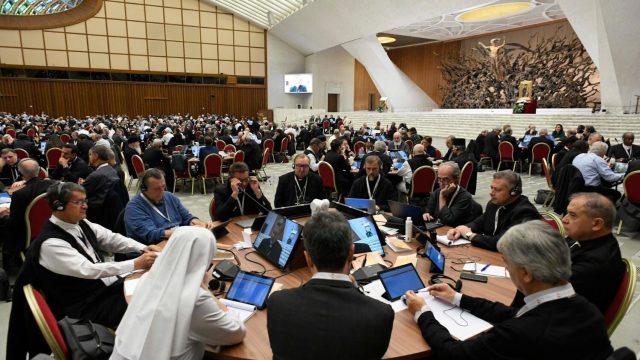
Synodality, a term that means "walking together," describes the path of spiritual renewal and structural reform that the Church approved in October 2024. It does not mean a democratic vote. It means that pastoral authority listens before it decides.
"Synodal" literally describes something done "walking together." The word "synod" comes from Greek and combines σύν ("with") and ὁδός ("way"). In its 2018 document on synodality, the International Theological Commission describes it as the path that members of the People of God travel together. The commission defines it as the specific way the Church lives and acts.
The 2023-2024 Synod
The Synod of Bishops is an assembly of pastors and other participants who gather around the pope to address a matter in the life of the Church. The synodal process on this topic had three phases: a consultation of the People of God; discernment by the pastors at the assembly's two sessions, in 2023 and 2024; and an implementation phase that began on October 10, 2021.
On October 26, 2024, the assembly approved its final document, "For a Synodal Church: Communion, Participation and Mission," which has 155 paragraphs. Pope Francis ordered it released immediately and decided there would be no follow-up exhortation. Paragraph 28 defines synodality as "a path of spiritual renewal and structural reform" that enables the Church to be "more participatory and missionary."
Not a democratic vote
Synodality does not mean deciding by majority, even though synodal assemblies do vote. The document directly addresses the difference between consultative and deliberative roles, and calls for a review of the relevant wording in the Code of Canon Law to remove ambiguities. The final decision belongs to the pastoral authority, but that authority cannot act as if it had not listened.
Paragraph 80 insists that those who make decisions must be able to trust the People of God and listen to them. The idea is that listening comes before deciding and that whoever decides is accountable, without the pastors' authority passing to a majority.
Stronger parish councils
Paragraphs 103 to 108 of the final document deal with participatory bodies, including the parish pastoral council, which canon 536 of the Code of Canon Law provides for. The document proposes that council members be able to suggest items for the agenda and that, where there are no elections, members be chosen through a synodal consultation.
Priests' meeting in Madrid
In Spain, synodality is being put into practice through the National Meeting of Priests, titled "Presbíteros: servidores de la comunión" ("Priests: Servants of Communion"). The Spanish Bishops' Conference, Spain's counterpart of the USCCB, will hold the meeting November 30 at the Fundación Pablo VI (Paul VI Foundation) in Madrid. The conference's synod team and its Episcopal Commission for Clergy and Seminaries are organizing it.
Cardinal Roberto Repole, archbishop of Turin, Italy, and a member of the Ordinary Council of the General Secretariat of the Synod, will give the keynote address. His talk is titled "La corresponsabilidad diferenciada en el ejercicio del ministerio ordenado" ("Differentiated co-responsibility in the exercise of ordained ministry").
In the afternoon, participants will hold a "conversation in the Spirit" on which tasks belong to ordained ministry and which can be delegated. Groups will work on areas including liturgy, community life, finances, evangelization and charitable work. Archbishop Luis Argüello of Valladolid, the conference's president, will close the meeting.
Implementation timeline, 2025-2028
Under the bishops' conference calendar, the implementation phase runs from 2025 to 2028. The 2025-2026 pastoral year is devoted to putting the document into practice in local churches. Local and national evaluation assemblies will take place in 2027. Continental assemblies and an Ecclesial Assembly at the Vatican will follow in 2028.
Based on reporting by Lucas Alonso for Iglesia Noticias. This article was translated and adapted from Spanish with the help of artificial intelligence.