Cardinal Brandmüller calls for restoring the role of synods in the Church
Writing on the blog of Vatican journalist Sandro Magister, Cardinal Walter Brandmüller said bishops' conferences have taken on procedures copied from political models and that provincial synods should recover their original importance
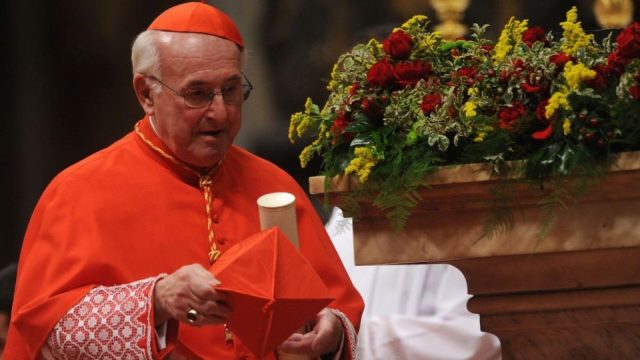
Cardinal Walter Brandmüller, president emeritus of the Pontifical Committee for Historical Sciences, said he is concerned about the direction bishops' conferences have taken over the past centuries. In an article published on the blog of Vatican journalist Sandro Magister, the cardinal wrote that since the late 19th century, especially in Europe, these conferences have adopted forms and procedures copied from political models. He described this as an expression of a progressive secularization in the understanding of the Church.
Against that political model, Brandmüller argued that the synods of particular Churches should recover their original importance, because they follow hierarchical structures that are genuinely ecclesial. Because their boundaries coincide with political borders, bishops' conferences have gradually displaced the role synods should have in the life of the Church, he said.
The article comes as synodality is at the center of much of the Church's internal debate. Brandmüller's proposal is to revive the function of synods as the proper settings for bishops to meet and decide, apart from the administrative logic that, in his view, now pervades the conferences. In the article he argued that the Church's structures must remain anchored in their theological foundations and must not give way to pressures from the contemporary political environment.
The model he defends is the provincial synod, which brings together the bishops of an ecclesiastical province under the presidency of the metropolitan. Its consultative and decision-making responsibilities concern the life of the Church ad intra: the doctrine of the faith, the sacraments, the liturgy and pastoral work, in contrast to the ad extra orientation of a bishops' conference. The article describes as a matter of great concern the usurpation of the individual bishop by a suffocating bureaucratic apparatus, something John Paul II warned about in the motu proprio Apostolos suos of May 1, 1998. Brandmüller had already spoken out against the drafts approved at the plenary assembly of the German Synodal Way held in Frankfurt. Participants there, among them most of the German bishops, voted by wide majorities in favor of blessing same-sex unions, changing the Catechism on homosexuality, ordaining women as priests, optional celibacy in the Latin Church and lay participation in the election of bishops.