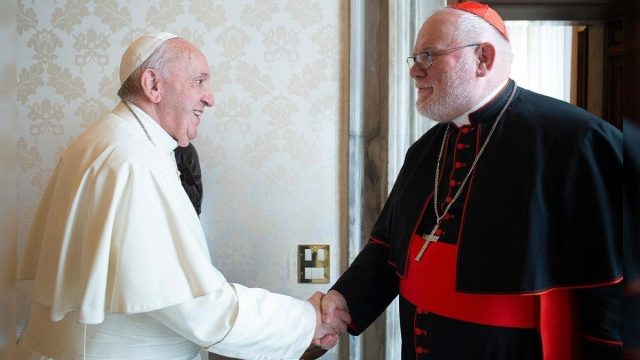
Cardinal Schönborn says Germany's synodal path ignored Pope Leo XIV's letter
Cardinal Christoph Schönborn, who retired last year after three decades as archbishop of Vienna, said in a newspaper interview that the letter Pope Leo XIV wrote to Catholics in Germany was not given the attention it deserved during the country's synodal path. He also said structural reform on its own is an illusion
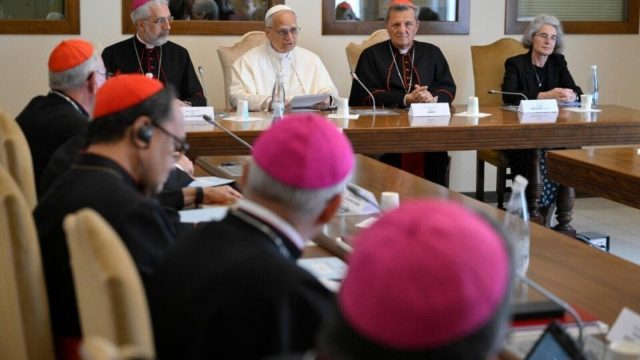
Cardinal Christoph Schönborn, who stepped down last year after three decades leading the Archdiocese of Vienna, Austria, spoke in a recent interview about renewal in the Church and about Germany's "Synodaler Weg," or synodal path, a reform process run by the German bishops and lay representatives. He said the "Letter of Pope Leo XIV to the People of God in Germany" did not receive the attention it deserved while that process was under way.
"If the message of Pope Leo XIV had been the leitmotif of the 'Synodaler Weg,' we would not be in the present difficulties facing this process," the cardinal told the newspaper Tagespost last Thursday. Still, he said, "it is not too late."
The 2019 papal message and its interpretations
In that 2019 text, Pope Leo XIV, whose pontificate ran from 2013 to 2025, said he was concerned about the aims of the "Synodaler Weg" and called for unity and evangelization, without prohibiting the reform process. The document has been read in very different ways over the years.
The illusion of structural reform
Schönborn said that relying on structural change alone to renew the Church is "an illusion." In his view, "the real strength comes from lived faith, from the sacraments." He also pointed to the vitality of many renewal movements in the Church today: the traditional orders, the new spiritual communities, "Katholische Aktion" (Catholic Action) and the many people who live their faith authentically in difficult circumstances.
"In God's garden many flowers bloom, but you also have to weed, because weeds grow," Schönborn said, using the image of a garden to speak about the need for discernment in Church reform.
On a Vatican post and the pontificate
On a possible role in Rome, Schönborn said he was relieved not to have taken on duties that would have required him to move to the Vatican. "I am grateful that I did not have to go down that road, since I do not see myself so much at a desk, perhaps for theology, but not for administrative work," he said.
He declined to pass judgment on the pontificate of Leo XIV. "Who am I to grade popes? I am glad not to get grades from them that are too negative," he said. He acknowledged that history also weighs the mistakes and weaknesses of popes, but said "the mystery of the Petrine office is much stronger."
Europe and its spiritual inheritance
The cardinal described the end of "Europe's hegemony" in the Church and in the world as "a historical justice." He said it was good that Europe no longer dominates the planet, because that dominance "was not so glorious." But he said the continent still has a spiritual and religious heritage it can offer, though to do so it must also learn to receive.
"Today Europe is the museum of the world. People come from everywhere to admire Europe, but in this museum there is still a living faith," Schönborn said, adding that "the strength from which Europe has drawn its great achievements and its culture is the Gospel."