Immaculate Conception and Christmas holidays vary across five Latin American countries in 2026
With December 8 falling on a Tuesday and Christmas on a Friday in 2026, Colombia, Argentina, Chile and Peru all mark the Immaculate Conception as a holiday, while Mexico makes only Christmas a mandatory day off

December 8, 2026, falls on a Tuesday, and December 25 falls on a Friday. The Immaculate Conception is a public holiday that year in Colombia, Argentina, Chile and Peru. It is not a holiday in Mexico, where Christmas is the only religious day off in December.
Colombia: two holidays, no official long weekend for the Immaculate Conception
Colombia has public holidays on Tuesday, December 8, for the Immaculate Conception, and on Friday, December 25, for Christmas. Both holidays stay on their fixed dates and are not moved to a Monday, so the Immaculate Conception does not create an official long weekend. Christmas does create one, from December 25 to 27. December 24 and 31 are not holidays, and any special working hours are up to each employer. With these two holidays, Colombia ends 2026 with 18 national holidays.
Argentina: fixed holidays and a tourism day
In Argentina, December 8 (the Immaculate Conception of Mary) and December 25 (Christmas) are feriados inamovibles, holidays that stay on their date even when they fall midweek. Monday, December 7, is also a non-working day for tourism purposes, under Resolution 164/2025 of the Jefatura de Gabinete, the office of Argentina's chief of cabinet. The result is a four-day weekend, from Saturday, December 5, to Tuesday, December 8.
A non-working day is not the same as a holiday. Employers decide whether to open, and workers who take the day off receive their normal pay only if their company says so.
Chile: Christmas off for retail workers, stores may open on December 8
Chile has public holidays on Tuesday, December 8, and Friday, December 25. They are the last two national holidays of the year. The difference between them affects retail. Christmas is a feriado irrenunciable, a holiday that cannot be waived, so retail workers must not work that day, with some exceptions. December 8 does not have that status, and stores may open. Workers who can get Monday, December 7, off will have four days off in a row, although that Monday is a regular working day. Christmas creates a three-day weekend.
Peru: three holidays in December
Peru has three national holidays in December: Tuesday, December 8 (the Immaculate Conception), Wednesday, December 9 (the Battle of Ayacucho) and Friday, December 25 (Christmas). Because December 8 and 9 fall back to back, the calendar gives workers two consecutive days off in the middle of the week.
In the private sector, Legislative Decree 713 gives workers the right to their regular pay on a holiday without working. Workers who do work on a holiday and do not get a substitute day off are entitled to pay for that day plus a 100 percent premium, which in practice adds up to three days' pay.
Mexico: the exception, with only Christmas a mandatory day off
Mexico is the exception among the five countries. December 25 is one of the seven mandatory rest days listed in Article 74 of the Federal Labor Law, but December 8 is not on that list. Anyone who works on December 25 is entitled to their pay for the day plus an additional payment equal to double the daily wage. December 24 and 31 are not in Article 74 either.
What each date marks
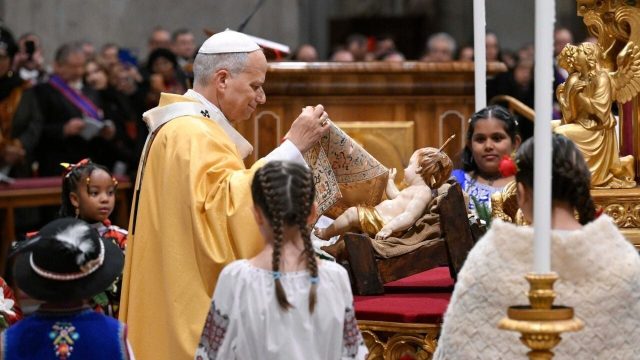
On December 8, the Catholic Church celebrates the Immaculate Conception of the Virgin Mary. On December 25, it celebrates the birth of Jesus Christ. Both dates appear on the civil calendars of these countries because of their religious roots. But each country sets its own holidays by law or decree, and not all of them coincide with the Church's holy days of obligation.
Based on reporting by Laura Clavería for Iglesia Noticias. This article was translated and adapted from Spanish with the help of artificial intelligence.