US bishops back sainthood cause of Pennsylvania teenager María Middleton
The bishops voted to advance the cause of a Doylestown teenager who died of a brain tumor in 2020, after giving away her Make-A-Wish grant and writing to her archbishop during the pandemic to ask that churches reopen
The United States Conference of Catholic Bishops (USCCB) voted November 17 to advance the cause for the beatification and canonization of María Middleton, a young laywoman from Doylestown, Pennsylvania. She died at 18 of an inoperable brain tumor.
The bishops voted at their fall plenary assembly in Baltimore. Bishop Thomas J. Paprocki of Springfield, Illinois, presented the cause, and Archbishop Nelson J. Pérez of Philadelphia took part. The cause is expected to be formally opened soon.
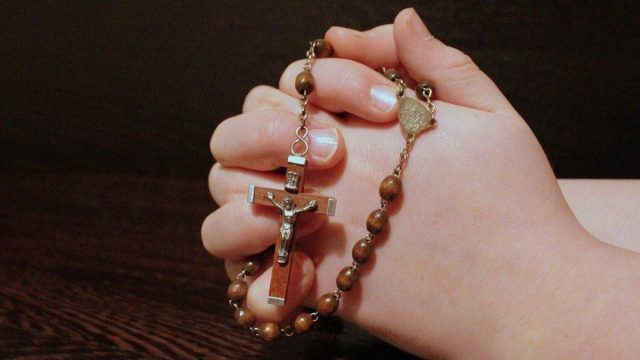
María was born September 10, 2002. Her family taught her from an early age the importance of a personal relationship with God. From the age of 3, her mother took her every week to the National Shrine of Our Lady of Czestochowa, where she learned the Divine Mercy Chaplet and the rosary. As a teenager she was a strong student and class president, and she was steadily involved in service. She organized clothing drives for the poor, co-chaired a charity dance marathon for children with cancer and neurological diseases, and served as a cantor and altar server at her parish.
A spiritual battle
When she chose St. Joan of Arc as her confirmation saint, María said: "I know I probably won't be asked to fight a physical battle, but I will be asked to fight a spiritual battle." In January 2019, at 16, she was diagnosed with an inoperable tumor in her brain stem. Doctors gave her nine to 12 months to live.
She kept up her acts of Christian service after the diagnosis. Nine months later she traveled to Uganda, where students at the Academia Papa Juan Pablo II (Pope John Paul II Academy) had been praying for her. There she met a student whose brother had sickle cell anemia. Instead of keeping her Make-A-Wish grant for herself, María used it to help the student's family and the school.
The Eucharist became a central concern in her final months. During the COVID-19 pandemic, when churches were closed, she wrote to Archbishop Pérez asking to receive Holy Communion and urging that churches reopen. Pérez responded by going to her home himself to bring her Communion and to accompany her on her way to eternal life.
Hope to the end
As the disease progressed, María gradually lost the ability to walk, move her arms, hear, swallow and speak. Rather than give in to despair, she offered up her illness for others, convinced that her suffering could bring other people closer to God. She did not see it as a punishment but as a path to union with God, as long as it was accepted without bitterness. When the tumor had made even writing difficult, her last words were "Think hope." The phrase is engraved on her headstone. It is also the name of the Think Hope foundation, which her parents, Susan and Brian Middleton, set up to fund community programs in education, care for the elderly and street ministry.
María died October 8, 2020, surrounded by family and friends, who have testified to her joy, her total surrender to God's will and her perseverance in the faith. She was 18.
Since then, her parents have told her story in the book "Think Hope: Maria Middleton's Life of Unyielding Trust in God." They regularly hear from people who say her example led them to return to practicing their faith or to draw closer to the Church. Graces attributed to her intercession have been documented from the United States, Italy, Poland and Uganda. Many people visit her grave every year.
The cause
Paprocki placed the cause in the Church's tradition of recognizing holiness in young people, citing St. Joan of Arc, St. Aloysius Gonzaga, Sts. Francisco and Jacinta Marto, two of the children who reported the apparitions at Fatima, and St. Carlo Acutis. He said contemporary models of holiness were urgently needed in response to data on depression, anxiety, loneliness and suicide among young Americans.
"María offers a contemporary witness to all Catholics of the redemptive power of suffering," Paprocki said. He added that statistics on young people's mental health point to "the urgent need to highlight examples of young saints who can bear witness to the power of faith, hope and love."
"If María's holiness were recognized by the Church, she would be a modern witness of hope, especially for young people searching for meaning and purpose in life," he said.
The next step is the diocesan phase. The Archdiocese of Philadelphia will investigate María's life and her reputation for holiness to determine whether she practiced the virtues to a heroic degree. If its conclusion is favorable, the case will be sent to the Holy See's Dicastery for the Causes of Saints.
Brian Middleton described his daughter as someone who lived "with one foot in heaven and one on earth" and said he was grateful. "Our daughter will be on the path to canonization, to becoming a saint in the Catholic Church. There is no worldly experience we can compare it to," he said.
Her mother, Susan, said: "María had a complete and total surrender to God. That was her source of power and strength. María doesn't belong to us anymore. She belongs to the world."
Based on reporting by Almudena Rodrigo for Iglesia Noticias. This article was translated and adapted from Spanish with the help of artificial intelligence.