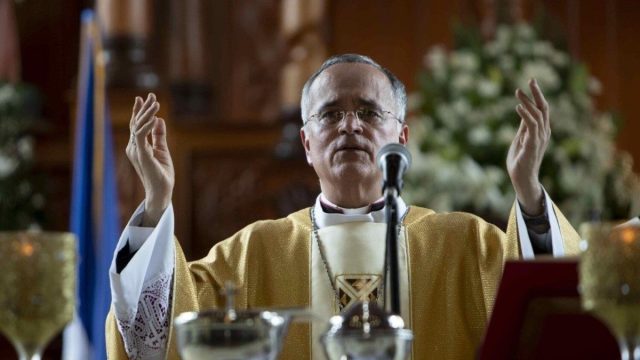
Central American bishops tell exiled Nicaraguan priests "you are not alone"
The region's bishops have written to priests forced out of Nicaragua to offer their support. Counts of clergy and religious who have been exiled or expelled from the country range from 130 to 309
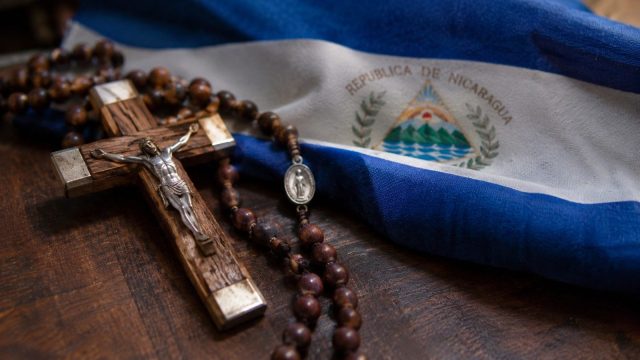
The bishops of Central America have written a letter to Nicaraguan priests who were forced to leave their country. The letter, dated November 25, 2026, is signed by Bishop Javier Gerardo Román Arias, president of the Episcopal Secretariat of Central America (SEDAC), which brings together the region's bishops, and by its secretary, Bishop Daniel Francisco Blanco. It came a few days after SEDAC's 84th assembly, which was held November 16-20 in Costa Rica.
A message of solidarity
"You are not alone. You are our brothers. Your suffering pains us, and your lives matter to us," the bishops write. The letter thanks the priests for their "fidelity" and their service and encourages them not to hide their weakness: "You do not need to hide your fragility to be good shepherds." It also asks them to stay in touch with one another: "Seek each other out, listen to each other, pray together."
Two exiled bishops at the assembly
More than 60 bishops from the region attended the meeting in Costa Rica. Among them were two Nicaraguan bishops who live outside their country: Bishop Carlos Herrera of Jinotega, who lives in Guatemala, and Bishop Isidoro Mora of Siuna, who is based in Costa Rica. None of the five bishops who remain in Nicaragua attended.
Seeking dialogue with the government
Herrera said he met Pope Leo XIV on October 12 and told him about the situation of the Church in Nicaragua. According to Herrera, the pope is looking for ways to try to open a dialogue with the government, which has not been possible so far.
Herrera also spoke about Bishop Abelardo Mata, the bishop emeritus of Estelí. Mata has been confined to his home in Tisma, in Nicaragua's Masaya department, since he was detained in June this year after asking for prayers for the persecuted Church. In July, SEDAC asked that he be allowed to receive medical care. He is 80 and has diabetes and a heart condition.
Conflicting counts of exiles
There is no single figure. The group Colectivo Nicaragua Nunca Más (Nicaragua Never Again Collective) estimates that about 140 priests from various dioceses have been exiled or have gone into self-imposed exile since 2018. Other counts put the number of priests, monks and nuns who have left the country at about 130.
Martha Patricia Molina, a researcher who lives in exile and writes reports on attacks on the Church in Nicaragua, gives a much higher figure. In February 2026 she raised her count to 309 religious men and women who have been exiled, expelled or barred from returning to the country. She said more than 95 percent of them are Nicaraguan. Her July 2024 count listed 143 priests forced to leave between 2018 and that year. Her November 2024 count put the number at 261 religious men and women. The figures differ mainly because each count includes different groups: some count only priests while others also count religious sisters, and the counts differ on whether they include voluntary exile, expulsion or bans on entry.
Timeline of the conflict
The conflict dates back to 2018, the year from which attacks and exiles have been counted. Events since then include the expulsion of the nuncio in March 2022, which the Vatican called "grave and unjustified"; the transfer to Rome of 12 priests released from prison in October 2023; and the banishment of Bishop Rolando Álvarez in January 2024, after 17 months in prison. Seven more expelled priests arrived in Rome in August 2024.
The Holy See's recent statement
The Holy See spoke about Nicaragua again this fall. On September 26, at the UN General Assembly, Cardinal Pietro Parolin, the Vatican secretary of state, said the Holy See "is following the situation in Nicaragua with particular concern." He also repeated "its constant appeal to pursue a path of respectful and constructive dialogue with the country's authorities." His reference to Nicaragua was brief and came during a review of several regional crises.
No mention of the government
The Central American bishops' letter does not mention the Nicaraguan government by name, and it does not describe specific cases. It expresses closeness to the priests and asks the Churches of the region to welcome and support them.
Based on reporting by Javier Ruiz Arregui for Iglesia Noticias. This article was translated and adapted from Spanish with the help of artificial intelligence.