Bishop Báez says forgiveness does not mean giving up on justice
Preaching at a Miami parish on September 13, Bishop Silvio José Báez, the exiled auxiliary bishop of Managua, Nicaragua, said Christian forgiveness does not cancel the demand for justice, and that criminals must answer before independent courts
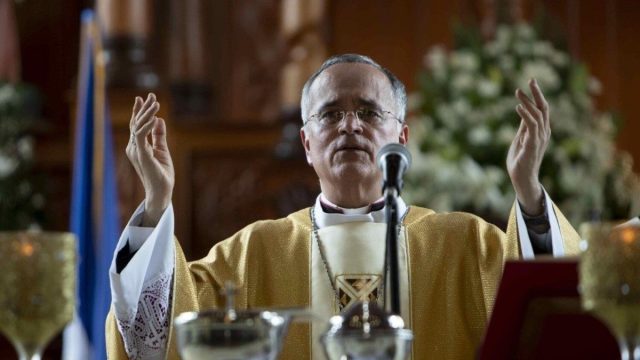
Bishop Silvio José Báez, auxiliary bishop of Managua, said in a homily on Sunday, September 13, that "God's mercy is not an excuse for the impunity of criminals" and that "an injustice that is not repaired undermines life together in society." He was preaching at Mass at St. Agatha parish in Miami, Florida.
Báez took as his starting point the day's Gospel, Matthew 18:21-35, in which Jesus answers Peter's question about the limits of forgiveness. "For Jesus, the only limit to forgiveness is not to set any limits," the bishop said, stressing how radical the Gospel's demand is on this question.
Báez has lived in exile since April 2019, after receiving death threats from Daniel Ortega's regime in Nicaragua. "God always goes beyond strict justice. His justice is mercy," he said. Forgiveness does not come from a person's own generosity but from grace already received, he added: "we do not forgive because we are generous, but because we have been forgiven first."
The danger of the spiral of evil
Báez warned against answering evil with more evil. Doing so, he said, "does not heal the wound received, or restore the dignity that was lost, or give the strength to begin again." He went further: "being cruel, hating, keeping resentment in the heart and wanting revenge are actions that deeply damage our lives and cause serious emotional imbalances."
Against that spiral, the bishop said that "only forgiveness defuses the spiral of evil at its root," and that forgiving is "a path of motherhood and of humanity." "Forgiving is not weakness," he said, adding that it demands "enormous spiritual strength and moral courage." Those who forgive do not lower themselves, he said; they come closer to human fullness and reflect God's mercy.
Forgiveness is not the same as justice
Báez addressed the relationship between forgiveness and justice directly. "To speak of forgiveness is not to deny justice," he said. Evil and injustice provoke legitimate outrage, he said, but "not even there can we give up forgiveness and resign ourselves to the logic of reprisal and hatred." He added: "forgiving is not forgetting; it is remembering in another way, without bitterness or desire for revenge."
"Whoever has committed a crime must answer before independent courts, with due process and the right to a defense," he said. "The corrupt, the unjust, torturers and criminals must face the consequences of their actions and give an account before the law."
Báez closed by saying that "only a heart touched by God's mercy can hold together the demand for truth and the capacity to forgive." He asked the Virgin Mary to "obtain for us a heart able to forgive without growing tired and to demand, without hatred, the justice the world so badly needs."