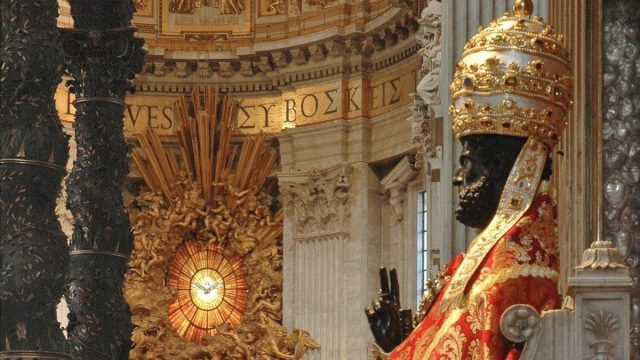
St. John Lateran, not St. Peter's, is the pope's cathedral in Rome
The Catholic Church marks the dedication of the Basilica of St. John Lateran on November 9. The Rome basilica holds the cathedra of the bishop of Rome and the title "Mother and Head of all the Churches of the City and the World."
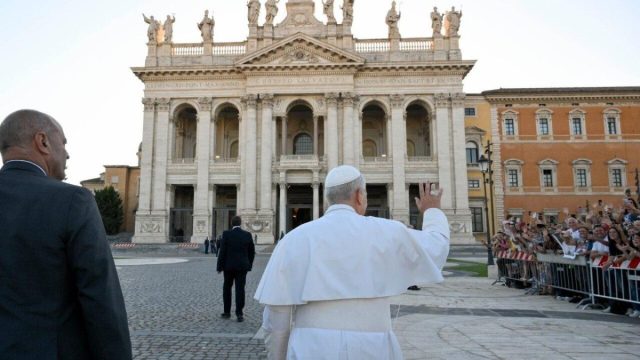
St. John Lateran is the cathedral of the bishop of Rome, a title held by the pope, even though St. Peter's is one of the best-known churches in Catholicism.
Every November 9, the Catholic Church celebrates the feast of the dedication of the Basilica of St. John Lateran, a building with roughly 1,700 years of history. St. Peter's Basilica at the Vatican is the most widely recognized church in the world, but it is not the cathedral of Rome. That title belongs to St. John Lateran, known as "Mother and Head of all the Churches of the City and the World."
Why St. Peter's is not the cathedral
The answer lies in what the word cathedral means in canon law. A cathedral is the church that holds the cathedra, or seat, of the bishop, the symbol of his mission to teach, sanctify and govern the diocese entrusted to him.
In Rome, that episcopal cathedra is in St. John Lateran. St. Peter's is a papal basilica tied to the burial place of the apostle, but it does not serve as the cathedral of the bishop of Rome.
That is why St. John Lateran carries the title of mother and head of all churches, a title many visitors to Rome may find surprising. During the celebration of its dedication on November 9, 2025, Pope Leo XIV said the basilica should be understood not only as a historic monument but as a representation of the living Church, made up of the faithful and built on Christ.
Founded under Constantine
The origins of St. John Lateran go back to the early fourth century. In 313, the emperor Constantine and Licinius agreed on a policy of religious tolerance that allowed Christians to practice their faith in public.
Constantine gave Pope Miltiades a property that had belonged to the Roman family of the Laterani. A basilica, a baptistery and a residence for the bishop of Rome were built on the site. The dedication of the church is traditionally dated to around 324, during the pontificate of Sylvester I.
The church was first dedicated to the Most Holy Savior. The present name came later, when the dedications to St. John the Baptist and St. John the Evangelist were added. Its full name is the Papal Archbasilica of the Most Holy Savior and of Saints John the Baptist and John the Evangelist in the Lateran.
The construction marked a change for Christians in Rome, who went from meeting in discreet places to having large buildings set aside publicly for worship.
Center of papal life for centuries
St. John Lateran was not only a place of prayer. Throughout the Middle Ages, the Lateran complex was the main residence and seat of government of the popes.
The old Lateran Palace, next to the basilica, housed the papal residence for centuries, before the Vatican took on the role it has today.
Five ecumenical councils were held at the Lateran between the 12th and 16th centuries. Among them was the Fourth Lateran Council, convened by Innocent III in 1215, which dealt with major doctrinal, disciplinary and pastoral questions for the medieval Church.
In 1986, John Paul II said that for roughly a thousand years much of the history of Christian Rome revolved around this basilica. Despite the successive changes in the popes' residence and the changes in the city, St. John Lateran kept its status as the cathedral of Rome.
Architecture and art
The basilica visitors see today is the result of many interventions over the centuries. The original building was damaged and went through reconstructions and renovations that gradually changed its appearance.
One of the major changes came in the 17th century, when the architect Francesco Borromini reworked the interior at the request of Pope Innocent X. The church preserves elements from different periods and is one of the major complexes of Rome's religious heritage.
The central nave holds monumental statues of the 12 apostles, and the decoration and architecture reflect the importance successive popes attached to the site. Next to the basilica stands the Lateran baptistery, linked to the first centuries of Christianity and to the celebration of baptism.
What the November 9 feast marks
Dedication is the solemn rite by which a church is permanently set aside for divine worship. Its anniversary recalls the religious meaning of the building as a place for the celebration of the sacraments, for prayer and for the gathering of the Christian community. The basilica is in Rome, but its feast is celebrated throughout the Church of the Roman rite because of its connection to the ministry of the pope and to the unity of Catholics.
The feast invites the faithful to remember that the Church is made up not only of material buildings but of the people who live and hand on the faith.
Two basilicas with different roles
St. John Lateran and St. Peter's are two of the four major papal basilicas in Rome, along with St. Mary Major and St. Paul Outside the Walls. Both are closely tied to the history of the papacy, but they serve different purposes.
St. Peter's hosts many celebrations led by the pope and stands over the place identified by tradition as the burial site of the apostle Peter. St. John Lateran is the cathedral of the bishop of Rome and the seat of his episcopal cathedra.
Based on reporting by José García for Iglesia Noticias. This article was translated and adapted from Spanish with the help of artificial intelligence.