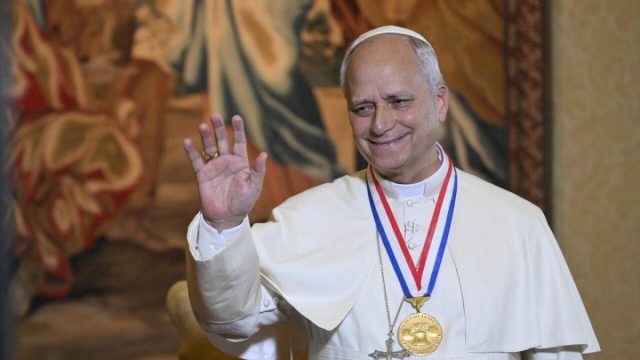
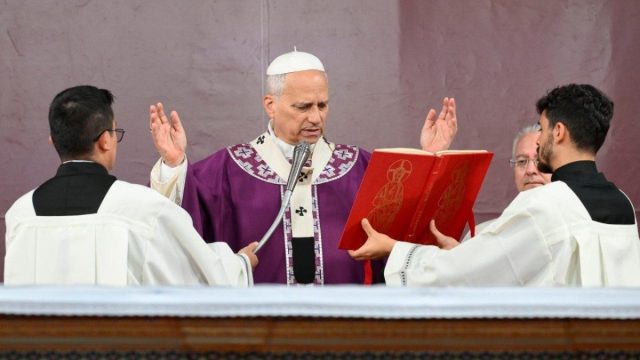
Coordinator describes plane fault and missed meals during Pope Leo XIV's trip to Spain
Yago de la Cierva, who ran Pope Leo XIV's 2026 visit to Spain, gave a behind-the-scenes account of the aircraft breakdown in the Canary Islands, the hours the pope went without food and his greeting of 95 sick people
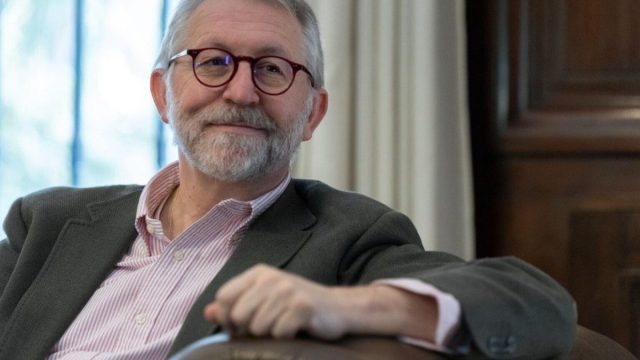
Yago de la Cierva, a Spanish professor of communication and crisis management who teaches at Villanueva University in Madrid, served as general coordinator of Pope Leo XIV's apostolic trip to Spain in 2026. The job meant managing thousands of people, four dioceses, large-scale stages and an aircraft breakdown in the middle of the visit. In remarks reported by Rome Reports en Español, De la Cierva gave a detailed account of what happened behind the scenes during days that, in his view, made Leo XIV pope in the eyes of the world.
For De la Cierva, the visit worked not mainly because of the organizational machinery but because of how the pope and the Spanish people came together. "The most important thing at a party is not the food, it is not the drink, it is not the music, it is not the temperature. The most important thing at a party is the guests," he said, concluding that the organization was there to serve that meeting, like someone introducing two people who hit it off. Leo XIV was relatively unknown to Spaniards when he arrived, barely a year into his pontificate. The earlier work on social media was, according to De la Cierva, the quiet factor that prepared the ground. It introduced his biography, his priorities and the purpose of the trip far enough in advance for people to connect with him before he landed.
Pope Francis had decided not to visit Spain, which caused some unease among Spaniards. Leo XIV arrived after 15 years without a papal visit, and that helped make the welcome especially warm. The coordinator also pointed to the tone the pope chose in his speeches: instead of listing the failings of the country or of the Church, he recalled high points of Spanish history. The address in Parliament was, in De la Cierva's words, "a celebration of Spain," followed by a list of tasks for the future.
Up close, De la Cierva noticed several things about the pope. First, Leo XIV would rather listen than talk. "If you want the pope to say something to you, keep quiet, because he prefers you to talk," he said. Second, his full attention to each person who greets him, a concentration De la Cierva took to be prayer. Third, his refusal to hurry. On the first day of the visit in Madrid, the pope greeted a group of 95 sick people at the nunciature. When the head of papal protocol warned him they were running late, Leo XIV answered: "We are not in a hurry." De la Cierva said the group had been presented to the Holy See as a simple blessing on the way out, when in fact there were 95 sick people there. The pope greeted every one of them.
He also recalled the pope's sense of humor. In a relaxed moment after an address to the Spanish bishops, someone handed him a microphone and asked him to say something more. Leo XIV said that before traveling to Spain he had asked an artificial intelligence tool what he should say to the Spanish bishops, and the system had answered by talking about Pope Francis. "I think there is another pope," the pope said wryly. De la Cierva drew his own conclusion from the episode: the pope was using the free version of the tool, not the paid one, which in his view fit his missionary spirit. "I told the journalists traveling with him: 'Hey, pay for his premium subscription, please,'" he joked.
On the incident with the Iberia aircraft, which could not take off from the Canary Islands because of an alert in one of its engines that turned out to be a faulty sensor, De la Cierva defended the airline. "I congratulated Iberia," he said, because the company acted on its fundamental principle, safety. The engine was in perfect condition and that same plane had flown that morning, but the sensor showed a problem and the airline did not ignore it. His only criticism was that Iberia had no replacement aircraft in the islands, only one three hours away on the mainland. They also looked into whether the local carrier Winter had a plane available, but it was not big enough to carry the whole group.
While they tried to sort out the situation, the pope had been without food since 4:15 p.m. He had eaten very little at breakfast, just yogurt, cereal and coffee, and had not had lunch because he was expected to eat on the plane. The Mass had run long and lunch was never served. The king of Spain, who was in the farewell line with the rest of the group, went over to the pope and offered him a room where something had been prepared just in case. The pope resisted at first, worried about his aides, who would have to wait in a smaller plane, but they convinced him it was better for him to go. Days later, Leo XIV sent a letter to Iberia thanking the airline for how it had treated him throughout the visit.
De la Cierva also said the pilot of the Madrid to Barcelona flight invited the pope into the cockpit, set up a seat for him and told him: "You have no responsibility here, you have come to enjoy yourself." The pope, who likes engines and mechanics, spent a relaxed stretch asking what each control was for and was able to speak with the pilot of the F-18 escorting the aircraft. According to De la Cierva, it was a break after four very intense days in Madrid. Iberia also carried everyone traveling with the pope free of charge on the trip's four legs.
Among the logistical problems that never became public, De la Cierva cited the slowness of the company building the stages in Madrid. The first was delivered the day before the event. The second, for Sunday's Mass in Plaza de Colón, arrived the night before, which made it impossible to rehearse at the planned site. He also mentioned problems with the computer system for registrations, with coordination among the four dioceses involved and with lining up all the sponsorships. In the quick-answer round at the end of the interview, he named the tensest moment of the trip as not knowing whether the Colón stage would be finished in time.
On communications, De la Cierva said the key was anticipating what journalists would need: a good press center, open channels, good press platforms and someone always available. He said the Spanish media behaved respectfully and that the criticism there was aimed not at the trip itself but at the pope's positions on issues such as the defense of life, care for migrants and his rejection of abortion. "If they criticize me, let them criticize me for what I really represent," he said, paraphrasing his own approach to communication. He did acknowledge that the handling of the abuse question was not entirely satisfactory: the Holy See was slow to announce that there would be a meeting with victims, which created unnecessary tension. He noted that in France, for the later trip, that meeting was announced three months in advance, and he said it was good that the Holy See was applying the lessons learned in Spain.
On the Sagrada Familia, De la Cierva said the foundation had spent two years preparing the event, knowing in advance when the centenary of Antoni Gaudí's death would fall and when the Tower of Jesus Christ would be finished. They first secured Pope Francis's presence and then Leo XIV's. The Catalan regional government paid for that part of the visit because of the tourist and cultural value of the building. It was already the most visited monument in Spain, and in De la Cierva's view it has become a global icon after the images produced during the papal visit.
De la Cierva said the visit had two general coordinators: himself as the lead and a deputy with equivalent duties. Both admitted they had wanted to quit several times, but never at the same moment: when one flagged, the other held on. Four weeks before the trip began, both wanted to leave at once, but by then they could not. He described the method he used: divide the work by phases and by the person responsible, so that with seven days to go, each person knew exactly what to do and could handle it without escalating decisions. "A papal trip is like eating an elephant: the only way is to cut it into little pieces," he said. He drew on what he had learned at World Youth Day in Madrid in 2011, the World Meeting of Families in Philadelphia in 2015 and World Youth Day in Krakow, among other events.
Asked what he meant by saying that "the pope became pope in Spain," De la Cierva said Leo XIV had made three earlier trips. One was inherited from Pope Francis, to Turkey, to which he added Lebanon. Another was a short visit to Monaco, and the third a more substantial trip to four African countries. Spain was different. The pope himself took the initiative to go to Madrid, without the city's archbishop asking him to. He told the cardinal of Madrid that he wanted to visit the capital, saying he wanted to use a large European city to send messages to the whole continent. He could have chosen Berlin or somewhere else, but he chose Madrid. In Spain, Leo XIV spoke for the first time with European politicians, in many cases people diametrically opposed to Christian anthropology, and he did it, according to De la Cierva, "extremely well."
Looking ahead to the next trip, to Uruguay, Argentina and Peru, De la Cierva said each destination has its own complexity. Leo XIV's return to Peru, his country of origin, will be, in his words, "overwhelming." Uruguay has not received a pope since 1988, nearly two generations. Argentina has two dimensions. One is the Church side, marked by the figure of Pope Francis, whom many Argentines loved and many others did not. The other is political, with President Javier Milei as the pope's counterpart in a very different situation from previous years.
In the closing round of short answers, De la Cierva named the pope's greeting of the sick as the best moment of the trip, the inauguration of the Sagrada Familia as the image that stayed with him most, and people's reaction as what turned out best compared with his expectations. The first thing he did when he got home after it was all over was get into bed. To describe Leo XIV he chose one word: kind. To describe what organizing a papal trip is like, he chose another: madness.
Based on reporting by Lucas Alonso for Iglesia Noticias. This article was translated and adapted from Spanish with the help of artificial intelligence.