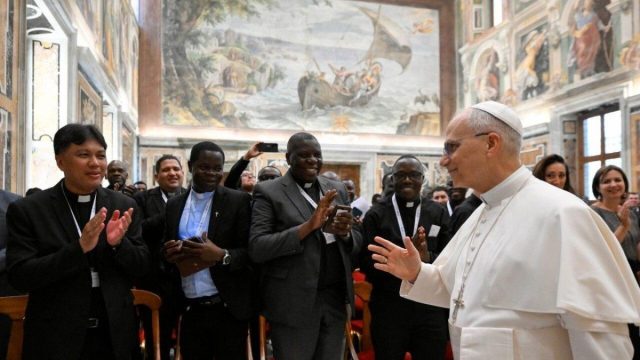
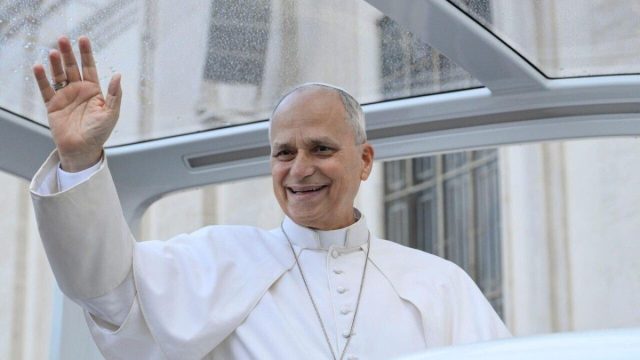
294 Spanish missionaries await Pope Leo XIV's arrival in Argentina
Pope Leo XIV begins his trip to Uruguay, Argentina and Peru tomorrow. More than 40 percent of Uruguayans say they have no religion, and 294 Spanish missionaries are waiting for him in Argentina
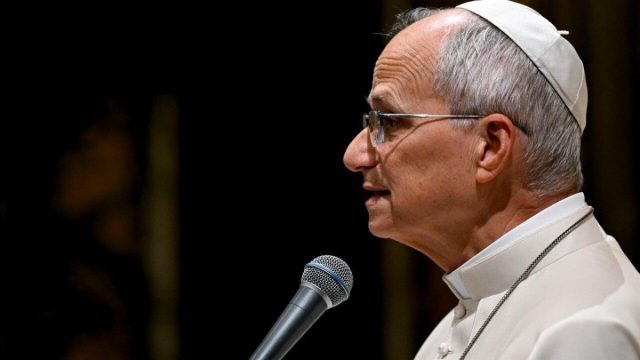
Pope Leo XIV's trip to Uruguay, Argentina and Peru begins tomorrow. He lands first in Uruguay, one of the most secularized countries in the Americas, where more than 40 percent of the population say they have no religion. Across the Río de la Plata, Argentina is waiting for the pope with 294 Spanish missionaries working in the country, according to figures from Obras Misionales Pontificias (OMP). OMP is the Spanish branch of the Pontifical Mission Societies, the Church's agency for supporting missionary work.
Uruguay: secularization and religious expression in public spaces
Fifty Spanish missionaries are currently working in Uruguay, according to OMP's database. José Luis Arias, an Augustinian missionary in Montevideo, put it plainly to OMP: "we are in the context of a country and a Church that are very small." He drew a comparison: "We are talking, for example, about a Peru of 34 million people, and a Uruguay of three and a half million."
Uruguayan secularization has deep historical roots. "In the last years of the nineteenth century and the first years of the twentieth the country went through a transformation, a shift toward secularization, and that shows in the population, in the culture, in many dimensions and aspects," Arias said. One of the clearest signs is that Christian feast days have disappeared from the official calendar: "Here December 25 is Family Day; Holy Week does not exist as such either, it is Tourism Week."
People still mark those dates in popular celebrations, but "the state and public spaces have removed religious expressions." For Arias, that raises a question with no easy answer: "You would have to ask whether a believer in Uruguay is truly free to express his religious faith in public spaces; it is not easy."
Arias hopes Leo XIV's visit will change some of that. "Because of his profile as a man of dialogue and consensus, who at the same time is courageous, the pope is going to help give legitimacy to expressing religious convictions publicly," he said. "I think that is the great impact his visit will have on Uruguayan society."
The challenge of education in a secular setting
Secularization poses a particular challenge in education, made harder by the country's low birth rate. The Augustinians, who run a parish and a school in Montevideo, have been working at it for years. Arias met Leo XIV at international congresses of Augustinian schools. "We were always looking for ways to shape our educational programs for a society that does not choose the school because it is especially religious, but for the integral education it offers," he said.
"Education has to take on that dialogue between reason and faith, so Augustinian, that dimension of educating the whole person in all his dimensions: intellectual, moral, spiritual, physical," he said. "That is our challenge as educators in Augustinian schools."
Argentina: hoping to be confirmed in the faith
Bishop José Vicente Conejero, a Spanish missionary from Plasencia who arrived in Argentina 50 years ago, was ordained a bishop in 1997 and appointed bishop of Formosa the following year. He spoke to OMP from there as he waits for the pope to arrive.
"We were sorry that Pope Francis could not come to his native country while he was pope, but he loved his Argentine people very much," Conejero said. "Now Leo XIV will visit this country. All of us, with great expectation and much joy, want him to come to us and confirm us in the faith, because that is the mission of the Successor of Peter."
Issues the pope will raise
The Church in Argentina has identified the central issues ahead of the visit. "In the prayer we have been praying for weeks as preparation for his coming are the themes I think the pope may bring out," Conejero said. Among them are "the urgency of putting the infinite dignity of the person at the center, the search for the common good and for dialogue, the preferential option for the poor, the little ones and the sick."
Conejero plans to attend nearly every event. He singled out the pope's visit to the Cottolengo Don Orione in Claypole, a place he described as "a whole city" where "the special brothers and sisters are, the poorest of all. They should hold a preferential place in our lives."
He urged the faithful to get past the financial and logistical obstacles and come to the events in person. "It is worth it. For those of us who have faith the presence of the pope is very important, and all the difficulties should be overcome," he said.
Based on reporting by Javier Ruiz Arregui for Iglesia Noticias. This article was translated and adapted from Spanish with the help of artificial intelligence.