US archbishops urge Catholics to let faith shape their votes in the midterms
Days before the 2026 midterm elections, the US bishops' conference released video messages in which the archbishops of Portland, Baltimore and Louisville ask Catholics to let their faith shape their political decisions, not the other way around
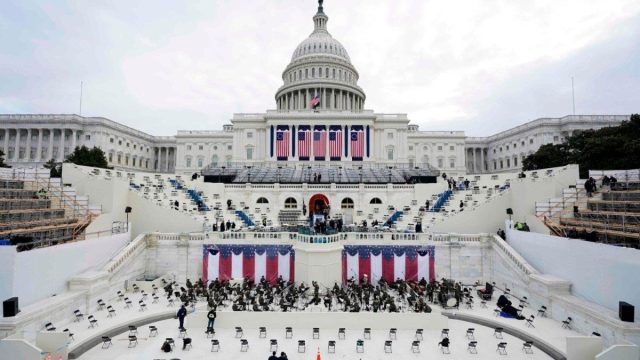
Days before the 2026 midterm elections, the United States Conference of Catholic Bishops (USCCB) has released a series of videos in which several archbishops ask the faithful to form their consciences in the light of their faith before they vote. The elections could serve as a referendum on President Donald Trump's second term, which has been marked by the start of a war with Iran and rising prices for fuel and other consumer goods.
Sample's proposal: Christ before party
Archbishop Alexander Sample of Portland, Oregon, chairman of the USCCB's religious liberty committee, posted his message on October 26. He asked Catholics to think of themselves first as disciples of Jesus Christ, second as American citizens and only third as members of a political party. He told them to start from their personal relationship with Christ and let that faith shape how they see social and political questions, rather than starting from a party platform.
Sample also said that no political party in the country fully reflects Catholic social teaching.
Moral conscience as a guide
Also on October 26, Archbishop William Lori of Baltimore, a former vice president of the USCCB, focused on the role of moral conscience. He described it as the part of a person that points toward the good and away from evil, and as the place where God speaks and his word echoes in the heart.
Lori said that at a time of constant political turmoil and nonstop news cycles, citizenship requires slowing down and practicing discernment. He cited St. Paul's exhortation to hold fast to what is good. He described faithful citizenship not as a list of prohibitions or voting instructions but as an invitation to know what the Church teaches, so that Catholics can discern prayerfully about ballot measures or candidates. "It's not a voting guide," he said, but something meant to present a vision of the United States at its best. Lori added that the bishops trust their people and that they issue messages about voting periodically.
Further calls to discernment
Archbishop Shelton Fabre of Louisville, Kentucky, released a separate video asking Catholics to put the desire to be the best possible disciple of Jesus Christ at the center of every decision they make. Fabre said participation in public and political life exists to promote the common good and to remind everyone in politics that the dignity of each person is a supreme value.
Several bishops have also asked the faithful to pray in the days before the vote, particularly about ballot initiatives on abortion and other moral questions before voters in various states.
Voting as a sacred act
Mariann Budde, the Episcopal bishop of Washington, D.C., published a reflection describing voting as an act of sacred trust. Budde recounted the story of a listener to the public radio program 1A who remembered how her father took her to vote as a child in the 1950s, with the same solemnity as going to church. They dressed for the occasion and went to a polling place set up in a local fire station.
Budde encouraged those who had not yet voted to do so with that same dignity. She said that on election day the Episcopal Benedictine community in Omaha, Nebraska, would hold an online prayer vigil from 9 a.m. to 9 p.m. Eastern time, with bishops and priests from around the country taking part, including herself at 6:30 p.m.
Several analysts predict a significant Democratic victory in the midterms, partly because of Trump's low approval ratings halfway through his second term. The election tracking site Decision Desk HQ estimated on October 29 that Democrats had an 80 percent chance of winning a majority in the House of Representatives, and it also projected likely Democratic wins in the Senate.
Based on reporting by Laura Clavería for Iglesia Noticias. This article was translated and adapted from Spanish with the help of artificial intelligence.