Pope Francis's diary records his election as pope in a single sentence
The personal diary Jorge Mario Bergoglio kept until August 2024, now published as a book by the Vatican, gives his 2013 election one line and spends more space on his parents
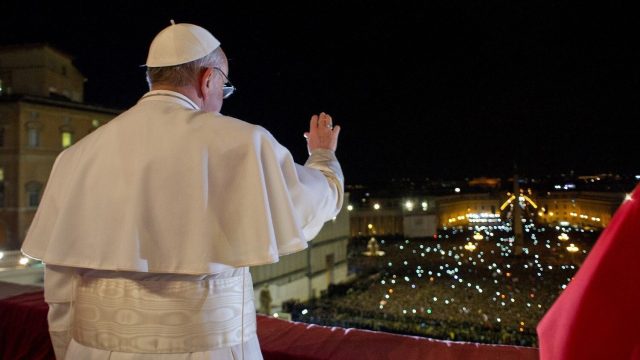
Jorge Mario Bergoglio kept a personal diary for decades. It shows that on the eve of the March 2013 conclave, the then-archbishop of Buenos Aires was not thinking about possible candidates for the papacy. He was remembering his parents.
The diary is the basis of the book El diario personal del papa Francisco (The Personal Diary of Pope Francis), published by the Libreria Editrice Vaticana, the Vatican's publishing house. Cardinal Víctor Manuel Fernández, prefect of the Dicastery for the Doctrine of the Faith, edited the volume. Its entries run from long before the election to August 18, 2024.
One line for the resignation, one for the election
On March 11, 2013, in Rome, Bergoglio wrote that he had chosen to make an effort to remember his family rather than dwell on the names being mentioned as Benedict XVI's successor. That day was the 55th anniversary of his arrival in Córdoba, Argentina, with his parents to enter the Society of Jesus, the Jesuit order. "So many memories! How many hopes they had..." he wrote. He added that he had asked the Lord to grant them great joy, and acknowledged that he had not lived up to the dreams they had held.
He recorded Benedict XVI's resignation in a single sentence, in an entry dated February 12, 2013: "Yesterday the pope resigned." His own election got no more space. On July 21, 2013, four months after the conclave, he wrote briefly that he had been elected pope on March 13.
Spiritual priorities
According to Fernández, Bergoglio gave those events the same weight as news from the people closest to him, such as the death of an acquaintance's relative or a visit to a friend recovering from illness. The cardinal said that for Bergoglio, the suffering or death of any person, however humble, mattered as much as the most prominent event in the life of the Church.
The diary runs to just over 140 pages. The first 86 cover the period before his election, and the remaining 55 were written after he became pope, up to mid-August 2024.
Caravaggio's painting and his vocation
The book also links Bergoglio's election to Caravaggio's painting of the calling of St. Matthew. The pope kept a reproduction of it at the Casa Santa Marta, the Vatican residence where he lived. In a diary entry dated January 4, 1998, he had already connected the painting with his own vocation: "As in Caravaggio's painting, I kept looking at his hand, which points and calls, and asked him: 'Me?'"
Years later, in a 2013 interview included in the book, Francis returned to the image to explain how he accepted his election as pope: "Here, this is me: a sinner on whom the Lord has turned his gaze. And this is what I said when they asked me whether I accepted my election as pontiff."
Concern over succession in Buenos Aires
A little over a year before the conclave, the succession on Bergoglio's mind was his own, as head of the Archdiocese of Buenos Aires. In his last entry of 2011, written while he was confined to bed for several days with a health problem, he noted that attacks from the far right on the internet had intensified. He also wrote that turning 75 had reopened the question of who would replace him in the diocese.
In the same entry, he asked the Lord to have mercy on him and on the diocese, and to send him death before he became a cause of scandal. He added a wish for a good successor. Fernández reads the passage as a sign that Bergoglio was preparing for an end he then believed was near.
Based on reporting by José García for Iglesia Noticias. This article was translated and adapted from Spanish with the help of artificial intelligence.