China detains four lay catechists for teaching children catechism at home
Four laywomen in China's Zhejiang province were sentenced to 10 days of administrative detention after they were arrested on November 7 with more than 20 children, under a nationwide ban on minors in churches
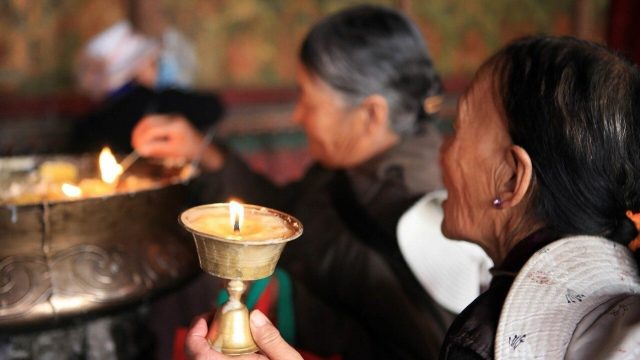
Chinese authorities have firmly established a nationwide ban on minors entering churches or taking part in any religious activity. The ban is enforced through signs on church doors, guards from the Chinese Catholic Patriotic Association, cameras linked to government offices and direct sanctions against clergy. The Patriotic Association is the state body that oversees the officially recognized Catholic Church.
The most recent case came on November 7 in Zhejiang province, in eastern China. Four lay catechists, all women, and more than 20 children were arrested for organizing catechism classes in private homes. The children were released after questioning. The four women were sentenced to 10 days of administrative detention, according to a report by the Catholic news agency AsiaNews.
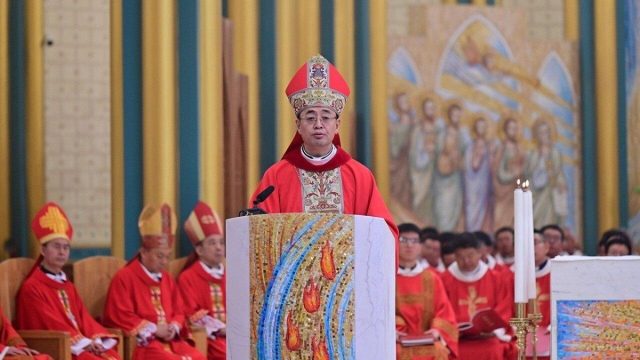
The ban is not informal. It has been enforced since the summer of 2019, just a year after the Holy See and Beijing signed their Provisional Agreement on the appointment of bishops. The agreement was renewed in 2024 and runs until 2028. It decides who leads each diocese, but it has not stopped children in those same dioceses from being barred from churches, from catechesis and from the sacraments of Christian initiation: baptism, First Communion and confirmation. The officially recognized Church carries out the restriction itself. Registered priests must sign and stamp a pledge not to admit minors, and members of the Patriotic Association stand guard at church entrances.
A surveillance system
On major feast days and during sensitive periods, inspectors and community workers are posted at church entrances to make sure no minor goes inside. Many churches have surveillance cameras at the entrances and inside, linked to government offices or to an intelligence platform for religious affairs. Local religious affairs offices and neighborhood administrations carry out random checks on who attends services.
The pressure extends to schools. In some regions, schools work with the Communist Youth League, the Women's Federation and other bodies to survey students' religious beliefs. Parents are given documents to sign, such as a "Declaration of not believing in any religion" or an "Information letter on rejecting the entry of religion into schools." In some areas, the authorities enlist students to report the religious practices of relatives or classmates. Families receive explicit warnings that taking part in illegal religious activities can cost them access to university or the job market.
Tighter rules
The rules behind these measures have been tightened gradually. In several localities, religious affairs departments and the United Front departments, the Communist Party bodies that oversee religious groups, have written the ban into "regulations on safety and compliance at venues for religious activities" and other forms that clergy must sign. Compliance is tied to the official registration of priests, the annual inspection of churches and proof of ownership of parish property. A single violation is enough for priests and parish leaders to be sanctioned.
A divided response
Not every Church leader has given in, but not every one has resisted either. At diocesan assemblies, the bishop of a diocese of considerable symbolic importance has warned priests and religious sisters not to hope for change. He has even publicly rebuked those who still allowed altar servers at services, accusing them of "endangering the Church."
Bishop Paolo Meng Ningyou of Taiyuan, in Shanxi province in northern China, took a different course. Born in 1963, he was ordained a priest in 1991, consecrated an auxiliary bishop in 2010 and has led the diocese since 2013. He now has cancer of the larynx, which has advanced to the point that he can no longer eat. In the summer of 2019, just as the ban was starting to be enforced, he confirmed a group of children. Speaking in a broken voice but without hesitation, he thanked the catechists and the parents who had brought their children to be formed in the faith, acknowledged how hard it was to organize catechesis and said that as bishop he would take full responsibility. "Do not be afraid," he said. "A person lives, at most, a little over 30,000 days."
Effects on Church life
Sunday schools, parish summer camps, children's choirs and altar serving have disappeared. Many children cannot complete the sacraments of initiation, and catechesis survives only within families and small private groups.
AsiaNews reports that mental health problems among teenagers are serious and that suicide at ever younger ages has become a worrying trend linked to academic pressure. The agency says the Church could offer valuable resources to strengthen young people's spiritual resilience, but the ban prevents it from doing so. For now, it says, the only response lies with each family and with the perseverance of ordinary people: parents, religious sisters, priests, bishops and catechists who never give up, even under pressure. "It is those four laywomen... Simple people who spread a very faint light," the agency concludes.
Based on reporting by José García for Iglesia Noticias. This article was translated and adapted from Spanish with the help of artificial intelligence.