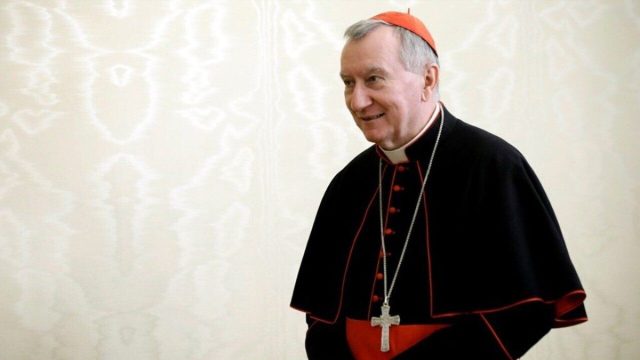
Pope Leo XIV matches Francis' total of bishop appointments in China
José Liu Hengping's ordination as bishop of Xiamen is the 10th appointment under the Vatican-China agreement since Leo XIV became pope, equal to the number made during Francis' entire pontificate
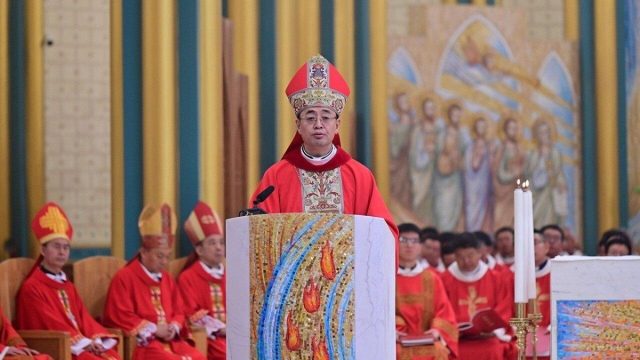
José Liu Hengping was ordained bishop of Xiamen, a diocese in Fujian province in southeastern China, on November 18, 2026, at the Lujiangdao Catholic Church. His ordination took place under the Provisional Agreement between the Holy See and the People's Republic of China. Pope Leo XIV made the appointment official on October 15 after approving Liu as the candidate under the terms of the agreement, which has been in force since 2018.
Bishop José Yang Yongqiang of Hangzhou presided at the consecration. Five other Chinese bishops took part: José Huang Bingzhang of Shantou, Vicente Zhan Silu of Mindong, José Cai Bingrui of Fuzhou, Pedro Wu Yishun of Minbei and José Lin Yuntuan, auxiliary bishop of Fuzhou. About 500 priests, seminarians, religious sisters and lay faithful attended the liturgy.
Pace of appointments
Liu is the 10th bishop in China appointed under the agreement since Leo XIV's pontificate began. That equals the number his predecessor, Pope Francis, reached over his entire pontificate. Twenty bishops have been appointed under the agreement since it took effect in 2018, and six of them have been named since the start of 2026.
The new bishop
Liu was born July 24, 1972, in Zhangzhou, in Fujian province. He studied philosophy and theology at Sheshan Seminary in Shanghai from 1992 to 1999 and was ordained a priest for the Diocese of Xiamen on September 19, 1999. He has held several pastoral posts since then. He served as pastor of Houban from 2000 and was responsible for the parishes of Lindong, Yanqian, Lianchiwei, Gankou and Guxian at the same time. When Bishop José Cai Bingrui was transferred to Fuzhou, Liu took on more responsibility for the diocese's pastoral initiatives. He played a leading role in visiting the families of priests and religious sisters and in organizing concerts of sacred music.
Dispute over the agreement
Liu's appointment comes amid a long-running dispute over the provisional agreement between the Holy See and Beijing. Some analyses hold that the deal recognizes the church approved by the Chinese state and gives the Chinese Communist Party the power to appoint bishops. In that reading, the pope's veto is theoretical, and in practice the decision rests with the Chinese authorities. Cardinal José Zen, bishop emeritus of Hong Kong, has repeatedly and sharply criticized the agreement. He has called it an "incredible betrayal" of Catholics in China and accused the Vatican of "selling out" the Chinese faithful. In its annual reports, the US Congressional-Executive Commission on China has documented an increase in religious persecution in China in the wake of the agreement.
Catholic roots in Xiamen
The Catholic faith reached Xiamen as early as 1313, according to the Annals of the city of Jinjiang. The Diocese of Zaiton was established in Jinjiang during the Wanli period of the Ming dynasty (1573-1619). In 1625, the Italian Jesuit missionary Giulio Aleni and his Portuguese companion Emanuele Diaz arrived in Jinjiang to preach the Gospel. Spanish Dominicans landed on an island near Fuzhou in 1632, the first friars of their order to preach in mainland China. The Apostolic Vicariate of Fujian was established in 1680. In 1883, Pope Leo XIII divided it into two jurisdictions with the apostolic letter Quod iampridem, and the southern one became the Apostolic Vicariate of Southern Fujian. It was renamed the Apostolic Vicariate of Xiamen in December 1924. In April 1946, Pope Pius XII raised it to a diocese with the bull Quotidie Nos, making it a suffragan see of the Archdiocese of Fuzhou.
The diocese today
The Diocese of Xiamen has more than 30,000 Catholics in 11 parishes, with 42 churches and six places of worship. It runs a charitable social service center and is served by about 20 priests. The Misioneras de Nuestra Señora del Rosario (Missionary Sisters of Our Lady of the Rosary) also work in the diocese. Its recent pastoral initiatives include a special Year of the Catechism, which began May 1, 2023. At the opening Mass, copies of a Chinese edition of the Catechism of the Catholic Church were handed out. The Catechism was prepared under the supervision of then-Cardinal Joseph Ratzinger and approved by Pope John Paul II in the 1990s. The diocese has also held years dedicated to the faith and to St. Joseph.
On December 29, 2024, the diocese opened its celebrations of the 2025 Jubilee. It designated seven churches as pilgrimage sites and set out specific arrangements for the observance. The see had been vacant since January 2026. Fujian is still recognized as one of the first regions of China where the Gospel was preached, as early as the Tang (A.D. 618-907) and Yuan (A.D. 1279-1368) dynasties. The Chinese Rites Controversy also broke out in Fujian, in 1635, when Dominican and Franciscan missionaries challenged the method of cultural adaptation introduced by the Jesuits.
Based on reporting by José García for Iglesia Noticias. This article was translated and adapted from Spanish with the help of artificial intelligence.