Pope Francis' private notebooks describe a spiritual crisis in 2021 and 2022
Cardinal Víctor Manuel Fernández says the late pope's newly published notebooks record a time of "dryness, desolation and darkness," while critics say publishing the private diary violates his privacy
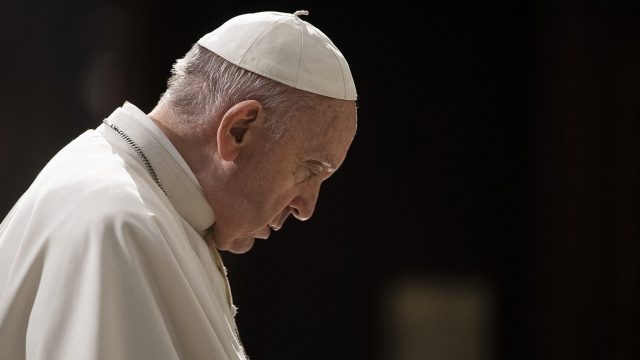
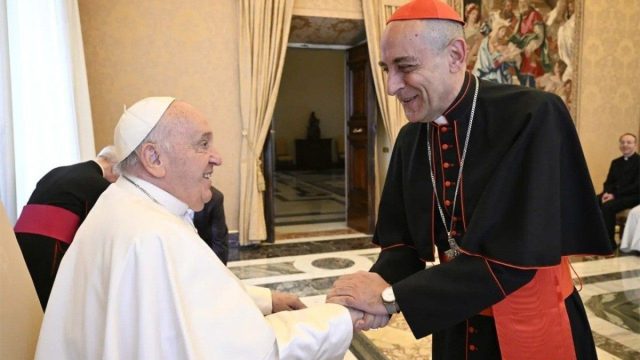
Cardinal Víctor Manuel Fernández, prefect of the Dicastery for the Doctrine of the Faith, the Vatican's doctrinal office, has said that Pope Francis went through a serious spiritual crisis in 2021 and 2022. The account comes from the late pope's personal notebooks, which have been published under the title Diario personale di Papa Francesco. In them, Francis described that period as a time of "dryness, desolation and darkness."
Fernández said Francis always saw crises, hard times and temptations as preparation for something of great importance. But the cardinal said this inner turmoil did not lead to any extraordinary mission. Instead, it brought the pope "to a true inner peace and complete trust in God."
Visions of the devil and dark encounters
One entry in the diary, dated June 7, 2018, reads: "Last night I saw the entrance to hell. Pagan seduction in all its force. It filled me with terror." Fernández said visions of the devil appear several times in the notebooks. The figure of the evil one returns even in the final paragraph, he said, where the pope looks back on his own life.
Fernández said such experiences could be dismissed as products of the imagination, but that they carry a deeper meaning: they pushed Francis to leave superficiality behind and focus on the ultimate meaning of his life. He said the pope kept his joy and his sense of humor despite the intensity of those experiences. "He joked and laughed," Fernández said. But he said the experiences also kept the pope inwardly watchful and led him to take his mission seriously.
Fernández's surprise at the writings
The cardinal said the notebooks deeply surprised even him, though he had been one of Francis' closest collaborators for years. "When I opened the box and read the diary, I was surprised myself. More than that, I was shaken, because it contained things I had never heard before," he said.
Fernández said he hesitated at first to publish the most private passages but in the end decided to do so. The book does not include every text that was found. Some deal with private matters involving people who are still alive. Francis also wrote many passages in unusual symbols that the cardinal compared to hieroglyphics. "Clearly he did not want anyone to read them later, and that has to be respected," Fernández said.
The book does include personal accounts, among them a conversation with Angela Merkel, the former German chancellor, along with the pope's comments on some Argentines and on people who have since died. Pope Leo XIV approved both the publication and the selection of texts.
Criticism of the diary's publication
The book's release has also drawn criticism. It has come from outlets such as religiondigital.org, a Spanish website covering religious news, which published an opinion piece arguing that the publishing venture is driven by commercial and propaganda motives. The piece also argues that publishing a private diary after its author's death violates the pope's privacy.
The opinion piece compares the situation with John Paul II's last days, during Holy Week 2005. The pope, by then in very poor health, was filmed from behind in his private chapel as he followed the Way of the Cross on a screen. Days later he appeared at his window in front of the cameras, unable to speak. The piece says those scenes were not a witness to faith but "public mockery."
Exposing the soul, exposing the body
The piece argues that the same machinery is now repeating that pattern with Francis in a different form. In John Paul II's case, it says, what was put on display was a body weakened to the limit; in Francis' case, what is on display now is "the naked soul in bookstores and shop windows across half the world." It rejects the argument that Francis himself commissioned the publication. Accepting that claim without a handwritten document or a notarized record to prove it is unacceptable, the piece says, because a person who keeps a diary writes it for himself, not for publication.
Criticism of sensationalism
The piece also criticizes a promotional campaign built around Francis' alleged encounters with the devil and his vision of the "gates of hell." It calls this sensationalism that revives "the old pedagogy of fear." It argues that addressing these spiritual realities in the 21st century requires rigorous biblical exegesis and hermeneutics, rather than using a man's nighttime anguish to feed morbid curiosity.
The piece concludes that when the institutional machinery puts profit or sensationalism ahead of the respect owed to a person, it stops serving the Gospel, and that staying silent in the face of that amounts to complicity.
Based on reporting by Lucas Alonso for Iglesia Noticias. This article was translated and adapted from Spanish with the help of artificial intelligence.