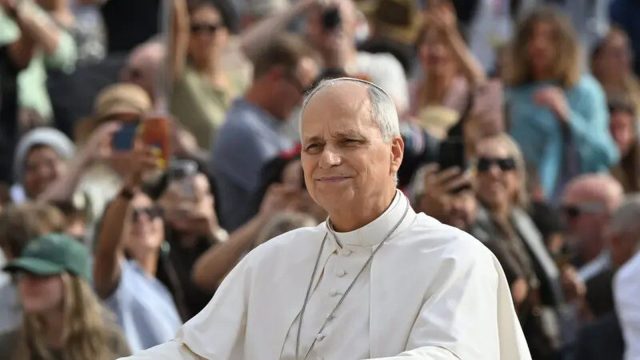
Cardinal Parolin says Vatican's deal with China on bishops is unchanged under Leo XIV
The Vatican secretary of state said in Rome that the secret 2018 agreement with Beijing on the appointment of bishops continues as before. His speech to a congress marking 100 years since the first Chinese bishops were consecrated made no mention of the underground bishops or the martyrs
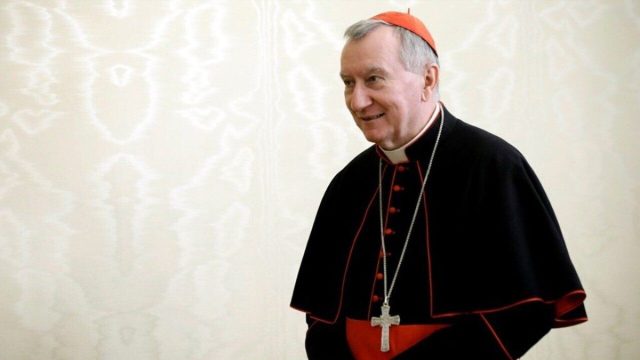
Cardinal Pietro Parolin, the Vatican secretary of state and the main architect of the provisional agreement signed with Beijing in 2018, said in Rome on Thursday, November 5, that Pope Leo XIV is keeping his predecessor's policy unchanged on the accord covering the appointment of bishops in China. He spoke on the sidelines of a congress titled "The face of the universal Church in China," held at the Pontifical Urbaniana University to mark the centenary of the episcopal consecration of the first six Chinese bishops by Pius XI in 1926.
The agreement is secret and its text has never been published. It was renewed in 2020, 2022 and 2024, and runs until October 2028. "There have been no changes. Bishops are appointed in accordance with what the agreement stipulates, and the pope has given his approval," Parolin told reporters.
The challenge of ecclesial communion
Parolin said the central challenge is reconciling two demands: "being Chinese, with all the particularities that entails, and at the same time being in deep communion with the pope and with the universal Church." He called the presence of Chinese bishops at the congress a positive sign in that direction.
Leo XIV sent a video message to the gathering in which he said the unity of every bishop of the Catholic Church with the Roman Pontiff is an indispensable sign of the faith. He closed with a prayer that God "guard the treasure of ecclesial communion, a fruitful source of goodness and peace for all."
Who spoke at the congress
The speakers included the bishop of Beijing, Joseph Li Shan, an archbishop since 2007 and president of the Chinese Catholic Patriotic Association since August 2022. Also speaking were Cardinal Stephen Chow, a Jesuit and the archbishop of Hong Kong, and the bishop of Haimen, Ignatius Ding Zuyao, 40, who was consecrated on October 15 in Nantong. Representatives of religious organizations in China are subject to special restrictions on leaving the country.
Li Shan has also been vice president of the Chinese Bishops' Conference since 2016. In 2018 he served on the Committee on Ethnic and Religious Affairs of the 13th Chinese People's Political Consultative Conference, a body that is part of the regime's political system. The Patriotic Association he heads is controlled by the United Front Work Department of the Chinese Communist Party.
A defense of sinicization
Li Shan defended the policy of sinicization by placing it within the history of the Church in China. He argued that the idea predates the communist regime, since the 1924 National Council of Shanghai had already rejected the Church's dependence on Western powers. He described the Chinese revolution as "the founding of a New China" that "completely changed the situation in which the Church in China depended on Western political forces."
Li Shan went so far as to equate sinicization with synodality, saying that "just as the recent Synod of Bishops promoted 'walking together,' the affairs of the Church in China are managed jointly by Chinese clergy, religious sisters and the faithful."
Chow said sinicization is a form of inculturation and acknowledged that the Chinese government's main concern is that religion could become "a vehicle for foreign interference." He described the challenge facing Chinese Catholics as being "patriots and Chinese nationals, but also people faithful to God."
A new bishop under the agreement
Ding Zuyao is the 19th bishop ordained under the provisional agreement. He was consecrated for the diocese of Haimen, which had been vacant since 2023. Haimen's first bishop, Simon Zhu Kaimin, was one of the six consecrated by Pius XI in 1926, the centenary marked by the congress.
No mention of persecuted bishops
Parolin's address made no mention of the bishops of the underground Church or of the martyrs. Cardinal Ignatius Kung Pin-mei, bishop of Shanghai, spent three decades in prison for refusing to renounce his loyalty to the pope and died in the United States in 2000. His underground successor, Joseph Fan Zhongliang, was arrested in 1955 and died in 2014. Shi Enxiang, bishop of Yixian, was arrested on Good Friday 2001 and died in custody at age 94. A 2024 report documents that Su Zhimin, bishop of Baoding, has been held at an undisclosed location since 1997.
Acknowledging the agreement's weaknesses
Responding to criticism from Archbishop Paul Richard Gallagher, who handles the Holy See's foreign relations and had acknowledged that the agreement has "evident weaknesses," Parolin said that "all agreements are imperfect, and this one is no exception, all the more so because it was not simple, given the complexity of the situations and the conditions in which we had to act."
Parolin said the work should continue: "Let us go forward and try to perfect what is imperfect." He called the centenary of the first episcopal appointments in China "a sign of hope."
Restrictions on religious activity
In 2025, the National Religious Affairs Administration of the Chinese Communist Party barred foreign citizens from taking part in acts of worship alongside Chinese faithful, and required all visitors to recognize the national independence of the country's churches and religious communities. The rules state that foreigners carrying out religious activities in China must respect Chinese law and the principle of independence and self-administration of religions, under government oversight.
Based on reporting by Almudena Buenadicha for Iglesia Noticias. This article was translated and adapted from Spanish with the help of artificial intelligence.