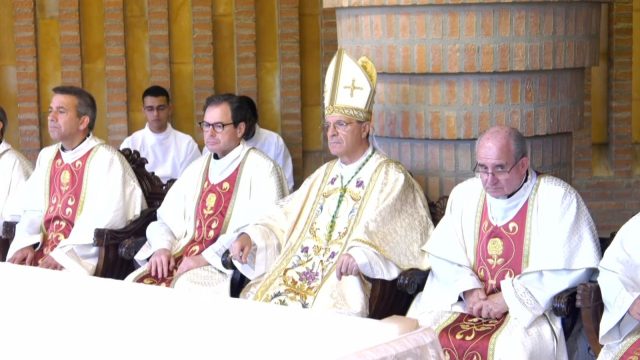
Opus Dei backs auxiliary vicar Mariano Fazio ahead of questioning by Argentine judge
Opus Dei says the three priests summoned in an Argentine labor trafficking case held office at different times and had no connection to the complainant, whose case began as a 2020 employment claim
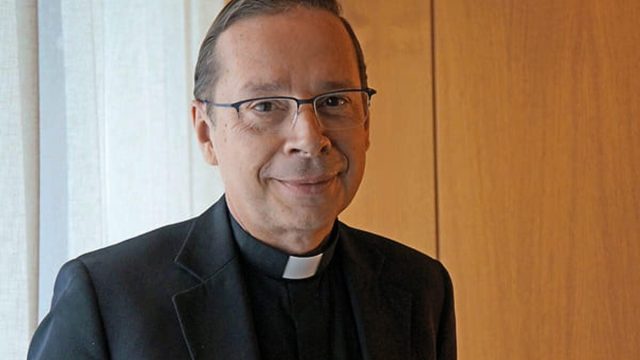
Opus Dei, a personal prelature of the Catholic Church, has said it is ready to cooperate after Argentine federal judge Daniel Rafecas summoned three former members of its regional leadership in Argentina for questioning as suspects. The institution says the questioning is a necessary step to settle, once and for all, accusations it describes as having no factual or legal basis.
The order from Buenos Aires' Juzgado Nacional en lo Criminal y Correccional Federal n.º 3 (Federal Criminal and Correctional Court No. 3) summons Mariano Fazio, the prelature's auxiliary vicar, along with priests Víctor Urrestarazu and Gabriel Dondo. They must appear on February 19 in a case investigating the crimes of reduction to servitude and human trafficking for labor exploitation.
The prelature says the three held leadership posts at different times and had no specific connection to the complainant. It calls the accusations groundless in fact and in law. Its statement adds that the questioning gives the three priests their first chance in the proceedings to give their account of events, after years of public accusations.
From employment claim to criminal complaint
Opus Dei says the dispute developed in three stages. It began in 2020 as a claim over discrepancies in the pension and labor contributions paid for the complainant. It then became a civil suit for damages. In 2022, after that suit failed, the woman and her lawyer turned it into a criminal complaint.
The institution maintains that the human trafficking charge has nothing to do with the events described or with the reality of the prelature, and that the complaint takes the meaning of a vocation in the Catholic Church out of context. The prelature also criticized the media coverage that has accompanied each step of the case, saying it aims to establish guilt automatically before the courts have ruled.
What the case is investigating
The questioning was requested in 2024 by the Procuraduría contra la Trata (PROTEX), the Argentine prosecutors' office that specializes in human trafficking, and by the Fiscalía Federal n.º 3 (Federal Prosecutor's Office No. 3). Prosecutors Marcelo Colombo and Alejandra Mángano are pursuing the case, along with federal prosecutor Eduardo Taiano.
The complainant is a woman of Bolivian origin who says she was recruited as a minor and worked as a domestic worker for 31 years. She testified before Rafecas for the second time in April 2025. She said she had been assigned to clean Fazio's room from 2009 to 2014, when he was regional vicar.
Former regional vicars Carlos Nannei and Patricio Olmos were not summoned because the acts attributed to them would be time-barred. The case file contains 43 cases involving former numerary assistants, women members who look after the domestic running of Opus Dei centers. Only one of those cases is not time-barred, and it is now the focus of the investigation.
Rafecas has yet to rule on a request from the complainants' lawyers to also summon the prelate of Opus Dei, Fernando Ocáriz. The prelature said again that it is willing to cooperate with the judicial authorities and is confident that "the truth will prevail" through the process.
Based on reporting by the newsroom of Iglesia Noticias. This article was translated and adapted from Spanish with the help of artificial intelligence.