Cardinal Fernández says the Vatican is not interfering in Rupnik's abuse trial
The Vatican's doctrine chief says the judges trying ex-Jesuit artist Marko Rupnik work independently, as Pope Leo XIV acknowledges that spiritual abuse is still a legally imprecise concept
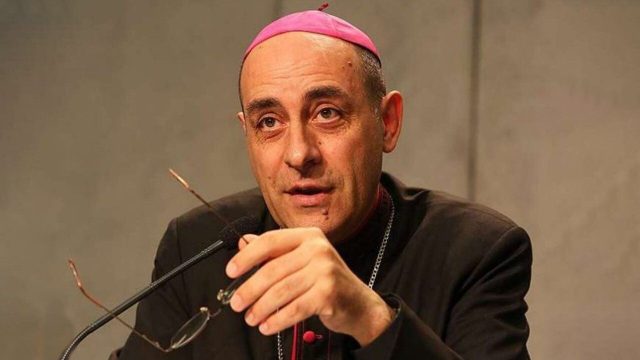
Cardinal Víctor Manuel Fernández, prefect of the Dicastery for the Doctrine of the Faith, has confirmed that the tribunal trying former Jesuit and artist Marko Rupnik works fully independently, without any interference from the Holy See. He added that the Vatican would still like the canonical criminal trial to end as soon as possible. Fernández made the comments on November 20 in a statement sent to the National Catholic Register, the US Catholic newspaper owned by EWTN.
When it set up the tribunal, the Holy See deliberately chose five judges, two women and three men, who had no ties to any Vatican dicastery. It also expressly committed not to interfere in their work. "We are keeping that commitment," Fernández said. Because of that promise, the Vatican cannot set the judges deadlines or ask them for information about where the case stands.
Spiritual abuse allegations
The Holy See announced the appointment of the tribunal in October 2025. Rupnik faces allegations of sexual, psychological and spiritual abuse, as well as abuse of conscience. The specific canonical charges have not been made public. In July of this year, the Vatican denied reports that the judges had already reached a verdict. It said that, as in any trial, it could not release details of the proceedings so as not to prejudice any of the parties involved.
A gap in canon law
The underlying problem in the case is that canon law does not define spiritual abuse as a crime in its own right. Pope Leo XIV acknowledged to reporters on his return flight from Peru in early November that the concept is still legally imprecise. "It is still a very vague concept," he said, "although we could probably all describe specific cases or kinds of situations where it has happened. So we are studying it and working on it."
Some of the behavior described as "spiritual abuse" may break existing Church laws. But without a legal definition of its own, it is hard to fit certain forms of spiritual manipulation into the crimes already on the books. A specific law would make clear what conduct is forbidden and what penalties apply.
A call for urgent codification
Fernández said the issue worries him "a lot" and said he had personally asked the pope to make spiritual abuse a crime. He also said the Dicastery for the Doctrine of the Faith has published a text on the subject on its website. The decision on how to proceed now lies with the Dicastery for Legislative Texts. It must decide whether to create a new crime or to reinterpret existing ones so that they cover the problem.
"These matters are studied in response to the needs of the Church, never because of a particular case," Fernández said. But Pope Leo said a document on spiritual abuse would not be published soon. He said one obstacle lies in the nature of the concept itself: justice can only be applied if there is a codification or legal wording that makes it possible.
A disputed road to trial
The road to the trial was not free of controversy. At first, the Holy See declined to open a canonical case, saying the statute of limitations had run out. The public outcry that followed led Pope Francis to lift the statute of limitations in October 2023, which cleared the way for the current trial.
In the meantime, Rupnik faces no restrictions on his activities. After he was expelled from the Society of Jesus, he was incardinated, or formally accepted as a priest, in the Diocese of Koper in Slovenia in 2023.
Rupnik's work still on display
Rupnik's art is still on display in places connected to the Vatican. Some of his works have been removed in several countries, but others could still be seen in August 2024 in Pope Francis' private apartment at the Vatican. The Holy See continued to use them on its website and in official communications until June 2025. His mosaics still decorate the facades of the Basilica of Our Lady of Aparecida in Aparecida, Brazil.
Rupnik's book Secondo lo Spirito: la Teologia Spirituale in Camino con la Chiesa di Papa Francesco is also still on sale on the official website of the Libreria Editrice Vaticana, the Vatican's publishing house. He wrote it for the publisher's series on the theology of Pope Francis.
Based on reporting by Lucas Alonso for Iglesia Noticias. This article was translated and adapted from Spanish with the help of artificial intelligence.