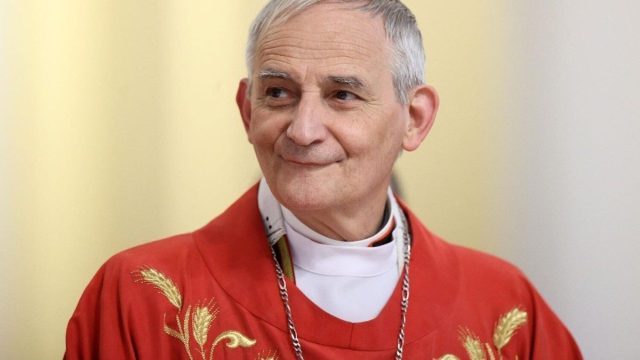
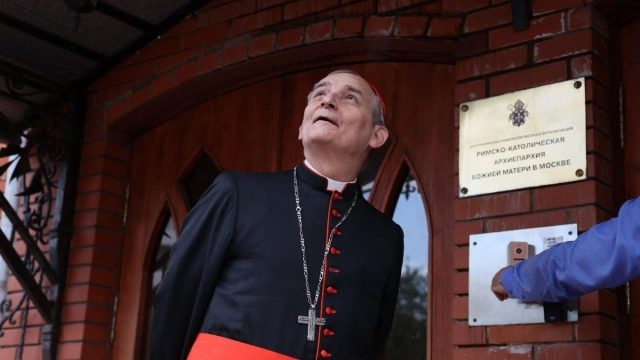
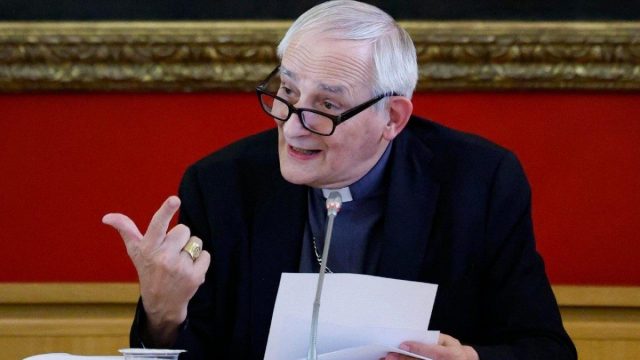
Cardinal Zuppi opens Italian bishops' assembly with a warning of a society 'sick with polarization'
In his opening address in Assisi, Cardinal Matteo Zuppi, president of the Italian Bishops' Conference, named the Church's pastoral priorities: listening to young people, fighting poverty, transparency on abuse and synodal renewal
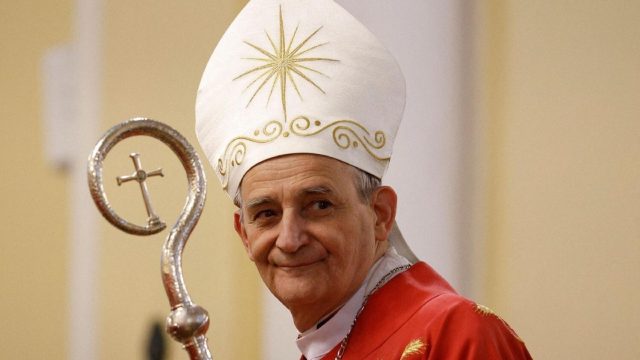
Cardinal Matteo Zuppi, archbishop of Bologna and president of the Italian Bishops' Conference (CEI), Italy's counterpart of the USCCB, opened the Italian bishops' assembly in Assisi with an address that set out the Church's pastoral priorities. He named four: listening to young people, fighting poverty, transparency on abuse and synodal renewal.
Zuppi described today's society as "sick with polarization," dominated by antagonism, harsh judgments and disputes amplified on social media. In response to that hostility, he said the Church should be "an open home," a place where the other person is not an adversary to defeat but someone to listen to. "Woe to those who divide," the cardinal said. He called on people to look for what unites them and set aside what separates them.
Listening to young people, education rather than repression
Zuppi turned to the young people who have recently taken to the streets and squares of Italy. He rejected violence, and he also rejected reducing the protesters to simple labels. "They are our children, from our cities and our schools," he said. He said young people's anger often expresses a loneliness that finds no response, and reveals a lack of meaning, of relationships and of credible adult role models. "Security is necessary, but repression alone contains without educating," he said. He said communities, oratories (the parish youth centers common in Italy) and schools are called to become places of listening and responsibility.
Transparency and justice in abuse cases
Abuse was a central theme of the address. Citing both Pope Francis and Pope Leo XIV, Zuppi said the Church is called to respond to victims' pain with truth, justice, forgiveness, reparation and a firm commitment to a culture of prevention and protection. A pilot study will be presented at the assembly. The Istituto degli Innocenti in Florence and the victimology center at the University of Bologna were commissioned to carry it out. It examines abuse committed by clergy in Italy and reported between 2001 and 2021.
"The victims remain at the center: their pain, their demand for truth and justice, their need to be heard and supported," the cardinal said. He pointed to specific progress in training and prevention. He also acknowledged the delays and the resistance that remain. "Much has been built, but there is still a way to go," he said.
Synodality and reform of Church structures
On synodality, Zuppi recalled the 50th anniversary of the first National Congress of the Churches in Italy, which began a new way of walking together. That approach took shape through further gatherings in Loreto (1985), Palermo (1995), Verona (2006) and Florence (2015), and led to the Synodal Path (2021-2025). "Today that way of being Church has a precise name: synodality," he said.
The CEI is beginning a review of its statute as part of that process. The cardinal said the review is not simply a regulatory adjustment but "a process of ecclesial and synodal discernment," aimed at adapting the Church's tools to the demands of the times without losing its own identity.
Support for clergy and the meeting with the pope
Zuppi urged all Italian priests to turn out in large numbers for the meeting with the pope scheduled for December 12. An afternoon of reflection and a vigil will come before it. He praised the clergy's generosity and daily faithfulness, and spoke openly of the difficulties that come with the ministry: loneliness, discouragement and a growing burden of responsibility. He asked the bishops to support and encourage their priests. "Every pastor lives and serves within a fraternity: we too need Peter to take us by the hand," he said.
Material poverty and economic vulnerability
Zuppi ended his address with an appeal about material poverty. Citing figures from the latest Caritas report, he said that for many families, even those with jobs, rent, utilities and everyday expenses have become an unbearable burden. He said that behind these situations are people who work but cannot live with dignity, elderly people who put off medical care, and loneliness that makes financial hardship worse.
The cardinal also condemned the poverty caused by gambling, which he called "terrible slavery" rather than entertainment. "The poor are not service users but brothers and sisters," he said. He called on the Church to ask itself how many real chances for independence and redemption it has been able to offer, starting with the right to health for everyone.
Based on reporting by Almudena Buenadicha for Iglesia Noticias. This article was translated and adapted from Spanish with the help of artificial intelligence.