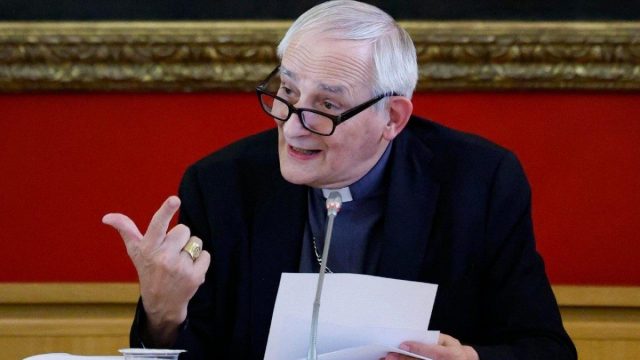
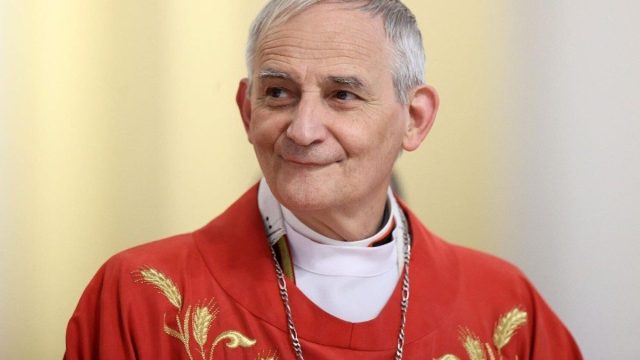
Cardinal Zuppi ends third Moscow mission as Pope Leo XIV's envoy
Cardinal Matteo Zuppi ended a three-day visit to Moscow on September 30, his third as papal envoy, with talks focused on prisoner exchanges and the return of deported Ukrainian children
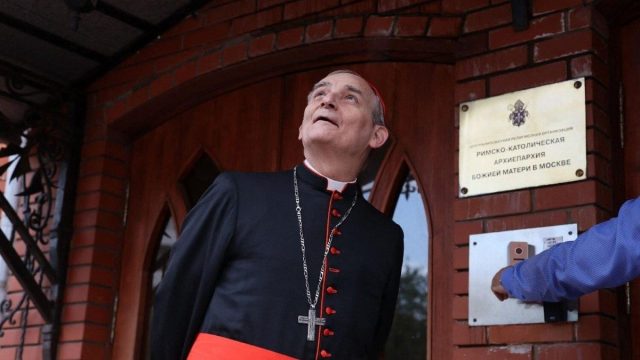
Cardinal Matteo Zuppi, archbishop of Bologna and president of the Italian Bishops' Conference, ended a three-day visit to Moscow on September 30, his third as special envoy of Pope Leo XIV. The mission centered on "the exchange of prisoners and the return of Ukrainian children who have been deported." The Vatican is keeping its channel for mediation open in the conflict between Russia and Ukraine, which began on February 24, 2022.
High-level meetings on humanitarian issues
In the Russian capital, Zuppi met Foreign Minister Sergei Lavrov, according to the French Catholic daily La Croix. His agenda was limited to humanitarian questions, in line with the mandate Pope Francis gave him, which Leo XIV has kept in place.
The talks covered "support for efforts toward the exchange of prisoners of war" and "attention to the situation of civilians affected by the conflict." The Vatican has kept lines of communication with the Kremlin open while formal diplomatic negotiations remain blocked.
Prisoners and deported children
Estimates point to at least 7,000 Ukrainian prisoners and around 4,000 Russians in captivity. Thousands are in legal limbo, with no guaranteed access to mediation by the International Committee of the Red Cross and no reliable information about their situation.
There is also "the tragedy of thousands of Ukrainian children who have been separated from their families and moved to territories occupied by the Russian army." The Holy See has assigned specific diplomatic resources to that issue. Speaking to the Russian news agency TASS, Zuppi said the Holy See's aim is to deepen dialogue to ease the suffering caused by the war and help resolve these humanitarian problems.
Gallagher's parallel mission
Archbishop Paul Richard Gallagher, who handles the Holy See's foreign relations, also traveled to Russia recently. He celebrated a Mass for peace and held meetings with Lavrov and with Orthodox Metropolitan Anthony of Volokolamsk, a representative of the Moscow Patriarchate.
Zuppi handles specific humanitarian cases, while Gallagher works on diplomatic dialogue and on relations with the Orthodox hierarchy.
The Vatican's approach
The Holy See's diplomacy seeks to "facilitate concrete processes rather than force both sides to sit down and negotiate immediately." Through this work, the Vatican "has managed to reunite separated families and facilitate the release of captives through the exchange of prisoner lists."
Leo XIV on negotiation
During his recent visit to France, Leo XIV spoke of Europe's peaceful vocation and the need to show "the courage of negotiation," even if that means giving up certain positions for the sake of peace. In his speech in Metz on the future of Europe, he said Europe was rebuilt after World War II on the basis of a negotiated peace, not on the total victory of one side over the other.
In 2024, Pope Francis caused controversy in Ukraine when he suggested there should be "the courage of the white flag" and negotiation in adverse situations. Many Ukrainians took the phrase as a call to capitulate, at a time when the country was under a particularly harsh Russian military offensive. Leo XIV has kept peace as a priority while using different language: not "white flag" but "the courage of negotiation."
Continuity between pontificates
Zuppi's mission as papal envoy began under Francis, and Leo XIV has continued it, though with different language and emphasis. Contacts with Moscow, communication with Kyiv and the work of several envoys in parallel are all continuing.
The Vatican has identified possible areas of cooperation such as prisoner exchanges, the return of deported children and access for humanitarian aid.