Mexican Church opens jubilee year marking 100 years since Cristero resistance began
Mexico's bishops have opened a yearlong jubilee with a plenary indulgence to remember the Cristero martyrs a century on, with the emphasis on reconciliation rather than armed conflict
The Catholic Church in Mexico opened a jubilee year on Sunday, November 22, 2026, the solemnity of Our Lord Jesus Christ, King of the Universe. The jubilee marks 100 years since the start of the Cristero resistance, the Catholic resistance to the Mexican government's anti-religious laws, and runs until November 21, 2027. It is backed by a pastoral letter from the Mexican bishops and by diocesan announcements that have already led to specific pastoral measures. Its motto, "Their faith, our memory, and their witness, our mission," sums up its main aim: to recover the witness of the martyrs, promote reconciliation and reaffirm religious freedom as an inalienable right of every person.
The Mexican Bishops' Conference (CEM), Mexico's counterpart of the USCCB, has published a pastoral letter titled "¡Viva Cristo Rey! Su fe, nuestra memoria; su testimonio, nuestra misión" ("Long live Christ the King! Their faith, our memory; their witness, our mission"). The letter offers a historical, theological, spiritual, legal and pastoral reading of those events. It does not celebrate the war, and it does not present armed resistance as a model for today. Instead, it starts from the faithfulness of a people who, in the midst of persecution, kept baptizing their children, protecting their priests, celebrating the sacraments in secret and defending freedom of conscience. They did this, the letter says, against a state that tried to treat religious belief as something granted by political power.
From the outset, the bishops draw a distinction they consider essential: the armed conflict is one thing, and the witness of those who died without renouncing their faith is another. The martyrs, the letter says, are remembered not for killing in Christ's name but for dying for him and, in many cases, for forgiving those who executed them.
Historical roots of the conflict
The letter's first chapter traces the conflict back well before 1926, to the formation of the Mexican state after independence. At that time two visions of the nation clashed. One recognized Catholicism as the foundation of the social order. The other sought to limit the Church's institutional influence. In the letter's account, the 1857 Constitution and the Reform Laws were a turning point. They separated Church and state, restricted church property and redefined the place of religion in education and civil life.
The letter acknowledges that secularization did not erase Catholicism's deep roots in everyday life. Faith remained present in families, customs, festivals and the way communities organized themselves. In that climate, social Catholicism gained momentum, encouraged by Pope Leo XIII's 1891 encyclical Rerum novarum. Labor unions, youth and women's associations, rural credit cooperatives, night schools and mutual aid networks flourished. Catholics used civic tools such as the vote, the press and public mobilization.
From the Revolution to the Calles Law
The Mexican Revolution revived anticlericalism, which at times turned into open violence: attacks on churches, the destruction of religious images and assaults on clergy. The 1917 Constitution tightened the restrictions. It denied churches recognition as legal entities, curtailed the political rights of the clergy, banned certain forms of religious education, dissolved the religious orders and nationalized church property. These measures laid the legal groundwork for the persecution that followed.
After a period of relative calm under President Álvaro Obregón, tensions reached a breaking point under President Plutarco Elías Calles. The penal reform known as the Calles Law was issued on June 14, 1926, published on July 2 and took effect on July 31 that year. It turned the constitutional restrictions into criminal offenses with specific penalties. The law placed the exercise of religious ministry under strict controls, penalized wearing religious garb outside churches and limited public expressions of faith.
The first response was civil and peaceful. The National League for the Defense of Religious Freedom (Liga Nacional para la Defensa de la Libertad Religiosa) organized petitions, protests and an economic boycott. A petition backed by nearly 2 million signatures asked for changes to the anti-religious laws, but it got no favorable response. The bishops then adopted the principle of Non possumus, "we cannot." The Episcopal Committee decided to suspend public worship from July 31, 1926, and announced the decision in a collective pastoral letter. The suspension was a legal, pastoral and theological protest against the enforcement of that law.
Indulgence and pilgrimages
The jubilee is backed by a decree from the Apostolic Penitentiary, the Vatican tribunal that oversees indulgences. The decree, dated November 6, 2026, grants a plenary indulgence to the faithful who meet the conditions set by the Church and make a pilgrimage to the shrines of the Mexican martyrs or to jubilee churches designated by each bishop.
In the Archdiocese of Guadalajara, in western Mexico, Cardinal José Francisco Robles Ortega called on the whole Church to celebrate the centenary jubilee. Before issuing his call, the archbishop asked the archdiocese's Diocesan Commission for Causes of Canonization to carry out a canonical review of the mortal remains of saints and blesseds kept in the archdiocese. The work took place between April and September 2026. Following that review, Robles Ortega authorized the faithful to gain the plenary indulgence at the places where the relics are kept, so that the sites of martyrdom form a route of pilgrimage and conversion.
The churches on that list are those that hold the remains of St. Cristóbal Magallanes Jara, St. Agustín Caloca Cortés, St. Román Adame Rosales, St. Justino Orona Madrigal, St. Atilano Cruz Alvarado, St. José Jenaro Sánchez Delgadillo and St. José Isabel Flores Varela. The list also includes places that keep relics of other saints and of Blesseds José Anacleto González Flores, Miguel Gómez Loza and others. Churches such as Guadalajara Cathedral, the Santuario de los Mártires Mexicanos (Shrine of the Mexican Martyrs) and the Centro de Experiencia del Desierto San Máximo Confesor (St. Maximus the Confessor Desert Experience Center) are on the list as well.
Memory, reconciliation and witness
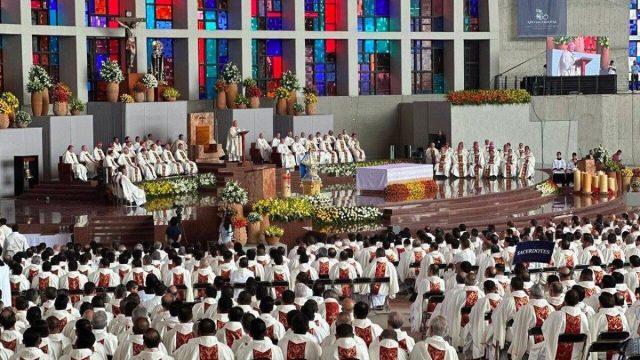
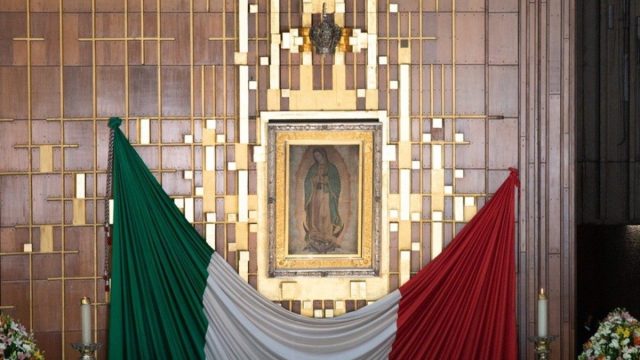
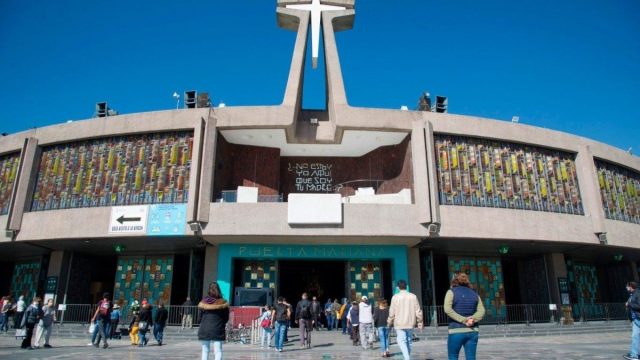
The jubilee year was announced on November 9 during the opening Mass of the CEM's 121st Plenary Assembly at the Basilica of Guadalupe in Mexico City. Bishop Ramón Castro of Cuernavaca, the CEM president, said that remembering the religious persecution does not mean reopening wounds, feeding resentment or singling out adversaries. He said the Christian memory of the Cristero resistance should focus on acknowledging suffering, on reconciliation and on building peace.
In the Archdiocese of Mexico City, known as the Primatial Archdiocese of Mexico, the weekly Desde la Fe published an editorial. It noted that a family today can leave home and arrive in time for Mass on the solemnity of Christ the King. "A hundred years ago, in Mexico, millions of people lost that possibility because of the restrictions of the Calles Law," the editorial said. It described the CEM's pastoral letter as a document that "recovers the memory of those who sustained the life of the Church in those years." Among them were women who passed the faith on to their children and families who organized themselves so that their communities could keep praying together.
The archdiocese noted that Article 24 of the Mexican Constitution recognizes freedom of conscience and religion. It added that this freedom also covers people who believe something different or have decided not to believe. The editorial ended with a request to the faithful. When they say "¡Viva Cristo Rey!", they should remember that saying those same words cost other Mexicans their lives, and that honoring their memory requires speaking up when a neighbor is excluded because of his or her beliefs.
Based on reporting by Javier Ruiz Arregui for Iglesia Noticias. This article was translated and adapted from Spanish with the help of artificial intelligence.