Book on Austrian mystic María Simma and purgatory draws readers each November
Sister Emmanuel Maillard's interview with María Simma, an Austrian woman who said souls in purgatory visited her for decades, draws readers every November even though it has no official Church recognition
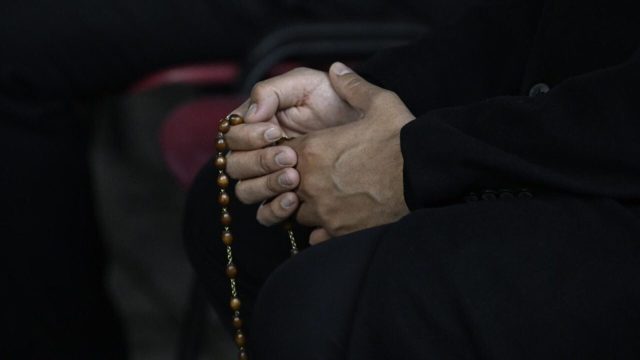
A book by Sister Emmanuel about an Austrian mystic draws readers every November, even though it has no official recognition from the Church.
"El maravilloso secreto de las almas del purgatorio" ("The Wonderful Secret of the Souls in Purgatory") is a short spiritual book that readers look for every November. In Catholic tradition, November is the month set aside to remember the dead. The book is not a Church document or a long theological treatise. It is an interview, published by a French religious sister, with an Austrian peasant woman who said souls in purgatory had visited her since she was young.
The original French title is "Le surprenant secret du Purgatoire." The author, Sister Emmanuel Maillard, is a French religious sister associated with promoting Medjugorje, the pilgrimage site in Bosnia and Herzegovina. She published the book in 2005. It contains a direct interview with María Simma. It also explains Catholic teaching on purgatory: what it is, the sins that most often lead there, the part the Virgin Mary and the angels play for the souls, and what suffrages and indulgences are. The book has had several Spanish editions, including a 96-page edition from ADADP, published in Barcelona in 2013, and a 98-page edition from San Pablo in 2017. A Spanish-language audiobook is also available on the Iglesia Noticias audiobook platform. The first 10 minutes are free without registration, and the full recording, almost nine hours long, is available with a free account.
Who was María Simma
María Simma was born February 5, 1915, in Sonntag, in Austria's Vorarlberg region, and died in 2004. She said that in 1940, when she was 25, a soul visited her for the first time one night and asked her to have three Masses said so it could be released from purgatory. By her own account, the visits continued for decades. She said her spiritual director confirmed that they were souls in purgatory and encouraged her not to turn down their requests.
What the book contains
Most of the book consists of Simma's answers to Sister Emmanuel's questions. She describes what the souls ask for, mainly Masses, rosaries and the Stations of the Cross. She names the sins that most often lead to purgatory, which in her account are above all sins against charity and slander. She also discusses which people are most likely to go straight to heaven, and describes her own experience of offering up her sufferings for the souls who visited her. The book also includes specific accounts that Simma said she received about people who had died, always presented as her personal testimony.
No official approval
Despite the book's popularity, María Simma has never received formal recognition from the Church. There is no decree approving her experiences, she has never been given the title of visionary, and the Church has not ruled officially on her accounts. They are therefore considered private revelation, which is not part of the deposit of faith. Readers are free to accept them or not, as with any testimony of this kind, regardless of whether their content broadly agrees with what the Catechism teaches about purgatory.
Church teaching on purgatory
The Church's official teaching on purgatory is set out in paragraphs 1030 to 1032 of the Catechism of the Catholic Church. The Catechism says that those who die in God's grace but are still imperfectly purified "after death undergo purification, so as to achieve the holiness necessary to enter the joy of heaven." That purification, it says, is "entirely different from the punishment of the damned."
The Catechism says that from its earliest days the Church has honored the memory of the dead and offered prayers in suffrage for them, above all the Eucharist. It also recommends almsgiving, indulgences and works of penance on their behalf.
Why November
Interest in purgatory, and in books like Sister Emmanuel's, peaks every November because the month opens with the Solemnity of All Saints on November 1 and the Commemoration of All the Faithful Departed, or All Souls' Day, on November 2. The Holy See attaches indulgences for the souls in purgatory to those dates. Pope Paul VI's apostolic constitution Indulgentiarum doctrina states that on November 2 the faithful can gain a plenary indulgence, applicable only to the dead, by visiting a church or oratory. They must also meet the usual conditions of confession, Holy Communion and prayer for the pope's intentions. The Apostolic Penitentiary, the Vatican office that handles indulgences, also extends that possibility to each day from November 1 to 8, with an indulgence tied to visiting a cemetery.
Based on reporting by Miguel P. Herrador for Iglesia Noticias. This article was translated and adapted from Spanish with the help of artificial intelligence.