Vatican official says more young people and laypeople are candidates for sainthood
Father Bogusław Turek, undersecretary of the Vatican's Dicastery for the Causes of Saints, said young people, laypeople and married couples now appear more often among candidates for beatification and canonization
Father Bogusław Turek, undersecretary of the Dicastery for the Causes of Saints, the Vatican office that handles beatifications and canonizations, said in an interview with Vatican media that the profile of candidates for sainthood is changing. Young people, laypeople and married couples now appear more often among those proposed for beatification and canonization.
Turek said this reflects a deeper and more widespread understanding of the universal call to holiness proclaimed by the Second Vatican Council. One development the dicastery has noticed is the rise in requests to open causes for people who died young, although Turek said the numbers are still not high.
Caution over causes involving young people
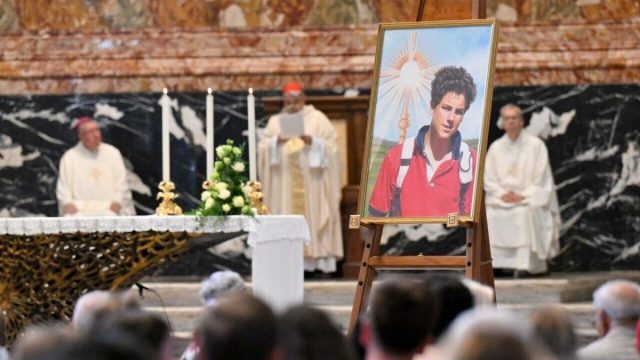
Turek said such cases call for particular caution. The early death of a young person, especially when it involves suffering, can stir strong emotion and genuine admiration, but that is not enough to support a rigorous judgment about the person's virtues. As a contemporary example of holiness in a young person he cited St. Carlo Acutis, whose life, he said, shows that holiness is not reserved for maturity but can be lived from youth.
"The best catechesis is to show the figures of the saints," Turek said. The genuine example of those who lived the Gospel helps others find their own path to happiness and Christian fidelity, he said.
Laypeople in public and professional life
Some of the lay candidates for sainthood held prominent roles in public life, science or culture. Turek named the French statesman Robert Schuman, the Italian statesman Alcide De Gasperi, the French geneticist Jérôme Lejeune and the Spanish architect Antoni Gaudí. More professional groups are realizing that holiness is compatible with excellence in their own work, he said: "Following the Gospel sometimes demands refusing to compromise, but that is not at odds with professionalism or with great achievements."
The family as a place of spiritual growth
Families also account for a growing share of beatification causes. The best known example is the Ulma family of Poland, along with Sts. Louis and Zélie Martin, the parents of St. Thérèse of the Child Jesus. Turek said the home is not only where faith passes from one generation to the next, but also where each person matures in his or her own response to the call to holiness.
"A person comes to know holiness, touches it and is steeped in it within the family," he said. Given the difficulties facing family life today, he said, the witness of holy spouses and families takes on particular value: "Where today's world faces particular trials, there God's Providence leaves a kind of concrete indication."
Martyrdom: unchanging in substance, varied in form
On martyrdom, Turek said that while forms of persecution vary from age to age, the essential core does not change. The martyr gives his life for faith in Christ, or for a virtue inseparable from that faith, without seeking death but resolved not to betray the Gospel even if it costs him his life. As a contemporary example he cited Blessed Rosario Livatino, an Italian judge murdered by the mafia, whose fidelity to justice came from the Christian conviction that one must always act according to conscience.
Turek also said that today's regimes and persecutors tend to mask the religious motives for their violence, presenting martyrs as political opponents rather than witnesses to Christ. That does not change the nature of their victims' witness, he said.
Growth in Africa, Latin America and Poland
The dicastery has also seen growing interest in beatification and canonization causes in the Churches of Africa, where communities are coming to realize that people in their midst lived the Gospel heroically and that their witness deserves to be made known. A similar pattern is emerging in Latin America, with Brazil and Argentina leading the region in the number of open causes.
Poland is among the most active countries. Turek said more than 100 cases involving Polish candidates are currently under way. "Poland is one of those Churches with many causes in progress. I would say it is one of the leading countries. Along with Spain and Italy, Poland is probably among them," he said.
The Polish cases include people who devoted their lives to caring for the sick, such as Blessed Hanna Chrzanowska and two candidates for sainthood, Stanisława Leszczyńska and Dr. Wanda Błeńska.
Holiness for all, not for a chosen few
Responding to those who consider the current number of beatifications and canonizations excessive, Turek rejected that view and placed the question within the teaching of the Second Vatican Council. "When we say in the Creed that we believe in the Church, which is holy, this is not a theoretical concept. We come into contact with the holiness of the Church through the holiness of her members," he said.
Turek said the growth in causes shows that more of the faithful accept that the call to holiness is not the preserve of a chosen few but an invitation addressed to everyone without exception. That, he said, matches the modern understanding of the universal Christian vocation established by the Second Vatican Council.
Based on reporting by Javier Ruiz Arregui for Iglesia Noticias. This article was translated and adapted from Spanish with the help of artificial intelligence.