Congregations in five countries join forces to care for aging religious sisters
A report from The Anna Trust, published November 2, gathers six case studies from Canada, Kenya, Mexico, the United States and Zambia in which religious congregations pooled resources to care for their elderly sisters
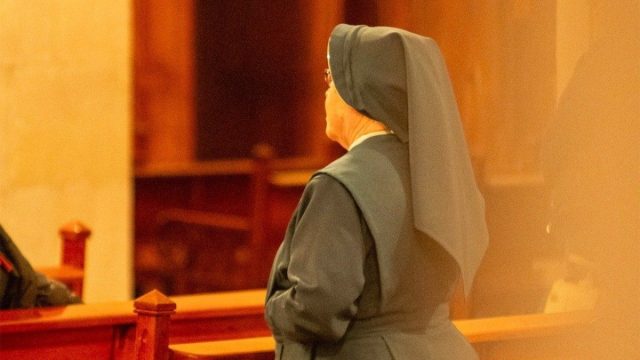
Religious congregations in Canada, Kenya, Mexico, the United States and Zambia have developed ways of working together to meet the challenges posed by the aging of their members. A new report from The Anna Trust, published November 2, collects their experiences under the title "Together: Case Studies and Principles of Collaboration for the Care of Elderly Nuns." The report responds to three pressures on religious communities: the growing complexity of older sisters' health needs, the rising cost of their care, and the shrinking size of the communities themselves.
Origin and purpose of The Anna Trust
The Anna Trust was established in 2024 with backing from the Catholic Sisters Initiative, funded by the Conrad N. Hilton Foundation. Its stated aim is that no elderly Catholic sister should be left without access to the care she needs, and that dignity and excellence should mark every stage of aging.
The report sets out the organization's aspiration to build "a Catholic sisterhood that unites religious sisters of all ages in health, love and spiritual strength." Sister Patricia Murray, CJ, president of The Anna Trust, said sisters have historically been on the front lines wherever help was needed, in education, in hospitals and in social services. The same commitment now extends to caring for their own older sisters, she said.
"The greatest opportunity lies in helping congregations come together, work together and learn from one another," Murray said.
Timing of the publication
The report comes out as the Resource Center for Religious Institutes (RCRI) opens its assembly in St. Louis, which runs November 2 to 5, and alongside the announcement that the documentary "Walking My Sister Home," about the difficulties of caring for elderly Catholic nuns, will premiere on PBS in November 2026.
The publication grew out of a workshop convened by The Anna Trust in Rome in July 2026, where the religious leaders featured in the case studies reflected together on their experiences and on the shared approach that connects them.
The six collaborations
The document presents six accounts that describe both the difficulties of organizing collaboration among several congregations and what taking that path together can change. The report frames collaboration between congregations as more than a logistical answer to a particular need, calling it a prophetic and strategic option. It describes it as a way to share resources and experience, bring together each institute's charisms and care effectively for older sisters, while strengthening the future viability of the communities and their works.
Among the contributors is Sister Patricia Wolf, of the Religious Sisters of Mercy in the United States, who describes the process of building infrastructure and services jointly. Sister Judith Dieterle, of the Sisters of St. Louis, also in the United States, writes about the central role of dialogue in that process. From Kenya, Sister Agnes Wamuyu Ngure, of the Franciscan Sisters of St. Elizabeth, sets out what a shared learning network contributes.
Sister Christine Gebel, OLM, Sister Georgette Gregory, CSJ, and Sister Anna McNally, SOS, describe the Canadian experience and reflect on what it means to form a community made up of communities. Sister Edith Sokosi, LSMI, and Sister Dorothy Chongo, LSMI, write from Zambia about the challenge of aging in the African context. Sister Brenda Hernández, HMIG, and Luis Fernando Falcó give their view of what is needed for collaboration between congregations to take root in Mexico.
A path forward for communities
Susan Raymond, PhD, executive director and editor of the report, summed up the collected accounts: "The experiences gathered in this report show what can be possible when congregations come together with a shared understanding of their needs, the willingness to listen and the confidence to chart a common path."
The report says collaboration between congregations is not only an operational answer to the challenges of aging but an expression of the religious call to fraternity and communion that marks consecrated life. By joining forces to care for older sisters, it says, congregations strengthen their bonds, secure the continuity of their charisms and reinforce their future viability at a time of falling numbers and more complex care needs.
Based on reporting by Juana Morales for Iglesia Noticias. This article was translated and adapted from Spanish with the help of artificial intelligence.