Islam tops Christianity in religious questions asked of ChatGPT, OpenAI report says
OpenAI says 45 percent of religious queries to ChatGPT over a year concerned Islam and 34 percent Christianity, while a separate survey found some US Catholic health care chaplaincies using AI to write prayers
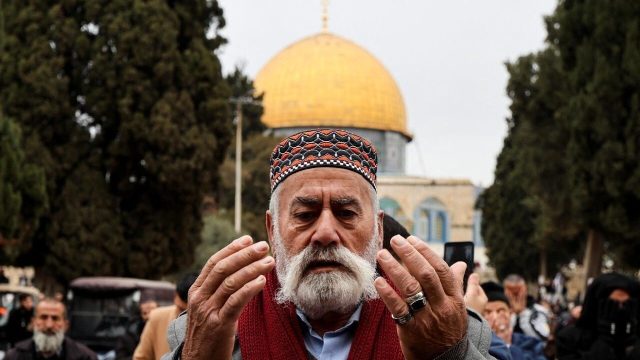
Islam accounted for 45 percent of religious queries on ChatGPT between 2025 and 2026, compared with 34 percent for Christianity, according to OpenAI.
In October 2026, OpenAI published a report titled "Faith, Community & AI," which says ChatGPT receives more than 70 million religious queries a week. The report combines the company's internal statistics with accounts from pastors, rabbis and believers of various faiths. It argues that artificial intelligence can support spiritual life but warns that it must not set itself up as an "arbiter of religious truth" or replace religious leaders.
Between September 2025 and September 2026, 45 percent of religious queries to ChatGPT concerned Islam and 34 percent concerned Christianity. Hinduism accounted for 4 percent, Judaism for 2 percent and Buddhism for 1 percent. Together, the five traditions made up 85 percent of the total. Usage followed each faith's calendar. During Ramadan, the Muslim month of fasting, Islam's share rose above 60 percent of weekly queries while Christianity's fell below 25 percent. In Easter week, the Christian share rebounded to nearly 45 percent.
Queries by topic
By subject, the study of sacred texts led with 30 percent of queries, about 22 million a week. Practices and festivals followed with 23 percent, and beliefs and spiritual guidance with 22 percent. Nearly half the queries from Christian users were about Bible passages. Among queries about Islam, 39 percent sought to establish what is permitted and what is forbidden.
Catholic hospitals turn to AI for prayers
The data on Catholic use come not from OpenAI but from a 2025 survey by the Catholic Health Association of the United States and the National Association of Catholic Chaplains. Georgetown University's Center for Applied Research in the Apostolate (CARA) collaborated on the survey. Conducted between the summer and fall of 2025, it found that 21 percent of spiritual care departments in US Catholic health care already use artificial intelligence. Of those, 52 percent use it to write or adapt reflections and prayers for the sick.
Those departments are dealing with a shortage of chaplains, budget pressure and chronic difficulty filling vacancies. The OpenAI report includes the account of Keith Pimm, a Texas layman and the only Catholic profiled in the report. He uses ChatGPT to explore philosophical and theological concepts in St. Thomas Aquinas and Aristotle. Pimm prefers existing human translations because, in his view, machine translations lose theological nuance.
Protestants divided
The OpenAI report also cites outside surveys. A Lifeway Research survey of 1,003 Protestant pastors, conducted in September 2025, found that 42 percent use AI, but only 10 percent describe themselves as regular users. The other 32 percent are still experimenting. Among Protestant churchgoers, 61 percent said they were concerned about the influence of artificial intelligence on Christianity. Opinion on whether a pastor may use it to prepare a sermon was almost evenly split, with 44 percent in favor and 43 percent against.
A Barna survey of 442 pastors in December 2025 produced different results: only 13 percent said they do not use AI at all. The Lifeway survey put the share of pastors who do not use it at 56 percent.
Background: the pope's encyclical on human dignity
The report came five months after the publication of Magnifica Humanitas, Pope Leo XIV's first encyclical, which deals with the dignity of the human person as artificial intelligence advances. The encyclical, signed May 25, argues that these technologies are not neutral and calls for AI to be prevented from dominating human beings. During the same period, OpenAI and Anthropic met in New York with representatives of various religions at the first session of the "Faith-AI Covenant."
Methodological limitations
The report's data come from OpenAI itself and cannot be independently verified. The company does not explain how it decides that a query is "primarily religious" or how it assigns a query to a particular faith. The report also states, in the fine print, that the percentages by religion are shares within a classified weekly sample, not proportions of the total volume of messages.
All the user profiles in the report are from the United States except one from South Korea. None comes from Europe or Latin America. Harrison Kim, the South Korean user, warns that people's doubts about their faith may stay confined to a private conversation with a machine, so that neither their pastor nor their friends ever learn that someone in their community needs help.
Based on reporting by Lucas Alonso for Iglesia Noticias. This article was translated and adapted from Spanish with the help of artificial intelligence.