Pope Leo XIV plans to visit the United States, Vatican foreign minister says
Archbishop Paul R. Gallagher told foreign reporters in Rome that a trip to the pope's native country is "practically certain." Vatican watchers in the United States see 2027 as the likeliest year, and the trip could include a stop in Mexico
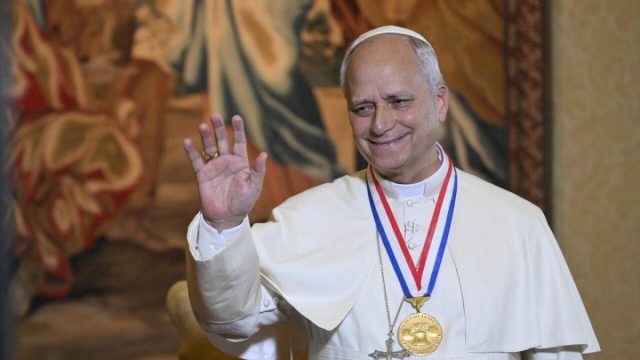
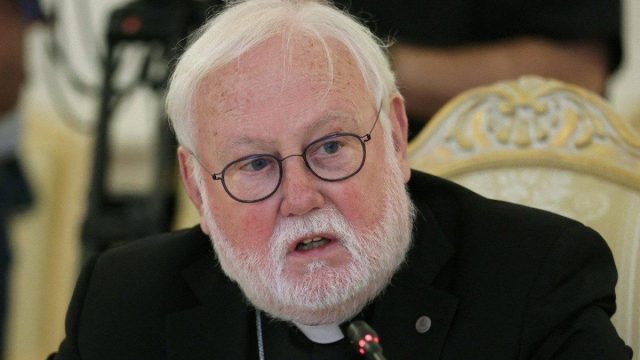
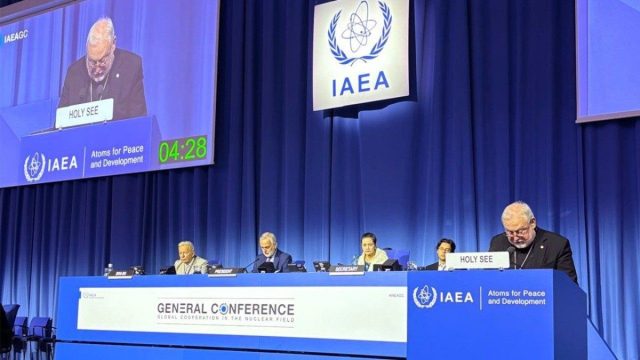
Pope Leo XIV plans to visit the United States before long, the Holy See's foreign minister, Archbishop Paul R. Gallagher, said on Tuesday, October 27, at a meeting with the foreign press in Rome. The American election calendar will determine the exact date, and Vatican watchers in the United States consider 2027 the most likely year. Gallagher said a visit by the pope to his native country is "practically certain," but that the election cycle will set the right moment. Once the midterm elections are over in the fall, a window could open in 2027; going too far into that year would run up against the start of the presidential campaign. With the primaries beginning in January 2028, 2027 would be the only stretch free of electoral pressure.
Gallagher, a British diplomat, did not rule out combining the trip with a stop in Mexico, where Leo wants to visit the Marian shrine of Our Lady of Guadalupe.
Open channels with the US administration
On relations between the Holy See and the US administration, Gallagher said the Vatican keeps channels of communication open with both the White House and the State Department. The US ambassador to the Holy See, Brian Burch, has direct access to the president's circle, which makes contact easier. Asked about the absence of any direct conversation between Leo and Donald Trump, Gallagher said that so far no specific need for one has come up.
The Vatican and international conflicts
On the Vatican's role in the conflict between Russia and Ukraine, Gallagher said the Holy See welcomes the fact that both sides turn to Rome regularly. Neither Moscow nor Washington wants the Vatican to take on a formal role as mediator. But all the parties involved recognize the usefulness of the humanitarian work carried out by the Holy See and by the pope's special envoy, Cardinal Matteo Zuppi. Asked whether the recent cease-fire in the Ukrainian city of Oleschky came about through papal intervention or through mediation by Melania Trump, Gallagher said what matters is the result, and that it is "completely irrelevant who contributed and to what extent."
To get past entrenched international conflicts, Gallagher proposed recovering the spirit of the Helsinki Conference, whose format allowed the opposing blocs of East and West to talk to each other in the 1970s despite their deep differences. He said a similar mechanism would be desirable today. He added that he would welcome a constructive discussion among the nuclear powers about the future "architecture of atomic deterrence." Gallagher said openly that he is not a pacifist and that he considers the just war doctrine useful, including for the many Catholics serving as soldiers in the armed forces.
The pope's health and his trip to Latin America
Gallagher spoke shortly after Leo came through lung cancer surgery that removed his lower right lobe. The operation took place less than four weeks before his departure for Uruguay, Argentina and Peru, scheduled for November 6 to 17. Doctors confirmed that his recovery is going well, that no further cancerous tissue was found and that no additional treatment is needed. Gallagher said he was as surprised as everyone else when the pope announced in early October that doctors had found a nodule that turned out to be malignant.
Asked why Leo did not postpone the Latin American tour, which includes several long-haul flights and destinations at high altitude, Gallagher answered simply: "He is going on this trip simply because he wants to go." He added that, given the favorable medical reports, the pope believes he can manage it.
Illness as a turning point in the pontificate
Gallagher also reflected on what the illness means for the pontificate. He recalled that when then-Cardinal Robert F. Prevost, 69, was elected pope in 2025, he started with such energy that, in Gallagher's words, "there was a temptation to think we had Superman, the Super-Pope." The illness, he said, shows that Leo is "a poor mortal like the rest of us," and he called the episode a "turning point" for the pontificate. He said he does not expect it to speed up the pope's plans significantly, at least for now: "I think he will stick to his plan and reveal it" little by little, as he has done so far.
A practical-minded pope
Gallagher described Leo as a pope with a practical turn of mind. He said he had heard officials in the Vatican's financial offices speak well of having a pope who can read a spreadsheet. He said Leo is more approachable in person and that his being an English speaker makes some dealings easier. In his weekly meetings with the pope, Gallagher goes over his reports and finds that Leo already knows almost everything he is presenting, which, he said wryly, "is perhaps something I should examine my conscience about."
Gallagher said the pope has "a certain natural instinct for politics" and asks follow-up questions when something interests him. "I don't think the Curia is going to devour him. I think that, if there is any sign of that, he will show that he has an appetite too," he said. Gallagher, who has served in Vatican diplomacy since 1984 and has worked under four popes, said what sets Leo apart is a "great serenity." Faced with global tensions or negative reactions to his words or to the actions of the Holy See, the pope remains unruffled, convinced that his mission is to preach the Gospel the way he believes he should.