Pope Leo XIV affirms communion of Chinese Catholics with Rome in video message
In a video message to a conference at the Pontifical Urbaniana University on November 5, Pope Leo XIV marked the centenary of the consecration of the first Chinese bishops by Pius XI and prayed for the Church's communion
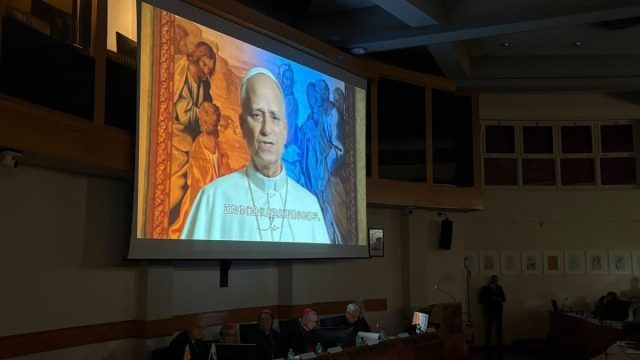
Pope Leo XIV sent a video message on November 5 to participants in the conference "The face of the universal Church in China. 100 years of the consecration of the first Chinese bishops," held at the Pontifical Urbaniana University in Rome. The Dicastery for Evangelization organized the conference with the university. The pope set the anniversary against the background of a world "torn by conflict and overwhelmed by war," and prayed that the Lord would guard the treasure of the Church's communion, which he called a "fruitful source of goodness and peace for all."
Leo opened with an idea he said holds for the whole history of the Church: looking at the past can shed light on the present. Exactly a century ago, six Chinese bishops sailed from Shanghai to Rome to receive episcopal consecration from Pope Pius XI. That gesture, the pope said, stirred joy and pride among many of their compatriots, strong enough to push mistrust and hostility out of mind.
Communion with the Bishop of Rome
Leo said the journey carried a deeper meaning: the future bishops crossed the world to bear witness to the communion that springs from the apostolic faith, whose indispensable sign is the unity of each bishop with the Bishop of Rome. He recalled the words Pope Benedict XVI addressed to Chinese Catholics in his letter of May 2007, which said the Church in China "has never been deprived of the ministry of legitimate Pastors who have preserved the apostolic succession intact."
Leo also cited a video message by Pope Francis from May 2024, in which Francis said Chinese Catholics in communion with the Bishop of Rome "bear witness to their faith through works of mercy and charity" and contribute "to the harmony of social coexistence and to the building of our common home."
Mission is not colonization
The pope recalled that it was at the Council of Shanghai in 1924 that the missionary bishops present urgently asked that the governance of Church communities be entrusted to native Chinese priests and bishops. All of them came from other countries, and they were led by the apostolic delegate, Archbishop Celso Costantini. Leo described that initiative as an expression of fidelity to what the Church is, and said its unity, in words he attributed to Francis, "is not uniformity, but communion in diversity."
The voyage of the six candidates for the episcopate belonged to the missionary push of the 1920s. Leo recalled that Pope Benedict XV had restated that approach in 1919 in the apostolic letter Maximum illud. The letter made clear that the Church's work of evangelization cannot be confused with colonization or with the export of foreign ideas or cultural models. The seed of the Gospel, it said, grows not through human strategies but through the grace of God. The Church naturally takes on the features of the peoples among whom it is called to proclaim Christ.
Faith in diversity
Leo grounded this view in the witness of the Fathers of the Church. They saw with joy that faith in Jesus and the action of the Holy Spirit make brothers and sisters of people from different cultures, languages, civilizations and nations, sometimes very far apart. The Church, he said, lives among peoples with friendship and sympathy for their hopes and their legitimate aspirations, and a shared faith embraces differences, taking in wherever possible what is proper to each person and each community.
Leo closed by returning to a point he made in September this year, when he addressed the bishops of Latin America and the Caribbean for the third centenary of the canonization of St. Toribio de Mogrovejo, a Spanish missionary bishop in Peru. No pastor in the Church, he said, can claim the mission as exclusively his own, but receives it and carries it out in communion, united with the Successor of Peter and with all the other successors of the Apostles throughout the world.
Based on reporting by Juana Morales for Iglesia Noticias. This article was translated and adapted from Spanish with the help of artificial intelligence.