Spanish Church mobilizes after Urda train collision kills at least 68
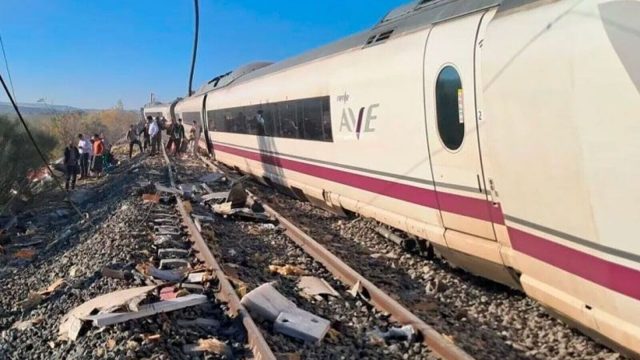
Bishops across Spain, religious orders and Caritas offered prayers and support after an AVE high-speed train and an Iryo train collided near Urda, in Toledo province, on October 28, killing at least 68 people
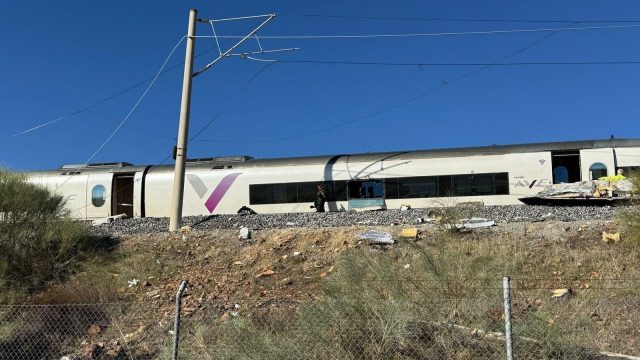
An AVE high-speed train and a train run by the private operator Iryo collided on the morning of October 28, 2026, in the municipality of Urda, in Los Yébenes, in the central Spanish province of Toledo. At least 68 people were killed and dozens injured. Three cars, two from the Iryo train and one from the AVE, fell down an embankment after the impact. More than 540 people were traveling on the two trains. The death toll is higher than that of the accident at Adamuz, in Córdoba province, which killed 46 people barely 10 months earlier, making it the deadliest rail accident in Spain's recent history.
The parishes of Urda and Consuegra mobilized immediately to take in those caught up in the crash. The Archdiocese of Toledo, together with Caritas Diocesana, the local branch of the Church's main charity in Spain, said it was available to offer help and spiritual accompaniment to those affected.
The bishops' conference responds
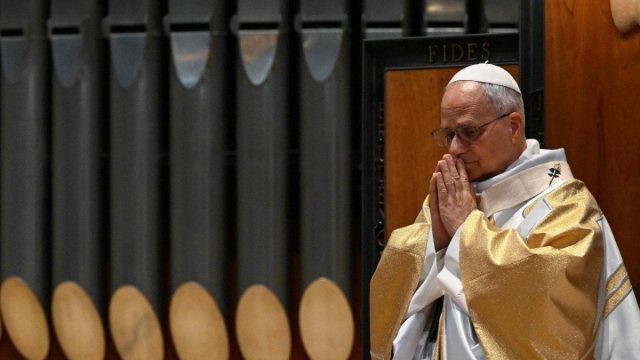
The Spanish Bishops' Conference, Spain's counterpart of the USCCB, was among the first institutions to speak. In a statement it offered condolences to the families of the dead, prayed for the eternal rest of those who lost their lives and for the recovery of the injured. The bishops also asked that celebrations in Christian communities include prayers for all the victims, "so that, through the intercession of the Virgin Mary, Consolation of the Afflicted and Queen of Peace, the Lord may grant the gift of Life to the victims and hope to the families and those affected."
The president of the conference, Archbishop Luis Argüello of Valladolid, said that "tragedy has again crossed the path of our existence" and added that "the inexorable reality of the cross in the form of structures, personal and institutional responsibilities, human limits and the mystery of evil invites us to look at the Vera Cruz of the Christ of Urda, to weep and to pray."
The Church in Toledo and leading bishops
The secretary general of the bishops' conference and auxiliary bishop of Toledo, César García Magán, was one of the first in the hierarchy to speak. He said he was "dismayed" by the accident and asked that those affected find in the Lord "consolation and strength in these moments of such suffering."
The archbishop of Toledo, Francisco Cerro Chaves, and García Magán together expressed their "deep concern" and their closeness to all those affected, and acknowledged the work of the emergency, medical and security services. Cardinal José Cobo, the archbishop of Madrid, said he was following reports of the crash "with deep sorrow" and asked for prayers for the victims, the injured, their families and those taking part in the relief effort.
Solidarity from dioceses across Spain
Bishops and archbishops from across Spain added their expressions of sorrow. The archbishop of Santiago de Compostela, Francisco José Prieto Fernández, asked the whole diocese to pray for the dead, the injured and their families, and for those working in the relief effort.
The archbishop of Tarragona, Joan Planellas, expressed solidarity and prayer for the victims and their families. The archbishop of Granada, José María Gil Tamayo, prayed for the dead and expressed closeness to their relatives. Similar messages came from the archbishop of Seville, José Ángel Sáiz Meneses; the bishop of Orihuela-Alicante, José Ignacio Munilla; the bishop of Getafe, Ginés García Beltrán; the archbishop of Pamplona, Florenció Roselló; the bishop of Sant Feliu, Xabi Gómez; and the bishop of Málaga, José Antonio Satué.
The dioceses of Huelva, which had already been closely affected by the Adamuz tragedy, Mérida-Badajoz, Coria-Cáceres, Cuenca, Ávila, Zamora and Vitoria also sent messages of solidarity and prayers. The bishops of the ecclesiastical province of Valencia, meeting in their provincial assembly, issued a joint statement saying they had learned of the accident "with deep sorrow" and offering condolences to the families of the victims.
The bishop of Jaén, Sebastián Chico Martínez, received the news in Rome, where he was at the time. He offered his condolences and his closeness to the families of the dead, and invited the whole diocese of Jaén to share in prayer the suffering of so many families.
Consecrated life responds
CONFER, the association of religious orders and congregations in Spain, said it shared in the suffering of the victims and their families and prayed for those working on the rescue. Sister Lucía Caram said, "with a heavy heart," that she was close to and in solidarity with all the victims, and thanked firefighters, medical staff, security forces and emergency teams "from the heart" for their dedication in the rescue work.
Orders and congregations including the Jesuits, the Salesians, the Claretians and the Hospitaller Brothers of St. John of God also expressed deep sorrow. The Society of Jesus in Spain said that among those hospitalized is Father David Cabrera SJ, delegate of MAG+S, who was traveling on one of the trains involved. His condition is not serious and he is recovering.
The Jesuits asked for prayers for him and for all the victims, and thanked the emergency teams, medical staff and volunteers, whose work they called a "testimony of humanity in the midst of so much suffering."
Based on reporting by Javier Ruiz Arregui for Iglesia Noticias. This article was translated and adapted from Spanish with the help of artificial intelligence.