New Ways Ministry leaders criticize Ratzinger's 1986 letter on homosexuality
Forty years after the Congregation for the Doctrine of the Faith published its letter on the pastoral care of homosexual persons, two leaders of the US group New Ways Ministry have criticized the document signed by Cardinal Joseph Ratzinger
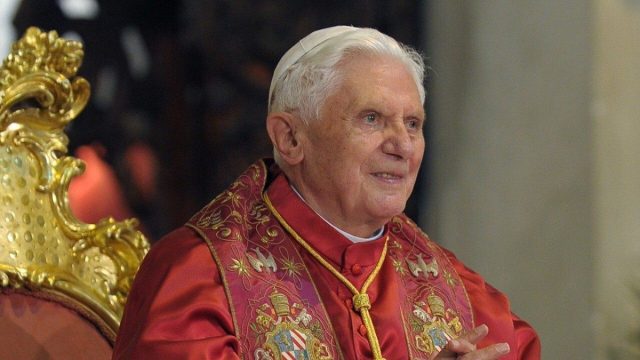
Forty years after it was published, the "Letter to the Bishops of the Catholic Church on the Pastoral Care of Homosexual Persons," signed on October 1, 1986, by the Congregation for the Doctrine of the Faith, has returned to the center of debate in the Church. On the anniversary, critics of Catholic teaching on homosexuality have sharply criticized its contents.
The text was signed by Cardinal Joseph Ratzinger, then prefect of the Congregation for the Doctrine of the Faith, who was elected pope in 2005 as Benedict XVI. John Paul II approved the letter, which was presented as a doctrinal clarification following the 1975 declaration on sexual ethics.
Ratzinger's teaching on homosexuality
The document distinguished between the homosexual inclination, which it called "objectively disordered," and homosexual acts, which it described as "intrinsically disordered" in Catholic moral terms. The congregation held that such acts could not receive moral approval of any kind.
The letter grounded that position in a reading of Scripture that affirmed a "clear consistency within the Scriptures themselves on homosexual behavior." It took Genesis as its central theological reference, recalling that God "creates man in his image and likeness as male and female," and argued that "only in the marital relationship can the use of the sexual faculty be morally right."
According to the document, "homosexual activity does not express a complementary union, capable of transmitting life, and therefore contradicts the call to an existence lived in that form of self-giving which, according to the Gospel, is the very essence of Christian life." It added that such activity "prevents a person's own fulfillment and happiness because it is contrary to the creative wisdom of God."
The pastoral response: chastity and the cross
On pastoral care, the document said homosexual persons "are called to live chastity," like any other Christian. It proposed that "for the believer the cross is a fruitful sacrifice," and invited those with a "homosexual inclination" to "unite to the sacrifice of the Lord's cross all suffering and difficulty they may experience because of their condition."
The letter also explicitly condemned "malevolent expressions and violent actions" against homosexual people and said that "the dignity proper to every person must always be respected in words, in actions and in legislation." But it warned bishops to remain "vigilant with regard to those programs which in fact try to put pressure on the Church to change her doctrine."
Vigilance against doctrinal pressure
The 1986 text warned of "pressure groups with various names" that sought to "present themselves as representatives of all homosexual persons who are Catholic." Their aim, the document said, was "to keep under the shelter of Catholicism homosexual persons who have no intention of abandoning their homosexual behavior."
The letter asked bishops "not to fail to seek the collaboration of all Catholic theologians" to explore more deeply the meaning of human sexuality and Christian marriage, and to reject "theological opinions which are contrary to the teaching of the Church and which therefore cannot serve as norms in the pastoral field."
Current criticism: "so un-Catholic"
Among the critics is Sister Jeannine Gramick, co-founder of New Ways Ministry, a US organization that has questioned official Church teaching since its founding. Gramick described how she and others reacted to the letter at the time: "We were horrified when we read it, though I would say we were not surprised."
Francis DeBernardo, executive director of New Ways Ministry, said, "I was really shocked," adding that the document struck him as "so un-Catholic."