Portland archdiocese tells lay Catholics not to extend their arms during the Our Father
The Archdiocese of Portland in Oregon has told lay Catholics not to extend their arms or hold hands during the Our Father at Mass, citing the General Instruction of the Roman Missal and the teaching of the Second Vatican Council
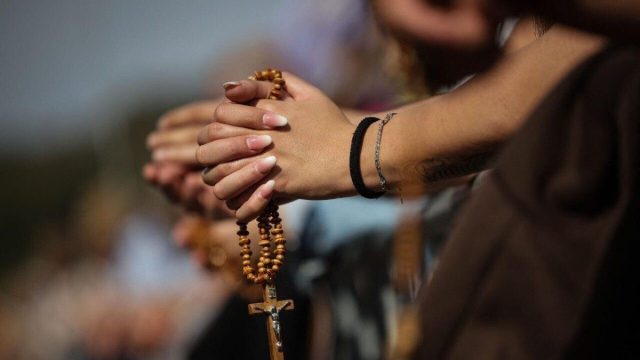
The Archdiocese of Portland, in Oregon, issued an official instruction in November 2026 asking lay faithful to refrain from extending their arms or holding hands during the Our Father at Mass. The Office of Divine Worship signed the instruction, which appeared in the office's monthly bulletin and was posted on the archdiocese's official account on X. The document, titled "Orans Posture During Mass," is meant to set a single standard for all parishes in the archdiocese.
The instruction rests on the General Instruction of the Roman Missal (GIRM). The bulletin says no. 152 of that document expressly reserves the gesture of extending the hands during the Lord's Prayer to the priest, whether he is the principal celebrant or a concelebrant. The office concludes that deacons and lay people who adopt the same posture would be adding to the liturgy something the norms never assign to them.
Conciliar teaching and canon law
The bulletin also turns to Sacrosanctum Concilium, the Second Vatican Council's constitution on the liturgy, whose no. 22.3 states that no one, not even a priest, may add, remove or change anything in the liturgy on his own authority. On that basis, the office concludes that because the orans gesture is assigned specifically to the celebrant, extending the practice to other participants amounts to an unauthorized change to the rite.
The document also cites canon 907 of the Code of Canon Law, which bars deacons and lay people from carrying out actions proper to the celebrating priest, including the eucharistic prayer. The archdiocese acknowledges that the GIRM contains no explicit prohibition addressed to lay people. But it argues that every reference in that text to extending the hands points only to the priest, and that neither lay people nor deacons are given any liturgical direction to adopt the posture.
Historical background of the 1970 Missal
The archdiocese also sets out the history. Before the new Roman Missal of 1970 took effect, only the priest recited the Our Father as part of the liturgy. He did so with his hands extended, a sign that he was praying in the name of the people. Neither the 1970 Missal nor the documents of the Second Vatican Council changed that distribution of gestures.
The bulletin notes that the orans posture has ancient roots, appearing in Scripture, as in the image of Moses with his arms raised in the Book of Exodus, and in the art of the early Christian communities. In the setting of the Mass, it says, the posture has historically belonged to the priest, who prays on behalf of the assembly, and extending it to the faithful has no basis in the norms or in history.
A decade of confusion clarified
The Portland text acknowledges that in recent decades there has been real confusion among the faithful about these gestures. The instruction states: "the priest and deacon should never direct the lay faithful to use the orans posture during Mass." With the clarification, the archdiocese is seeking to set a common standard for parishes in its territory and to keep celebrants from encouraging gestures that do not belong to the role of lay people.
Based on reporting by Juana Morales for Iglesia Noticias. This article was translated and adapted from Spanish with the help of artificial intelligence.