Canon lawyers in Germany call for stronger protection against spiritual abuse in religious orders
Sixty-five people from religious orders, canon law and theology met in late October at the Catholic University of Eichstätt-Ingolstadt in Germany and called for clearer legal limits on the authority of superiors
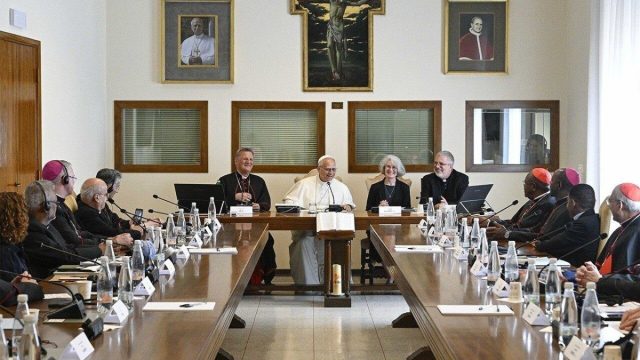
The third Eichstätt Day of Religious Orders Law ended with a call for stronger legal protection for members of religious institutes against abuse of power within their own communities. The meeting was held in late October at the Catholic University of Eichstätt-Ingolstadt in Germany and drew 65 people from religious orders, canon law and theology. Discussions centered on the legal limits of the authority of superiors and on the challenges posed by aging communities and falling numbers of vocations in institutes of consecrated life.
Benedictine sister Lydia Schulte-Sutrum, of the Institute of Religious Orders Law in Dinklage, said that entering an order does not mean giving up personal rights. "Opening incoming mail or requiring that letters be left unsealed is an intrusion into a person's intimate sphere," she said. She said areas of freedom must be preserved in matters such as confession, spiritual accompaniment, privacy and the handling of members' health data.
Benedictine theologian Noach Heckel, a professor in Trier, warned against giving the exercise of governing authority a religious character that places it beyond question. "A superior cannot equate his own ideas with the will of God," he said. Heckel said spiritual abuse is hard to define, calling it an "umbrella term that is difficult to grasp," and said that difficulty makes clear criteria necessary. "Not every command requires obedience. The authority of superiors also has legal limits," he said.
Transformation and management as vocations decline
The meeting gave particular attention to the changes monasteries are going through as vocations fall, communities age and financial burdens grow. Participants said these crises cannot be resolved in spiritual terms alone and require active management and specific decisions. "We cannot hide in prayer from the decisions ahead of us," said Franziska Mitterer, who handles affairs of religious orders in Munich. Mitterer proposed drawing up what she called a "testament of religious communities." Each institute would set out in that document what it deliberately wants to pass on and what it wants to endure, including the possibility that the community itself may come to an end.
Canon lawyer Rafael Rieger, of Eichstätt, focused on the orders' financial responsibility toward their own members. "Religious cannot become a burden on society," he said, and he called on communities to provide well in advance for the long-term care of their members. Rieger said decisions about property cannot be made apart from the spiritual mission of each institute, and that the sale of buildings in particular requires what he called a "charismatic plan." He said there are no simple solutions to these questions.
The series will continue next year with another edition of the Eichstätt Day of Religious Orders Law.
Based on reporting by Lucas Alonso for Iglesia Noticias. This article was translated and adapted from Spanish with the help of artificial intelligence.