Vatican center brings AI and human dignity talks to UN General Assembly
The Vatican's Laudato Si' Center for Higher Education is holding its invitation-only Borgo Dialogues in New York from September 20 to 23, 2026, alongside the 81st UN General Assembly

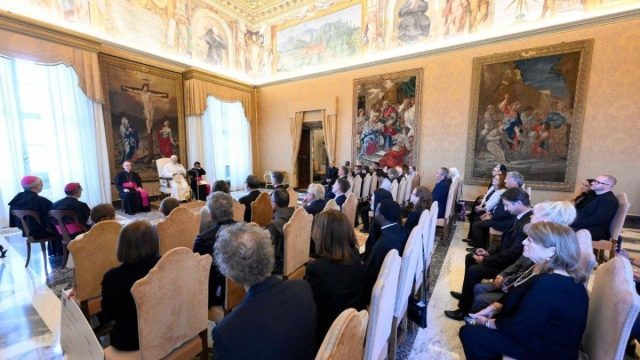
A Vatican-led group is in New York for talks with world leaders on artificial intelligence, human dignity and the common good, held alongside the 81st General Assembly of the United Nations. The event, known as the Borgo Dialogues, runs from September 20 to 23, 2026, and is organized by the Laudato Si' Center for Higher Education, a Vatican institution. The meeting is built around the question: "What are we building, for whom, and who will inherit it?"
The invitation-only sessions bring together figures from business, finance, academia, faith, health, sports, civil society and international institutions. Cardinal Fabio Baggio, director general of the Laudato Si' Center and founder of the Borgo Dialogues, said the meetings are an invitation to courageous leadership based on listening, encounter and shared responsibility. "At a time when many institutions face growing fragmentation and mistrust, we need spaces where leaders can address difficult questions honestly, build trust across differences and commit to actions that uphold human dignity and promote the common good," Baggio said.
The Borgo Dialogues draw on Francis' encyclicals Laudato Si' and Fratelli tutti and on Leo XIV's encyclical Magnifica Humanitas. The discussions cover how AI is changing work, human dignity in health care, sustainable development and systemic change across industries. The aim is a shared commitment to designing technologies and institutions that recognize the inherent dignity of every person, with particular attention to the most vulnerable.
Father Daniel G. Groody, a member of the general council of the Laudato Si' Center, said "the world's most urgent challenges require relationships that go beyond institutions and ideologies." He said the Borgo Dialogues create a setting where intellectual rigor, moral purpose and practical leadership come together, helping leaders turn reflection into responsibility and ideas into action. The first edition was held in the Pontifical Gardens of Castel Gandolfo, in Vatican City State, from June 17 to 19, with more than 80 participants.
Liz Shuler, president of the AFL-CIO, also took part in a conference at the Vatican, where she criticized AI executives who she said "want to play God" by making decisions that affect millions of workers without their consent. Shuler said AI is one of the biggest challenges facing the labor movement because of the threat of mass unemployment it could bring. She said workers need to be included in conversations about how AI affects their working lives.
Shuler praised the attention Leo XIV gives to labor issues in Magnifica Humanitas, which addresses the legitimate fear of sharp job losses and the need for political, business and labor leaders to work together on regulation and protections. She said the Catholic Church can bring significant convening power and can affirm that humanity must be at the center of the AI revolution.
The AFL-CIO has formed partnerships with companies including Microsoft to advance ethical considerations in the development and use of AI. The union says such collaborations offer an alternative to a debate centered on economic and geopolitical competition. The Laudato Si' Center is expected to bring proposals drawn from the Borgo Dialogues to the World Economic Forum.