Pope Leo XIV tells young people in Lima how to find their vocation
Speaking to more than 352,000 young people at Peru's National Stadium on November 12, 2026, Pope Leo XIV built his address around three words: passion, vocation and friendship with Christ
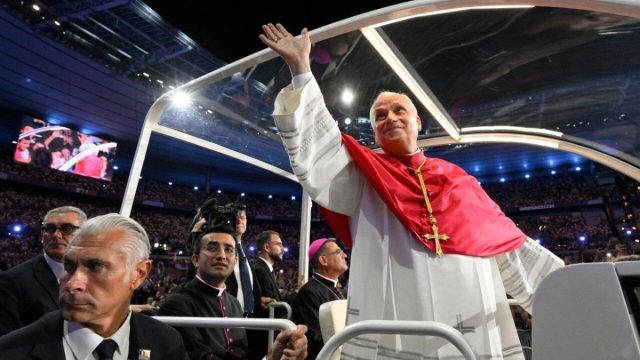
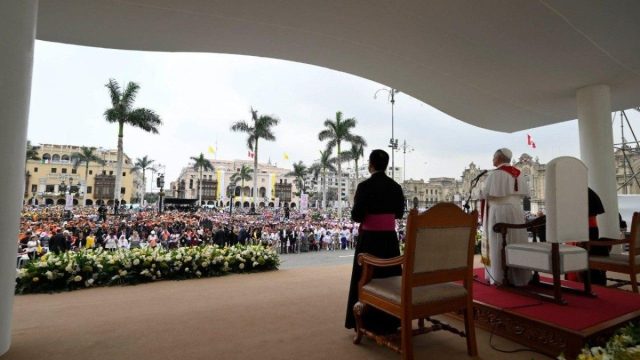
Pope Leo XIV spoke to young people gathered at the National Stadium in Lima, Peru, on Thursday, November 12, 2026, under the theme "And the Word became young and dwelt among us." More than 352,000 people attended: about 52,000 inside the stadium and close to 300,000 in the surrounding areas. The pope arrived at 5:55 p.m., five minutes ahead of schedule, and made two laps of the field in the popemobile. One sign in the crowd read "Pope Leo, see you in Seoul," a reference to World Youth Day 2027.
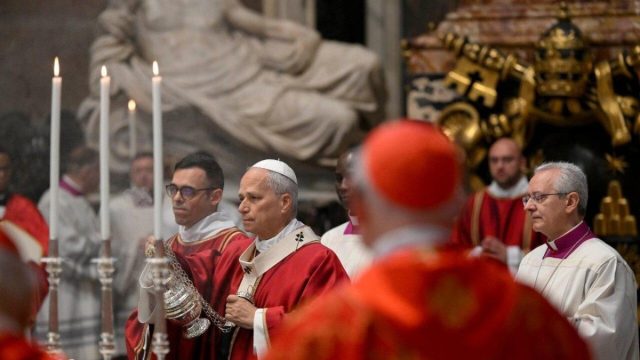
Cardinal Castillo attended the event, which included personal testimonies from three young people, Joao, Emily and Sister Luzbinda, whose words provided the starting point for the pope's address. Before the pope spoke, the cardinal recalled Jordan Inti Sotelo, 24, and Jack Bryan Pintado, 22, who were killed in the 2020 protests in Peru, and called them "martyrs of the young."
The testimonies that opened the reflection
Joao Meza, an 18-year-old medical student, said: "I did not think dance would help me connect with my deepest self, the place where God dwells." Emily Milagros Herrera, youth ministry coordinator in the Diocese of Carabayllo, said that "faith does not make pain disappear as if by magic, but teaches us to live it by letting ourselves be accompanied." Sister Luzbinda Ramos Zurita, an Ursuline who lost her mother when she was 17, said: "Face to face with Jesus Christ, the Bridegroom of my life, I fell in love with his love."
Leo opened by greeting the whole city: Lima, Callao, Carabayllo, Lurín and Chosica. Someone had told him, he said, that Peru needed a sign of hope, and he answered that the sign was the young people gathered in the stadium that night. He thanked the crowd for its welcome, Cardinal Castillo for his words, and the three young people for the honesty with which they had opened their hearts in front of everyone.
Jesus' first question: "What are you looking for?"
The pope turned to a scene from the Gospel of John: the moment John the Baptist points to Jesus in front of two of his disciples and says, "Behold, the Lamb of God" (Jn 1:36). Hearing this, both began to follow Jesus, who noticed them, turned and asked, "What are you looking for?" (v. 38). Leo said these are the first words Jesus speaks in that Gospel. He asked each young person to hear them as addressed to them at that moment: what are you looking for, what do you hope to find, what do you expect from life?
The pope told them not to rush the answer, because some questions stay with a person for a long time. He suggested they think about what excites them most, the people they love and the dreams they would be willing to fight for, but also about the worries that keep them awake and the things they would like to change. All of that matters to Jesus, he said, because Jesus cares about each one of them.
First word: passion
Leo said passion means both what we love intensely, which brings out the best in us, and the suffering that seems to drain the will to keep going. He acknowledged that some young people feel alone even when surrounded by others, and that others carry the pain of a loss or uncertainty about the future. At times, he said, they ask why God is silent when he is most needed.
He recalled that John the Baptist presented Jesus as "the Lamb of God," a title whose full meaning the disciples would understand only in the light of the Passion. Christ knew anguish and darkness, and from the cross he cried out, "My God, my God, why have you forsaken me?" (Mk 15:34). Jesus did not seek the cross for its own sake, the pope said, but our salvation. He accepted it out of love to the end, and through that self-gift an instrument of death became the revelation of a love able to defeat death.
Leo encouraged young people to turn to Jesus in suffering, to speak to him honestly even when they struggle to find words to pray, and to seek out the company of those who love them. He urged them to be passionate about everything worthwhile, about what is true, good and beautiful, to develop their talents, to discover the riches of their culture and to dare to take on generous projects. He quoted Pope Francis, who wrote in the post-synodal apostolic exhortation Christus vivit that such "unsatisfied restlessness" can move us to take up life with responsibility and commit ourselves to a mission. God has created each person able to do a good that no one else can do in the same way, Leo added.
Second word: vocation
The pope returned to the Gospel account: when Jesus asked his question, the two disciples answered, "Teacher, where do you live?" and he told them, "Come and see" (Jn 1:38-39). Leo noted the simplicity of that answer. The Lord did not explain in advance everything that lay ahead; accepting the invitation was enough to begin. A vocation starts the same way, he said, because some answers are discovered only when a person dares to walk with Jesus.
He recalled that St. Paul teaches that God chose us in Christ before the creation of the world (cf. Eph 1:4): before we existed, we were already loved by him. The pope also addressed the fear that following God's will means giving up one's own dreams, and warned that an even more dangerous suspicion can grow out of that fear, the belief that God withholds something and that enjoying life fully also requires experiencing sin (cf. Gn 3:5).
Leo asked the young people to keep in their hearts the words of Pope Benedict XVI: "evil always poisons" (Homily, December 8, 2005). God knows our deepest desires better than we do, he said, and wants to bring them to fulfillment.
As happened with the first disciples, the pope said, a vocation usually begins unexpectedly: through a friend, through an experience of service, or through meeting someone whose life raises questions about what really matters. He encouraged them to set aside moments of silence before the Blessed Sacrament, to talk to Jesus about their plans and to let his Word challenge them. Some will be called to the priesthood or consecrated life, he said, others to marriage and family, but all are called to put their abilities at the service of others. To those who think they have made too many mistakes or that it is too late to start again, he said: "look at Jesus. He knows your story and he keeps inviting you to walk with him."
Third word: friendship
Leo dwelt on a detail of the Gospel: the two disciples "stayed with him that day" (Jn 1:39), and John even recalls the exact hour, four in the afternoon, because the encounter left a mark the years could not erase. A vocation grows the same way, the pope said, by staying close to the Lord, listening to him and sharing joys and worries with him.
At the Last Supper, Jesus told his disciples, "I call you friends" (Jn 15:15), and that same night he spoke the words that would be fulfilled on Good Friday: "No one has greater love than this, to lay down one's life for one's friends" (v. 13). Leo urged them to cultivate that friendship with Christ in prayer, in the Eucharist and in listening to his Word, because the more we learn to love Jesus, the more we are able to love as he does.
Friendship with Christ also gives rise to a more genuine friendship with others, one that sincerely seeks their good, knows how to forgive and stays faithful in hard times. The pope said the Church is born of and lives by that friendship, and that in it we find brothers and sisters who help us keep going. He asked young people not to think they must always appear strong, especially those who lead groups or support others, and to let themselves be cared for. He recalled that Jesus himself, in Gethsemane, wanted his friends near him at the moment of greatest anguish (cf. Mt 26:38).
Closing: the Baptist's testimony as an invitation
The pope closed with the end of the Gospel passage: after that first encounter, Andrew went to find his brother Simon and told him, "We have found the Messiah" (Jn 1:41), and brought him to Jesus. Leo asked the young people to do the same, thinking especially of those going through difficult times, because a gesture of friendship can change the course of a life.
He ended with words from Pope Benedict XVI's homily at the start of his Petrine ministry on April 24, 2005: the Lord "takes nothing away, and he gives everything." He invited them to trust Christ as a true friend who knows them, loves them and never abandons them. He asked the intercession of the Virgin Mary and the Peruvian saints so that this trust would grow each day.
The gathering ended with a prayer repeated three times with the young people: "Jesus, I trust in you," followed by an invocation: "Come, Lord Jesus. Come into my heart, come into my family, come into my community. Come soon into my life! Come soon, Lord!"
Based on reporting by Almudena Rodrigo for Iglesia Noticias. This article was translated and adapted from Spanish with the help of artificial intelligence.