Pope Leo XIV warns Peru's bishops against exercising authority tyrannically
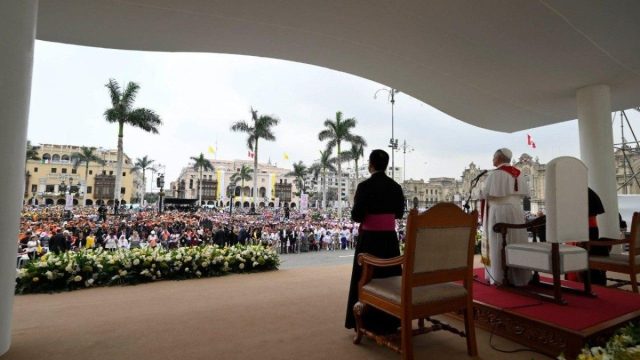
Pope Leo XIV met the bishops of Peru in Lima during his sixth international trip and used the image of the Inca Trail to describe the episcopal mission. He called for pastors who go out to the peripheries and listen to the questions of their time
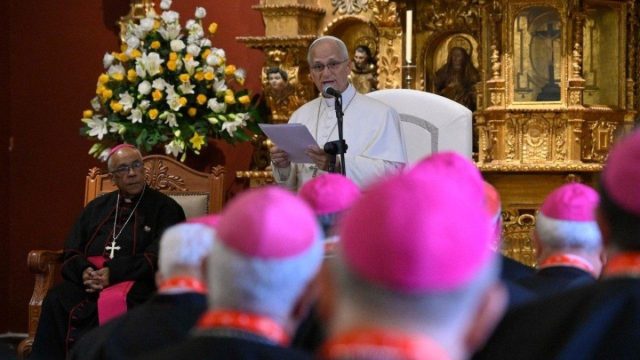
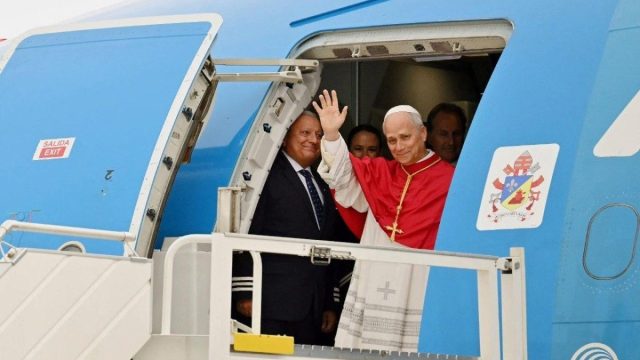
Pope Leo XIV met Thursday morning with the bishops of Peru in the chapel of the Archbishop's Palace in Lima, during his visit to the country. The visit is part of his sixth international apostolic trip, which has already taken him to Uruguay and Argentina. In a long address, the pope spoke about the mission of a bishop through the image of the Inca Trail. He thanked the bishops for organizing the visit and said he was looking forward to the events planned for the coming days.
The Inca Trail as an image of the episcopal mission
Leo XIV began by saying that the roads crossing Peru also run through the soul of its people. The mountains, the valleys, the coast, the Amazon and the ancient paths hold the memory of communities that learned to meet one another and exchange their gifts. He singled out the Great Inca Trail as a vast network that joined territories, communities and cultures across the country. From that image he offered the bishops a reflection on their mission, recalling that the Church is also a road: "of communion and of hope; a road that crosses the mountains of indifference, the deserts of individualism and the distances that separate people."
The motto of the visit, "Let us open our hearts!", served as the thread of his address as he explained what that means for a bishop. Opening the heart, the pope said, means knowing the road to God and walking it alongside the faithful, and letting both God and the people question one's own priorities. It is a journey that is "eminently missionary," like the Inca Trail, which was not laid out so that travelers would stop to admire the scenery but so that they could reach the whole of Tawantinsuyu, the Inca empire.
The bishop is the messenger who carries the Good News, guards the Word of God and distributes the sacraments as the goods needed to sustain the Christian life, he said. Just as that road inherited the paths of pre-Inca cultures, the bishop serves a history of salvation that began before him and will continue after he is gone.
Going out to meet everyone
Opening the heart also means knowing one's own diocese by entering homes, caring for the sick, meeting young people and drawing close to communities that are rarely heard because they are geographically remote or socially fragile, Leo XIV said. The pastor is called to go out to meet everyone, without exception.
Bishops must ask which roads truly lead to Christ and denounce the false ones, he added, because Peru today needs pastors able to listen to the questions of their time and illuminate them with the Gospel. Their mission includes supporting families, backing young people, defending the life and dignity of every person, promoting justice and committing themselves to care for creation. They should pay particular attention to those who suffer poverty, exclusion, corruption, violence and a lack of opportunity.
That mission, he said, requires joining doctrinal fidelity with pastoral closeness, the celebration of the sacraments with commitment to one's neighbor, and the formation of conscience with concrete witness of charity.
Peru's saints as a model of mission
The pope pointed to St. Toribio de Mogrovejo, the 16th-century archbishop of Lima, to illustrate that pastoral charity does not consist in avoiding problems but in remaining faithful to Christ and seeking the greatest possible good for people. The saint understood that his mission required him to be present in the communities, to attend above all to Christian formation and to make sure the Gospel could be preached in the languages of the indigenous peoples. The catechism written in Aymara, Quechua and Spanish bears witness to that missionary zeal, the fruit of his work with the bishops gathered at the Third Provincial Council of Lima.
Leo XIV also recalled St. Rose of Lima, whose prayer and dedication to the needy show that apostolic fruitfulness depends on union with the Lord and on caring for the spiritual life while exercising the ministry. From St. Francis Solano he highlighted the missionary and joyful spirit that drives a person to cross borders to proclaim the Gospel, especially on the human and geographical peripheries.
St. Martin de Porres and St. John Macias teach, through their humility, how to recognize Christ in the least, and they are a reminder that no one can be measured by prestige, origin or social position, he said. The lives of these saints, different from one another but moved by a single faith, represent the unity of the Church in Peru. They were bishops, priests and lay people, Spaniards, criollos and mulattoes, and they form, in the pope's words, a school of holiness.
The response to abuse
Leo XIV also addressed abuse committed by members of the clergy or within the Church, calling it a reality that has caused deep pain. The response, he said, must be the one Jesus would give: with truth, with justice, with forgiveness, with reparation and with an ever firmer commitment to a culture of prevention and protection of the weakest.
Unity and episcopal fraternity
On unity, the pope recalled that in that same place, in 2018, he himself sat among the Peruvian bishops and heard his predecessor, Pope Francis, urge them forcefully to work for communion. He quoted Francis: "Do not remain prisoners of divisions that fragment and diminish the vocation to which we have been called: to be a sacrament of communion. This was, is and will be the best evangelization."
The episcopal mission demands building bridges, encouraging dialogue, teaching people to meet one another and helping to heal the wounds that tear Peruvian society, Leo XIV said. That requires cultivating trust among the bishops themselves, sharing difficulties and strengthening episcopal fraternity, because no bishop should feel alone on the road and no particular Church should live its mission as if it were separate from the others.
The synodal process and three final appeals
The pope said he was pleased with the synodal process the Church in Peru has begun. He asked the bishops to keep working firmly alongside the People of God to make possible a Church in which everyone recognizes themselves as co-responsible and as missionary disciples of the Lord, in mutual trust. Authority, he said, should not be exercised tyrannically, and obedience should not be reduced to mere servility.
He closed with three appeals: do not stop walking with the Peruvian people, do not stop walking together as bishops, and do not stop opening your hearts. The Peruvian people, he said, should find in the Church a home where they are welcomed, listened to, loved and led to Jesus Christ.
"The Church does not belong to us: it belongs to Christ. We are messengers who one day will finish our journey. Only God remains," the pope said at the end of the meeting.
Based on reporting by Juana Morales for Iglesia Noticias. This article was translated and adapted from Spanish with the help of artificial intelligence.