
Holy See calls for a global response to human trafficking
Monsignor Luca Marabese told the 15th UN Congress on Crime Prevention and Criminal Justice in Abu Dhabi that trafficking, online abuse of children and hate crimes require coordinated responses from states
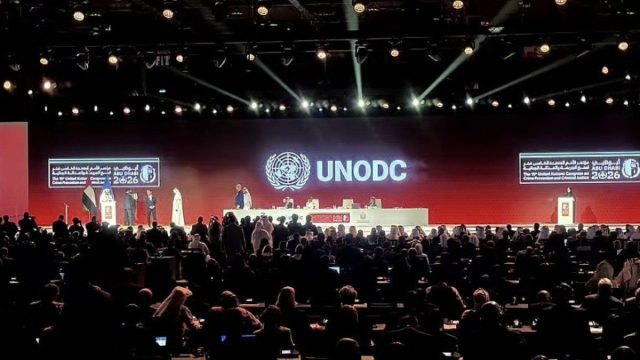
The Holy See defended the dignity of the human person as the center of the fight against crime during the 15th United Nations Congress on Crime Prevention and Criminal Justice, held in Abu Dhabi. Monsignor Luca Marabese, a counselor at the Holy See's Permanent Mission to the International Organizations in Vienna, spoke for the Vatican delegation. He focused on new forms of exploitation and violence driven by armed conflict and by advances in technology.
Marabese welcomed the adoption of the Abu Dhabi Declaration by states and called on them to respect the dignity of every human being, which he described as a "gift of God." The Holy See repeated its opposition to the death penalty, saying it destroys any hope of forgiveness and renewal. It said penalties must be proportionate to the crimes committed and that prison conditions must respect the dignity of inmates at all times.
Marabese pointed to three emerging criminal trends that require coordinated responses. The first is human trafficking, made worse by geopolitical instability and armed conflicts, which give traffickers fertile ground to operate, with migrants, refugees, women and children most affected. He recalled the words of Pope Leo XIV, who said that "human trafficking must be recognized as a contemporary form of slavery and a grave violation of human dignity." The Holy See is calling for concerted international action to break up criminal networks and at the same time address the root causes that push people to migrate and leave them exposed to exploitation.
The second threat he named was the abuse of children online, where harmful content spreads across borders and makes prevention harder. The Holy See called for closer cooperation among institutions, families, digital service providers and users. Marabese also recalled Pope Leo XIV's appeal for policymakers, schools and families to form an alliance to protect minors in the digital space.
The third point was hate crimes. The Vatican delegation welcomed the explicit reference to religion in the Abu Dhabi Declaration and said it was concerned about growing violence, both physical and online, against individuals and communities because of their faith. It cited the figure of more than 380 million Christians around the world who suffer such persecution, which it considers one of the most widespread human rights crises today.
Marabese ended his address by calling on the Abu Dhabi congress to produce effective and sustainable responses to these criminal trends, with a shared sense of responsibility that leads to specific measures at every level. The Holy See wants the meeting to result in concrete steps that protect the life and dignity of those seeking justice.


