Spanish Augustinian describes the challenges of evangelizing in secular Uruguay
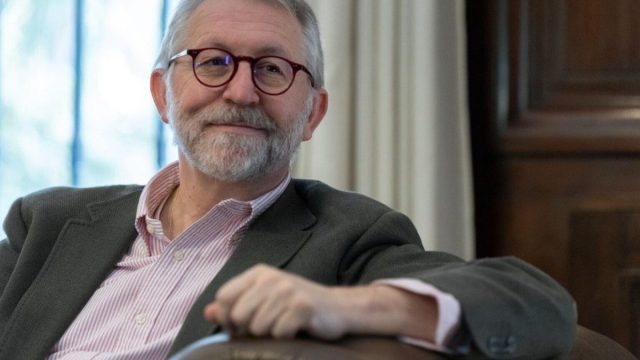
José Luis Arias Álvarez, an Augustinian from León in Spain who spent 29 years in Brazil, now serves in Montevideo, where his order runs a school and a parish in a country with a strong secular tradition
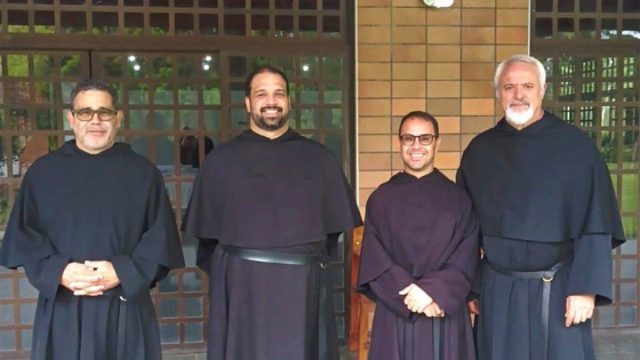
José Luis Arias Álvarez, an Augustinian born in Soto y Amío, in the Spanish province of León, is working in Montevideo, the capital of Uruguay, after 29 years of missionary work in Brazil. The order runs a school and a parish in the city. He described the challenges of evangelizing in a country with a deep-rooted secular tradition and, at the same time, a sense of community that he said connects naturally with the charism of St. Augustine.
The Montevideo community is the only Augustinian presence in Uruguay. As a circumscription, it belongs to the Province of Brazil, which brings together the communities in both countries. Uruguay has about 3.5 million people, half of them living in the capital.
Uruguay's secular context
Secularism in Uruguay goes well beyond the separation of Church and state. There is an active secularism that seeks to remove religion from public space. The official calendar calls December 25 Family Day, although people still speak of Christmas. Holy Week appears in official documents as Tourism Week.
Against that background, Arias Álvarez said Uruguayans have a marked sense of living together and of encounter, a cultural trait fully in tune with the Augustinian charism. That, he said, is the core of the mission: sharing life through the simplicity of everyday things.
Challenges of the daily mission
Arias Álvarez said the look in people's eyes is what most drives his vocation, above all that of children, the sick and families going through serious difficulty. At the school he identified two central challenges: the school's financial and institutional sustainability, and the need to offer a consistent witness. The greatest strength for sustaining the institution and the mission, in his view, is internal unity.
Vocations are another challenge. The Augustinian charism is lived with lay people, who share the mission and the vocation, but it also requires new religious willing to make that commitment. There are also the challenges of the Uruguayan education system, where legislative changes and new teaching models follow one another quickly, and where the falling birth rate is another significant factor.
The Augustinian charism in ordinary life
Speaking about the charism of St. Augustine, Arias Álvarez recalled the Gospel text taken up in the Rule: "To live united with one soul and one heart directed toward God." The charism is not identified with a particular work or activity, he said, but with a way of living. That means cultivating interiority, recognizing that truth dwells within the human person, and building fraternal communion by holding goods and the search for God in common. He warned that the center must always be Jesus and the Gospel, not the institution and not even the founder. That orientation takes shape in the most ordinary gestures: celebrating Mass in the morning, helping with the school's administration, greeting students in the schoolyard or clearing the plates from the table in the friary.
Hopes for the papal visit
Arias Álvarez described the visit of Pope Leo XIV to Uruguay as an experience lived with great joy, and he distinguished two levels in what he hopes will come of it. The first concerns the Church: he said the pope's presence helps to question the dominant tendency that seeks to confine faith to private life or to the sacristy, and strengthens the legitimacy of the Church's participation in public life. He recalled that one of the dearest missions of the Order of St. Augustine is to promote the integral development of the person.
The second level is internal to the order. The visit strengthens the Augustinian presence in Uruguay and encourages the growth of local vocations, he said. New Uruguayan Augustinians will be the ones able to carry the charism forward among a people with a deep sense of community, bringing together faith and spirituality as a proposal for integral human growth, through the parish and the school.
Arias Álvarez said he is left with a renewed awareness of belonging to the Church and of being part of a community of brothers, sons of Augustine, who seek God together on Uruguayan soil.
Based on reporting by Almudena Buenadicha for Iglesia Noticias. This article was translated and adapted from Spanish with the help of artificial intelligence.