Vatican doctrine office says handing on the faith has broken down between generations
The Dicastery for the Doctrine of the Faith published "Venite ad me" on October 22, 2026, a text commissioned by Pope Francis. It says the transmission of the Gospel has stopped almost completely in some parts of the world and calls for a renewed focus on evangelizing adults

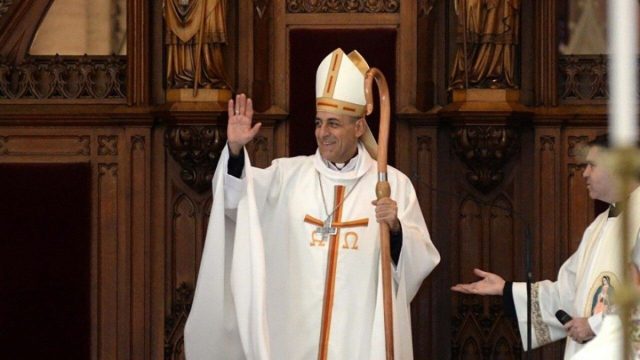
The Dicastery for the Doctrine of the Faith, headed by Cardinal Fernández, published a document on October 22, 2026 titled "Venite ad me. Considerations on the transmission of the faith in the change of era." The text describes the crisis in the handing on of the Gospel in the world today and proposes specific ways for the Church to place Jesus Christ back at the center of its proclamation.
The document came from an explicit request by Pope Francis, who in the final days of his pontificate asked the dicastery for a reflection of this kind to "stimulate debate and reflection in the community." Work on the text gained further momentum with the election of Pope Leo XIV, the celebration of the Jubilee and the approach of the Jubilee of the Redemption in 2033. The document describes these circumstances as an "additional stimulus to proceed more quickly."
Leo XIV's warning about a broken chain
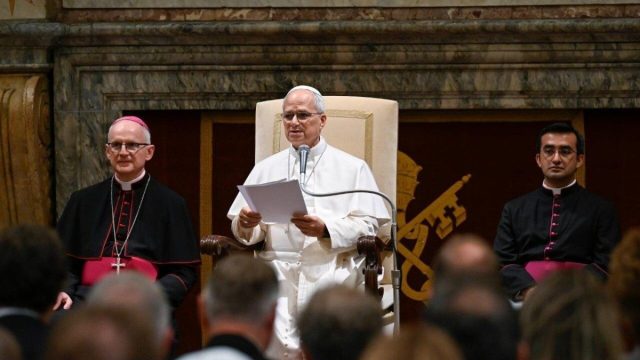
The Considerations quote a warning Leo XIV gave to the Italian bishops when he met them in June 2025: "First of all, a renewed impulse is needed in the proclamation and transmission of the faith. It is a matter of putting Jesus Christ at the center both of the proclamation and of existence and, following the path indicated by Evangelii gaudium, helping people to live a personal relationship with Him, in order to discover the joy of the Gospel. In an age of great fragmentation, it is necessary to return to the foundations of our faith, to the kerygma. This is the first great commitment that motivates all the others."
The pope also said evangelization today has to deal with "the changed conditions and dynamics in the transmission of the faith from generation to generation," and that "in some regions of the world, this transmission has been interrupted almost completely, which demands the ability to take on new challenges."
Diagnosis: the end of natural transmission
The document goes beyond the simple decline in religious practice. The dicastery finds a break in the chain by which Christianity passes from one generation to the next among Catholics. For centuries the family, the school, the parish and the surrounding society formed an environment that favored that transmission. In many countries, it says, that continuity has disappeared.
There are baptized children, sometimes catechized, who reach adulthood in deep religious indifference. The number of those who know neither Jesus nor the Gospel is growing, especially sharply among young people. The document draws a pastoral conclusion from this: the Church has to move beyond a model of evangelization aimed almost entirely at children and adolescents and address adults as well, and as a priority. "The transmission of the faith today requires, in a special way, the evangelization of adults," the text says.
The challenge of the "change of era"
The text describes the current "change of era" as a deep shift affecting culture, human relationships and the way people understand and live the faith. Globalization, secularization, individualism, consumerism and the spread of digital technology are eroding values and weakening family and community ties.
In this setting, the faith is no longer handed on naturally within families and can no longer be assumed as a cultural inheritance. Digital culture and artificial intelligence, the document says, are not only a technical challenge: they also touch on the anthropological dimension, shaping how people relate to one another and how they reach the truth. Still, the text rejects pessimism. The same changes open new opportunities for proclaiming the Gospel, it says. The rise in conversions and baptisms of young people and adults in some countries is a sign of hope, though it requires support to help people persevere in the faith.
The kerygma at the core of evangelization
The theological core of the document is the recovery of the kerygma, the basic proclamation of Jesus Christ, who died and rose for the salvation of humanity. The dicastery recalls the words of St. Paul: "If Christ has not been raised, then our preaching is in vain and your faith is in vain" (1 Cor 15:14).
Christianity cannot be reduced to humanitarian values, social commitment or an ethics of fraternity, the text says. It rests on the revelation of the triune God and on Christ's victory over sin and death. The proclamation must use language that can reach the heart and show that God's love and mercy are directed to each particular person. It is not only a matter of communicating a teaching, but of making possible a personal and communal encounter with the living Christ.
This priority given to a personal encounter with Jesus does not mean abandoning doctrine. The document distinguishes the fides qua, the personal act of believing, from the fides quae, the objective content of the faith, and warns that the first cannot replace the second. Proclaiming Christ also means faithfully handing on the teaching received from the Apostles, the truth of the sacraments and the integrity of the deposit of faith.
The family as the first place of transmission
Among the specific pastoral areas the text takes up, the family holds a central place: it is "the first and most essential place of transmission of the faith," though the document acknowledges that this role has weakened in many parts of the world.
One passage recalls the memory of Father Aimé Duval, who discovered the greatness of God by watching his father pray on his knees at the end of the working day and his mother recite the family prayers. "My father's hands and my mother's lips taught me about the Good Lord far more than my catechism," he wrote. Family prayer, Sunday Mass, devotion to the Virgin Mary and frequent reception of the sacraments are presented as ways in which children come to know God. The document also reaffirms the importance of infant baptism: the faith is not a cultural option that parents should put on hold, but a spiritual good they have a responsibility to hand on.
Liturgy and beauty as paths to God
The document also gives prominent attention to the liturgy. The text recalls the principle lex orandi, lex credendi: the law of prayer expresses the law of faith. The liturgy cannot be reduced to a functional community gathering. It brings the faithful into the mystery of Christ, and the dignity of the celebrations, the singing, the silence and the sacred signs all take an active part in handing on the faith.
The document also points to the power of beauty as a path toward God, citing the case of a young man from an atheist family who was deeply affected by music and by discovering Chartres Cathedral. Churches and cathedrals were built above all to give glory to God, it says, and should not be seen only as cultural heritage.
Other areas of pastoral attention
The Considerations also address popular piety, pilgrimages, confraternities, the homily, volunteer work and the role of art and music as possible ways of drawing people toward the Church. They point to the need for a greater presence of women in the leadership of Church processes, and warn that multiplying pastoral structures and initiatives is not enough if these do not actually lead souls to Christ.
The text also notes the difficulty some new converts have in persevering. In secularized settings where conversions are increasing, some of the newly baptized return soon afterward to practical indifference, which the document says makes it important for communities to welcome and accompany them.
Structure and character of the document
The document specifies that it belongs to the genre of "Considerations" and not that of a doctrinal note. Its purpose is to encourage reflection and pastoral commitment in the Church, so it examines a range of points of view without trying to settle the question, which "remains open to further analysis and development."
It therefore allows a more discursive style than other texts from the dicastery. That is most evident in the final chapter, devoted to the testimonies of people who have discovered or rediscovered the Lord Jesus, gathered from material sent in by numerous national bishops' conferences. Venite ad me has an introduction, eight chapters and a conclusion. The chapters deal with the proclamation of the Father's love, the light of faith, the change of era, the centrality of the kerygma, the transmission of the faith in communities, faith and culture, certain specific areas of attention, and personal testimonies. The text cites the papal magisterium, the Second Vatican Council and other Church documents.