Cardinal Koch calls on Christians to overcome their divisions to build peace
Speaking at a Rome conference on religions and diplomacy, the prefect of the Dicastery for Promoting Christian Unity said the Churches bear direct responsibility in the search for peace in Europe and pointed to ecumenism as a path toward it
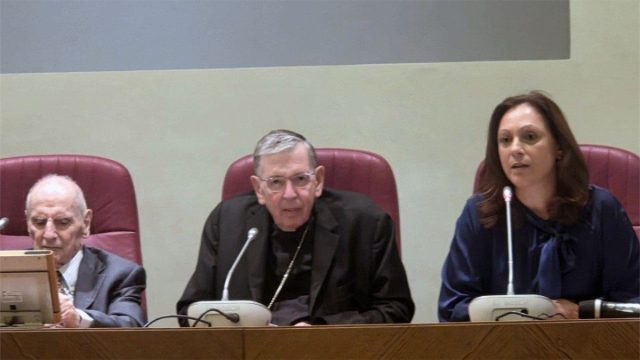
Cardinal Kurt Koch, prefect of the Dicastery for Promoting Christian Unity, said the Churches bear direct responsibility in the search for peace in Europe. He spoke at the conference "Religions and diplomacy," held in Rome from September 28 to 30. The meeting marks the 30th anniversary of the International Association "Caridad Politica" (Political Charity) and brings together religious leaders and diplomats to discuss the role of faith in resolving conflicts.
In an interview with Vatican News, Koch said ecumenism can be the route to a real balance amid diversity, and said it was necessary to "first recover peace within the Church and among all the Churches." The conference is examining how religions can contribute to peace, and what role diplomacy has to play when scientific and technological change presents societies and their governments with challenges they have not faced before.
Koch opened his address with a reference to the European Union and its institutions, saying the project is not only economic but also historical, spiritual and cultural. He asked whether Europe can have a future if it loses awareness of its own origins, and pointed to the link between "culture" and "cult," noting the religious dimension that has shaped the continent's cultures.
To illustrate those roots, Koch offered the image of three hills: Golgotha in Jerusalem, the Acropolis in Athens and the Capitoline Hill in Rome. He said the meeting of biblical heritage, Greek thought and the Roman legal tradition is essential to understanding European culture. He recalled the words of Benedict XVI to the Bundestag, the German parliament, in 2011, in which the pope emeritus described that meeting of traditions as one of the pillars of Europe.
Koch also turned to the search for goodness and truth that is part of the Greek heritage, warning that a democracy needs a law and a standard of justice that does not depend on the will of the majority alone. When the Christian faith met Greek philosophy, he said, it integrated that rational search for truth into its own history. On the Roman legal tradition, Koch said it brought Christianity face to face with political power, which made it possible to develop the distinction between Church and State, the basis of freedom of conscience.
Those roots, Koch said, are not simply a legacy of the past. Europe must pass on three principles: the reference to God, the dignity of the person and sociability. He warned that respect for human life is weakening, and linked that to the loss of awareness of God in public life. Recalling Christian roots, he said, does not mean granting the Church a privileged position, but recognizing an essential part of European cultural history and asking how relevant it remains today.
Asked how the Churches can contribute when politics and diplomacy run up against their own limits, Koch called on Christians to confront the current misunderstandings and polarization. He said it was necessary to "also recover peace among all the Churches," and said that only when relationships are lived in that way can Christians help society in its search for unity and peace. The ecumenical path, he said, offers an experience of living together in which diversity does not block unity. He cited the Augustinian motto of Leo XIV, In illo uno unum, as a reference for the Catholic Church, for ecumenism and for civil coexistence.