Jordan forms national committee to prepare for 2030 baptism anniversary
Bishop Iyad Twal, Latin patriarchal vicar for Jordan, said the 2,000th anniversary of Jesus' baptism in the Jordan River in 2030 offers a chance to strengthen the country's presence on the map of Christian pilgrimage
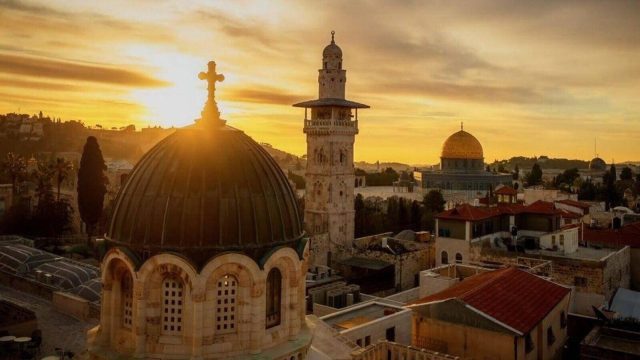
Jordan has created a high-level national committee chaired by the prime minister to prepare for 2030, the year that will mark 2,000 years since the baptism of Jesus in the Jordan River.
Bishop Iyad Twal, Latin patriarchal vicar for Jordan and a member of the board of the Baptism Site Commission, stressed the importance of Jordan being recognized as "part of the Holy Land." Speaking to ACI MENA, the Arabic-language service of EWTN News, Twal called 2030, which marks the 2,000th anniversary of Jesus' baptism in the Jordan River, a major opportunity to strengthen the country's presence on the map of Christian pilgrimage. He praised the Hashemite Kingdom of Jordan's response to the initiative. Cooperation among the state, the Church, the private sector and the institutions involved could produce a partnership that brings together the religious, humanitarian and cultural dimensions of the event, he said.
Twal made clear that the holy sites of Jordan and Palestine belong to a single spiritual itinerary. The aim, he said, is not for countries to compete for pilgrims but to offer a shared experience of faith in the Holy Land. He described the territory as the "geography of salvation," where the holy places are not merely tourist destinations but places to meet the local Church and to live an authentic spiritual experience. Under favorable conditions, he said, pilgrims could travel through Egypt, Jordan, Bethlehem, Jerusalem and Nazareth on a single pilgrimage route, following the "complete journey" in the steps of Jesus and the apostles.
Twal warned that investment, tourism planning and infrastructure development must not overshadow the spiritual dimension of the event. Every material improvement, he said, should serve the pilgrim and enrich the experience, without reducing a holy place to a visitor attraction.
Twal said his relationship with the site of Jesus Christ's baptism has moved from a personal and spiritual experience, lived during his episcopal consecration in 2025, to a direct responsibility in the Church. That responsibility, he said, focuses on preserving the sacred character of the place and caring for those who visit it. He called the local Church the "living stones" of the Holy Land and said pilgrims need to be shown the daily life of Christians in the region: their families, their young people, their schools and their social and Church institutions. He also said 2030 could open new paths for development, especially for young people, by boosting hospitality, services and religious tourism, by making use of what technology offers, and by creating jobs and supporting local communities.
Twal said the "success of 2030" should not be measured only by the celebrations but by what lasts in the life of the Church, in pilgrimage and in the local community. He said he hoped pilgrims would return home with the message of "renewing their baptismal promises." Every visit, he said, should bring a renewal of faith, an encounter with the local Church and a deeper understanding of what it means to be an Arab Christian in the Holy Land.