Church leaders condemn attack that killed eight at Orthodox funeral in Jordan
Christian leaders across the Middle East condemned an attack on a Greek Orthodox church in Jordan in which gunmen killed eight people and wounded 40 at a funeral service. Patriarch Theophilos III said it will not drive Christians from the Holy Land
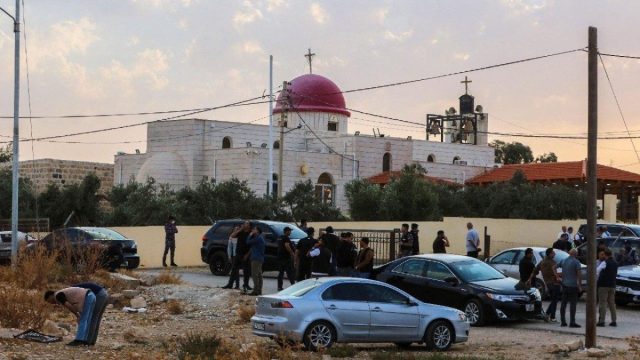
Gunmen attacked the Greek Orthodox Church of St. George in the village of Hammoud, in Jordan's Karak governorate, on October 23, killing eight people and wounding 40 who were attending a funeral service. Several armed men entered the church and opened fire indiscriminately on those inside. Jordanian authorities are still searching for the attackers and say it is too early to link them to any known organization. No group has claimed responsibility.
Prime Minister Jafar Hassan called the attack the product of "terrorist ideology and blind extremism" and said Jordanian society would not be allowed to go down that road. King Abdullah II traveled to the scene and said those responsible would be punished severely. As a precaution, security forces increased their presence at sensitive sites around the kingdom, including shopping centers and foreign diplomatic missions.
Patriarchate rejects any attempt to drive out Christians
The Greek Orthodox Patriarch of Jerusalem, Theophilos III, flatly rejected the idea that the attack could achieve its presumed aim of driving Christians out of the Holy Land. The only effect, he said, will be to bind that community more closely to its land. Theophilos III, who is represented in Jordan by two patriarchal vicars based in Amman and Irbid, said Christians are "children of this land" and will remain there bearing witness to their faith, however grave the challenges.
The patriarch said he was confident that Jordanian society would remain impervious to any dark and extremist ideology, and that the crime had nothing to do with the moderate Islam practiced in the country. "Coexistence between Muslims and Christians," he said, "will continue to be the model that defines Jordan."
Joint statement by the patriarchs
The patriarchs and heads of the Churches in Jerusalem issued a joint statement calling the attack "brutal and inhuman" and a grave offense against both God and humanity. Firing on people who are praying and mourning their dead inside a church violates every sacred and human value, they said. The attack, they added, was an assault on the whole Christian community of Jordan and on the country's social fabric, which they described as a model of coexistence between Muslims and Christians over generations.
The Church leaders said they drew consolation from the words of King Abdullah II and from the firm rejection of the attack by the Jordanian people, and that acts of this kind could never break national unity. As a gesture of solidarity and prayer for the dead and the wounded, they called on all parishes in the region to ring their bells at noon, Jordan time.
Latin Patriarchate points to national cohesion
The Latin Patriarchate of Jerusalem condemned the attack and offered its condolences on the day it happened. Its statement noted the work of Jordan's ruling Hashemite dynasty, headed by Abdullah II, in promoting the values of moderation and tolerance, defending human dignity and protecting religious freedom. Muslims and Christians in Jordan form a single national family united by a shared history, destiny and loyalty, the statement said, and that cohesion is the main shield against terrorism and against any attempt to sow discord.
Ecumenical solidarity from East and West
Ecumenical Patriarch Bartholomew, who was visiting Rome, telephoned Theophilos III to convey his sorrow and his unqualified condemnation. In a statement afterward he wrote that every terrorist act is aimed at the peaceful coexistence of peoples, religions and cultures, which he said was of vital importance for a Middle East that has already suffered a great deal.
The Rev. Jerry Pillay, general secretary of the World Council of Churches, a global fellowship of Christian churches, said the strong bonds of friendship and mutual respect between Christians and Muslims in Jordan would not be destroyed by this act of violence. He called for the protection of all places of worship so that prayer can take place in peace and safety, and urged the international community to respect sacred spaces around the world.