
A 1701 law still bars Catholics from the British throne despite 2013 reform
The Act of Settlement of 1701 remains in force in the United Kingdom, barring any Catholic from inheriting the Crown, though a 2013 law ended the rule that excluded anyone who married a Catholic
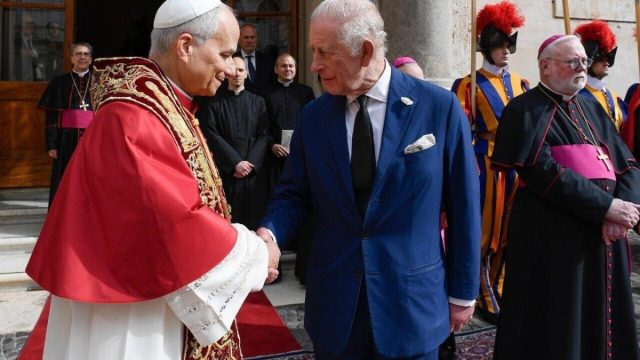
The British royal family cannot be Catholic. For more than three centuries the law has barred anyone who inherits the Crown of the United Kingdom from that faith, under the Act of Settlement of 1701, which is still in force. A 2013 reform changed part of what the law prohibited, but the central exclusion remains.
The origin of the ban
The English Parliament passed the Act of Settlement in 1701 to secure a Protestant succession to the throne, according to the official website of the British monarchy. The text says that no Catholic, and no one married to a Catholic, may take the throne, and it requires the sovereign to swear to uphold the Church of England, the country's established church. The act reinforced the Bill of Rights of 1689 and set out that the monarch is the "Supreme Governor" of the Church of England and must be in communion with it. That requirement has not changed.
The law followed directly from the Glorious Revolution of 1688, when the Catholic king James II was deposed and replaced by his Protestant daughter Mary II and her husband, William of Orange. After the children of Mary and of her sister Anne died without heirs, Parliament moved to keep the succession of future sovereigns within the Protestant faith, granting the throne to Princess Sophia of Hanover and her Protestant heirs.
The 2013 reform and its limits
In 2011 the prime ministers of the 16 Commonwealth realms met in Perth, Australia, and agreed to reform the rules of succession. The agreement produced the Succession to the Crown Act 2013 in the United Kingdom, which received royal assent on April 25 of that year and took effect on March 26, 2015, simultaneously in all 16 realms.
The reform introduced absolute primogeniture for those born after October 28, 2011, and ended the rule under which anyone who married a Catholic was removed from the line of succession. Since then a prince or princess in the line of succession can marry a Catholic without losing their place.
The 2013 law removed only the exclusion by marriage. The original prohibition in the Act of Settlement, on the heir or the monarch professing the Catholic faith, remains intact. When the bill was introduced, the British government said no member of the royal family with a realistic prospect of reaching the throne would be affected by the change. Marrying a Catholic no longer excludes anyone from the succession, but converting to Catholicism still does, as does remaining a Catholic from birth.
Windsors affected
Prince Michael of Kent lost his place in the line of succession in 1978 when he married Baroness Marie-Christine von Reibnitz, a Catholic. He was 15th in line at the time. He regained his place in 2015, when the new law took effect. The Earl of St Andrews, who married Sylvana Tomaselli, a Catholic, in 1988, was also restored to the succession then.
Lord Downpatrick, son of the Earl of St Andrews, converted to Catholicism himself in 2003 and remains excluded, because the 2013 reform does not cover those who convert on their own. His daughter, Lady Marina Windsor, converted in 2008 and was also left out of the line of succession. Katharine, Duchess of Kent, wife of the Duke of Kent, is a different case. She converted to Catholicism in 1994, but her husband did not lose his place in the succession. Buckingham Palace said at the time that the law applies only to someone who marries a person who is already a Catholic at the time of the wedding, not to someone who converts afterward.
The Church of England backs the reform
The Church of England publicly supported the 2013 reform. In January of that year it published a report describing the fast-track procedure used to pass the law as acceptable, and that same month it wrote to members of Parliament to say it backed the changes. The king remains supreme governor of the Church of England.
Based on reporting by José García for Iglesia Noticias. This article was translated and adapted from Spanish with the help of artificial intelligence.


