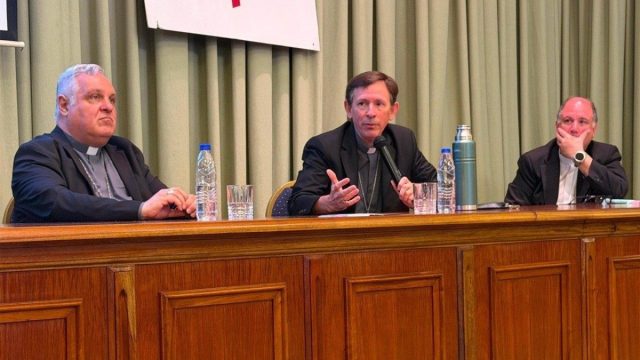
Argentina signs up 25,200 volunteers for Pope Leo XIV's visit
Volunteers from 71 of Argentina's 73 dioceses and prelatures will serve at events in Buenos Aires, Luján and Córdoba during the pope's November 8-11 trip, which includes a visit to a Buenos Aires prison
Argentina is preparing for Pope Leo XIV's visit, scheduled for November 8 to 11. Some 25,200 volunteers from 71 of the country's 73 dioceses and prelatures have registered to help at the main events of the papal trip, which covers Buenos Aires, Luján and Córdoba. They range in age from 18 to 65, and all have been given free transport and lodging so they can carry out their service.
Prayer and rosaries
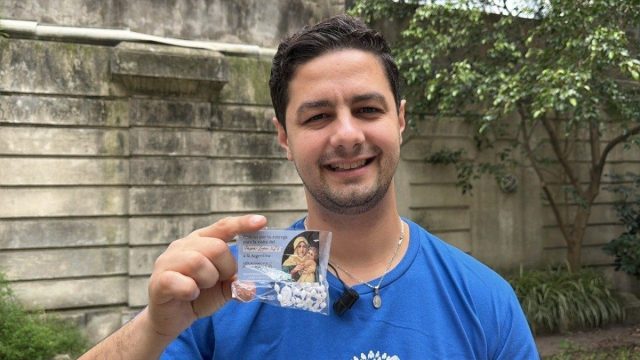
The preparations went well beyond logistics. The Schoenstatt movement in Argentina ran a prayer campaign that gathered more than 1.8 million Hail Marys. The movement also coordinated the collection of 35,000 rosaries for the volunteers, far more than the initial target of 25,000. Father Santiago Ferrerro, national director of Schoenstatt in Argentina, said the idea was simple: each volunteer would receive not only a rosary but also the prayer of the person who had entrusted it to the Virgin Mary.
The rosaries are of every kind. Some belonged to the people who offered them, others were bought or made by hand for the occasion, but all of them were prayed for the intentions of the volunteers before being placed in small bags. Leticia, a woman with health problems, found the strength at the Confidentia shrine in Buenos Aires to make and pray 156 rosaries, which she then handed over to the volunteers.
Older people in nursing homes and priests' residences, the sick, people with disabilities and young men at a center that helps men recovering from addiction also took part. "They prayed, they offered their rosaries and they handed them over... It was all they had!" Ferrerro said.
The volunteers' service
Federico Destéffaniz, national coordinator of the volunteers, described their role: "The volunteer's role is based on service, on opening your heart and being ready to help others, on passing on the message of the Gospel through what we do." Each volunteer has completed online training on their responsibilities and on how to assist the millions of pilgrims who will turn out to see the pope. All have received an identification kit with a T-shirt, a credential and a cap indicating their role.
During the Masses, the volunteers will have a particular part to play in the distribution of Holy Communion. The faithful will have to look for the black umbrellas held by these helpers to approach and receive the Body of Christ. Separate points marked with red umbrellas will be set up for people with celiac disease. Destéffaniz said that "the moment of the consecration and communion is fundamental, it is what is essential in our faith, and we think it is important that all the faithful can come forward and receive the communion of Christ."
Dignity rediscovered in prison
The Devoto prison, in the western part of Buenos Aires, has had its own spiritual preparation for the visit. Pope Leo XIV will go there on the morning of Wednesday, November 11, the last day of his stay in Argentina. He will meet 70 inmates who are in the final stage of their sentences and who, because of their conduct, have obtained benefits such as access to study or work.
The news that the pope had chosen Devoto for one of his meetings had a strong effect on the inmates. María Patricia Alonso, executive secretary of Argentina's prison ministry, said many of them did not feel they deserved such a visit: "Many did not feel worthy. In fact, there are going to be people sharing testimonies who at first had said no." The prison ministry helped the men prepare interiorly for the event through work promoted by the archbishop of Buenos Aires, Jorge García Cuerva, and coordinated by the prison chaplain, Father Matías De Martini.
A retreat held at the prison was marked by prayer, singing and waiting. Alonso said one of the inmates who was to give a testimony understood after the retreat that he was loved by God and could pass on a message of hope. "They realized that, even though they are in prison, they do not lose their dignity, because they have the dignity of children of God. So they are ready with burning hearts, like the pilgrims of Emmaus, waiting for the shepherd to arrive," Alonso said. She added that the mothers of the prisoners are experiencing this moment as a deep sign of God's consolation. Officials of the Federal Penitentiary Service and members of the prison ministry will also attend the meeting with the pope.
Alonso said the Church's approach in prisons is not to impose religious practices but to listen: "The challenge for the pastoral worker is to be able to listen without offering a magic recipe. First, listen to them, and then the Spirit guides what is needed and how we can help them."
Magnifica humanitas in the Argentine debate
The Association of Argentine Journalistic Entities (ADEPA), which represents Argentine news media, published its assessment of Magnifica humanitas. Pope Leo XIV released the encyclical in May, and it addresses the Church's social doctrine in the face of advancing artificial intelligence. ADEPA welcomed "the clarity and courage" with which the pope set out the ethical challenges posed by the technology. The document does not condemn its development but warns that it can dehumanize.
At the presentation of the encyclical, the pope said that "AI already has an impact on many areas of our lives and affects the decisions that shape human coexistence," and that it "is drastically changing the way war is waged." ADEPA said the pope calls for a search for the truth, for responsible communication and for "disarming words" in the face of the risks of algorithmic polarization and disinformation.
The association's statement also reports the discussions held by its directors and Argentine editors at an international meeting at the Pontifical Gregorian University in Rome in mid-October. The country's press representatives there pointed to the need to protect the journalistic content that feeds artificial intelligence models, as a condition for sustaining an activity essential to democratic debate.
Based on reporting by Almudena Rodrigo for Iglesia Noticias. This article was translated and adapted from Spanish with the help of artificial intelligence.