Pope Leo XIV says daily work is a path to encountering God
At his general audience in St. Peter's Square on September 23, 2026, Pope Leo XIV took up the third chapter of Gaudium et Spes and said scientific and technical progress must be guided by charity
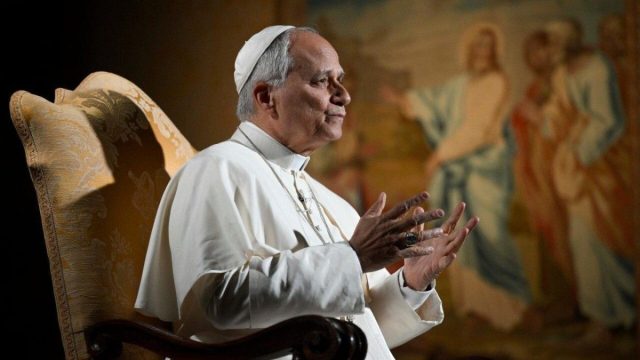
Pope Leo XIV devoted his general audience in St. Peter's Square on September 23, 2026, to human activity in the world, continuing his catechesis on the Second Vatican Council. It was the 27th session in the series and the fourth on Gaudium et Spes, the Pastoral Constitution on the Church in the Modern World, promulgated in 1965. The pope took up the document's third chapter, on "Man's Activity in the World."
He framed the subject as a question: "what is the value of human activity in the world, and therefore of technical, social and scientific progress?" The pope said that "created in the image and likeness of God, the human being is the agent of progress. With freedom and intelligence, he increases his knowledge and so advances the development of society as a whole."
Some thinkers have presented scientific and technical advances as weakening man's bond with God, even treating it as superfluous or contrary to the Christian faith, the pope said. That approach, he warned, contains a serious doctrinal error. "By denying the relationship with God, the possibility of affirming the transcendent value of the human person is also lost. This is the 'tragedy of atheistic humanism', well described by a leading theologian of the Second Vatican Council, Henri de Lubac," he said.
Gaudium et Spes gives a precise answer, the pope said. Christians "can justly consider that by their labor they are unfolding the Creator's work, consulting the advantages of their brothers, and contributing by their personal industry to the realization in history of the divine plan... Far from thinking that works produced by man's own talent and energy are in opposition to God's power, Christians are convinced that the triumphs of the human race are a sign of God's grace and the flowering of his own mysterious design."
The pope turned to the mystery of the Incarnation to underline a fundamental truth: "humanity, and with it work, progress and the autonomy of created realities, is not absorbed or annulled by the encounter with God, but is taken up in its entirety, continuing to be, in Christ, free and active: indeed, it is in him that it finds full truth and freedom." He also recalled that in the Eucharistic celebration the fruit of human work, represented by bread and wine, is placed on the altar each day to be transformed into the Body and Blood of Christ, a sign of the redemption of all human activity.
Quoting the homily of St. John Paul II at the canonization of St. Josemaría Escrivá, the founder of Opus Dei, the pope spoke of the value of sanctifying everyday work: "from this perspective an important truth emerges: to find God, the human being does not have to abandon his earthly occupations, but can live his vocation fully by doing his daily work well and sanctifying it." That teaching, he said, reflects the essential unity between faith and action. Christians, like everyone else, take part in building the city of man while making their way toward the definitive encounter with God.
The pope said that "earthly progress must be clearly distinguished from the growth of Christ's kingdom." For technical and scientific advances to become genuine human progress, he said, "that is, progress for the whole person and for all people, technical and scientific progress must be inspired and guided by charity. Only in this way can it always be placed at the service of human dignity and improve living conditions for everyone, especially the most disadvantaged."
Closing the audience, the pope asked those present to remember that they belong to a shared adventure of progress, science and life, and to share "the bread of knowledge and know-how, so that every person and every people can develop their potential, and together, with God's help, we can build a better future."