Cardinal Bustillo says Pope Leo XIV's visit to France must not end in nostalgia
Cardinal François Bustillo, bishop of Ajaccio, told Vatican News that the four days Pope Leo XIV spent in France should lead to a lasting missionary commitment rather than a fond memory of celebrations
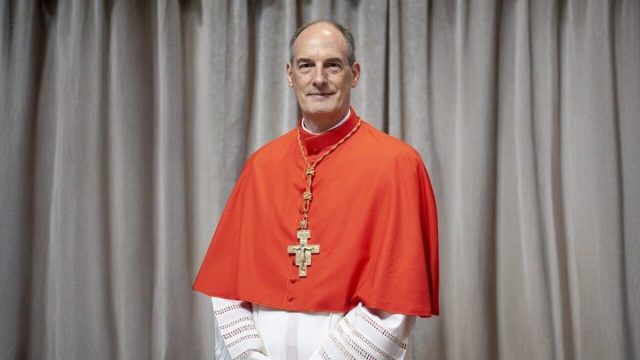
Cardinal François Bustillo, bishop of Ajaccio in Corsica, said Pope Leo XIV's visit to France should not remain just an emotional memory of four days of celebrations but should become a lasting missionary commitment. The faithful, he said, should commit themselves to "live out and embody the teachings that the Successor of Peter has shared." He spoke in an interview with Vatican News.
Bustillo described the pope's time in France as an "anointing" that calls for an active response. Leo XIV's exhortation, he said, comes down to a direct message: "courage, and onward." Pastors and laypeople must carry on their mission "with enthusiasm, with joy and without discouragement." He said "Christian memory must not be a mere exercise in nostalgia," but "a commitment to making what we have received bear fruit."
With the visit over, Bustillo asked what will remain once "the initial stir dies down." His answer was that the trip was not only a call to meet Jesus Christ and the Gospel again, but also reflected "a profound thirst for God in a society that has largely become secularized."
A secularized France that is still spiritually restless
Bustillo spoke about the particular situation of French society, where secularization has advanced strongly without extinguishing the search for the divine. "Despite the falling away from religious practice, a need for spirituality persists," he said. He pointed to specific signs of that thirst, including an "increase in requests for baptism and confirmation," especially among young people. "This indicates that there is an emptiness and a thirst," he said.
But he avoided hasty conclusions, saying that it "cannot be concluded that there is an imminent religious change in France."
The Mass celebrated in Paris stayed with Bustillo, who noted the Church's ability to "bring people together in a social context marked by divisions." He said that "speaking of communion is powerful, it is prophetic, and it comes at an opportune moment for our society."
Leo XIV, a pope who speaks without political calculation
Bustillo praised the freedom with which the pope spoke and acted. The pope was "firm in an environment where fear of other people's judgment prevails," he said. "We live in a French society where a great fear reigns: fear of what is said, fear of what is done, fear of what others may think." In that climate, he said, Leo XIV acted as "a solid pope" who refused to fall into political calculation and chose instead to "address French society on the basis of the dignity of the person and the common good."
Metz, Europe and memory as a guide
The last leg of the trip, in Metz, led Bustillo to reflect on Europe's future. He said there is a need to "resume dialogue and diplomacy, calling for more debate, more dialogue instead of useless wars." He described Europe as "tired" and said the continent "can still do something for humanity" because of its "soul."
Bustillo linked that to the value of memory. He cited Leo XIV's reference to St. Benedict and to Europe's founding fathers, saying that a return to the roots is not a retreat into the past but the use of "memory as a guide for discerning the future." Europe should remember that its history is steeped in Christianity, he said, not as nostalgia but as a guide.
In his closing remarks, Bustillo brought the challenge that follows the visit back to the Church's mission. "There are things that are good, and what is good should be celebrated," he said, but "this does not mean ignoring the difficulties." The point, he said, is to keep difficulties from becoming the only lens through which the present is seen. Christians are "children of the resurrection," he said, and their hope cannot rest on the passing enthusiasm of an event but must be "in Christ." He urged them to "begin with Jesus Christ and with the Gospel."
Bustillo said "it is not enough to talk about the Church, its history or its problems." What matters, he said, is making known the One for whom it exists. "The soul of the Christian lies in the Gospel," he said. "The memory of Leo XIV's visit can be fruitful if it translates into the continuation of the mission he came to encourage." He added: "If the Gospel is proclaimed and lived," then "the world will have life."