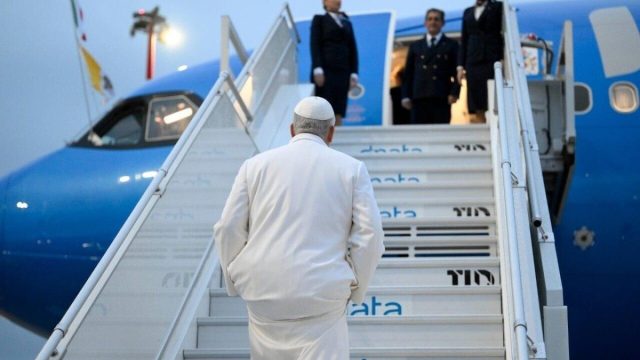
Pope Leo XIV to celebrate Mass in Florida, Uruguay, on feast of the country's patroness
The pope will preside at Mass on November 8, the feast of Our Lady of the Thirty-Three, outside the cathedral basilica in Florida, Uruguay, which houses the image of the country's patroness
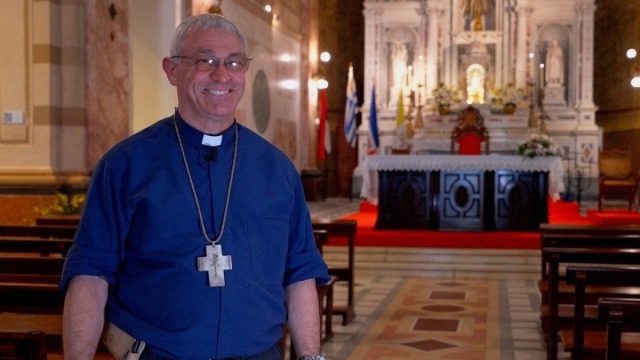
The city of Florida, in the center of Uruguay, is preparing to receive Pope Leo XIV on November 8, the day the Church in Uruguay marks the solemnity of Our Lady of the Thirty-Three, patroness of the country. Thousands of pilgrims will gather in front of the cathedral basilica, which houses the Marian image, for a Mass celebrated by the pope.
A challenge and a gift for Bishop Bauer
Bishop Alfonso Bauer of Florida-Durazno describes the visit as both a challenge and a gift at the start of his ministry. Bauer was named bishop on March 19, the feast of St. Joseph. He was ordained a bishop and took possession of the diocese at the end of May, and in September he traveled to Rome for the formation course for new bishops. "Beginning my pastoral mission as a bishop with the visit of the Holy Father is, I think, an immense gift," he said.
Bauer said organizing an event of this size has been demanding because he has had so little time to get to know the diocese. He said he hopes the pope's presence will bring "a renewal for our faith," confirm believers and revive Christian communities, giving them greater vitality and missionary commitment.
Historical roots of the devotion
Florida's place in Uruguayan religious life goes back to 1825. The Declaration of Independence was proclaimed in the city, and, as Bauer recalled, the Thirty-Three Orientals, the group of patriots who led the independence movement, placed themselves under the protection of a small Marian image kept there. The carving is of Guarani origin and linked to the Jesuit tradition as a representation of the Immaculate Conception. It did not yet carry the name it has today: the people gave it that name, tying devotion to Mary to the country's struggle for independence.
"It has a very deep root in our history. That is why this devotion was born, linked to the liberation of our homeland under the protection of Mary Most Holy," the bishop said. Every year, on the second Sunday of November, the Catholic Church in Uruguay holds a national pilgrimage to the shrine in Florida. This year it coincides with the pope's visit. Bauer said pilgrims have already set out, some on horseback, from towns such as Nico Pérez, carrying replicas of the image of Our Lady of the Thirty-Three.
Dialogue beyond the Church
The bishop said the event reaches beyond Catholics. He said the visit can open the way to renewed dialogue, stronger fraternity and a reaffirmed commitment to human dignity. In a heavily secularized country, Bauer said there is still work to do in spreading devotion to the patroness of Uruguay.
Carlos Enciso, the mayor of the Florida department, a practicing Catholic who was educated at a religious school, said the pope's arrival speaks to the whole of society, whatever people's religious affiliation. "We are happy that the tour of the Americas begins in Uruguay," he said in an interview with Vatican News from his office at the departmental government. He said he was glad Florida is again hosting a papal visit, as it did in 1988 with St. John Paul II.
Social change since 1988
Enciso said the context has changed since that first visit: fewer Uruguayans are Catholic now, but interest in the pope's arrival extends to people who are far from Church practice. "Church people are very happy, practicing people, but the ordinary citizen too [...] has been getting involved in recent days," he said. Flags, stickers and the enthusiasm of residents have created a mood of shared joy across the city, he said.
The Virgin as a symbol of national identity
For the mayor, the link between the two papal visits is not political or administrative but the presence of Our Lady of the Thirty-Three. Her shrine in the Florida cathedral, he said, is the reason an inland Uruguayan city of around 40,000 people draws national and international attention.
"The center of it is here in the Virgin, in the Virgin of the 33 Orientals, who is the patroness of Uruguay," he said. He said the title connects the old homeland, the independence movement and Uruguay today, an identity that is part of the population's historical DNA.
Hope in a time of polarization
The visit comes at a time when social polarization runs through much of public life. Both Bauer and Enciso said the pope's presence can renew hope and draw Uruguayans closer together. The bishop asked people to welcome the pope with a spirit of hospitality and fraternity, and pointed to his message in favor of peace, concord and human dignity.
Bauer also addressed those who will not be able to attend the celebration for financial or health reasons, or because they are in prison. For them, he said, the pope's message is equally an invitation to encounter Christ and to closeness. "The wheat and the weeds grow together, but we can also salvage so many good things," he said, adding that preparing for the visit has shown him how many people are willing to help.
Enciso said he hopes the pope's message leaves a lasting mark. "I think that is where that drip will stay, in people's hearts," he said.
Based on reporting by Almudena Rodrigo for Iglesia Noticias. This article was translated and adapted from Spanish with the help of artificial intelligence.