Lebanese Christians face killings and displacement as president says their presence is not in danger
President Joseph Aoun has said Lebanon's Christian presence is not under threat. Christian communities there have seen clergy and civilians killed, villages emptied by fighting, contested land sales and large numbers of young people wanting to leave
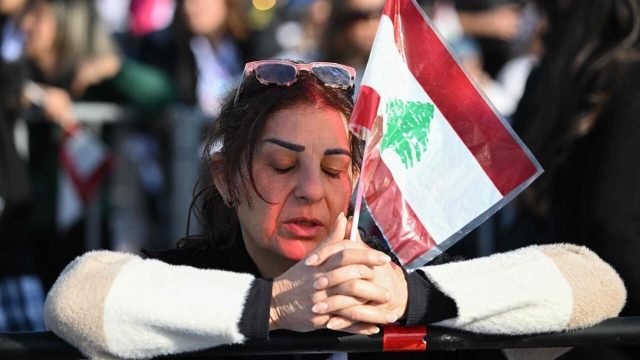
Lebanese President Joseph Aoun told French lawmakers on October 28 that "there is no danger to the Christian presence in Lebanon." He pointed to the country's tradition of coexistence between Christians and Muslims. His remarks came as Christian communities in Lebanon face violence, displacement and growing pressure to emigrate.
Lebanon's political system formally recognizes the coexistence of its Christian and Muslim communities. Since independence from France in 1943, the president has been a Maronite Christian, the prime minister a Sunni Muslim and the speaker of parliament a Shiite Muslim. Parliamentary seats are divided equally between Christians and Muslims.
Clergy and Christian civilians killed
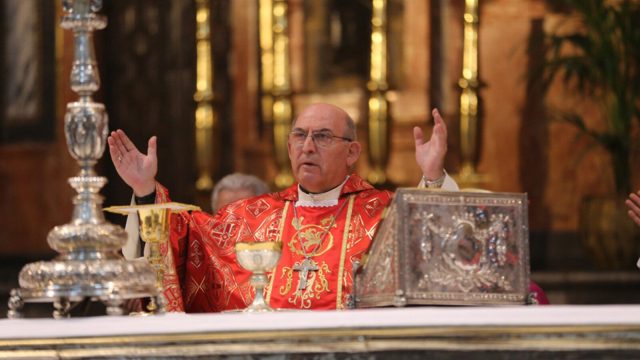
On October 29, the day after Aoun's remarks, a Syrian worker found the body of Father Samir Daou, a Maronite priest. Months earlier, Father Pierre al-Rahi was killed in Israeli bombing during the conflict with Hezbollah, the Iran-backed Lebanese Shiite militia. In February 2025, Armenian Apostolic Archimandrite Anania Kojanian was murdered in his home.
Clergy have not been the only victims. Israeli airstrikes killed dentist James Karam and his children, Tony and Theodosia. They also killed Pierre Moawad, his wife, Flavia Mourad, and Roula Matar. In earlier years, Pascal Sleiman and Elias Hasrouni were murdered. Both were linked to the Lebanese Forces, a Christian political party opposed to Hezbollah. Fadi Bejjani, a former bodyguard for a Christian politician, was killed in 2023 in a shootout between local residents and Hezbollah gunmen. The circumstances of the deaths differ.
Displacement and isolation in the south
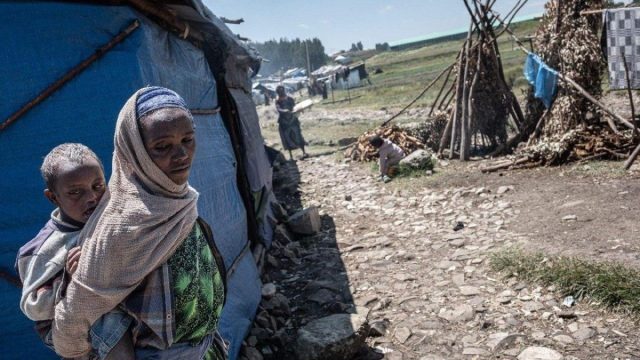
In southern Lebanon, where Hezbollah is the dominant force, entire communities have been uprooted. Christian villages near the border with Israel have been caught in the crossfire between the Israeli army and the militia. In Qawzah, Father Antonios Hanna, pastor of St. Joseph's Church, said residents had been evacuated after the village became a battlefield. He said homes and the parish church had been damaged.
Residents who have stayed in Rmeish, Ain Ebel and Debel face different conditions. The three villages near the Israeli border are known as the "delta of resilience." Residents there are cut off from jobs, universities and hospitals. They rely on coordinated convoys to leave their homes or return to them.
Land purchases and territorial control
Land is another source of pressure on Christian communities. Cardinal Bechara Boutros al-Rai, the Maronite patriarch and head of the Maronite Catholic Church, has warned of rising property sales. He urged Christian landowners not to give up the roots and the future that their land represents. Politicians, media outlets and research centers have alleged that Hezbollah and allied financiers are behind large-scale land purchases in majority-Christian areas.
Reports of coordinated purchases, opaque financing and offers above market price have raised fears that the sales are part of a deliberate strategy to extend the group's territorial and political control.
Civil service hiring and emigration
The Lebanese newspaper Nidaa al-Watan reported that only three of the 54 trainee accountants named in a decree on civil service transfers and appointments were Christian. Lebanon's constitution requires parity only for the highest civil service posts. For other public jobs, the established criteria are qualifications and competence.
Young people are also emigrating. A 2024 Arab Barometer survey found that 58 percent of Lebanese aged 18 to 29 wanted to emigrate. The figure covers Lebanese youth as a whole, not only young Christians.
Disarming Hezbollah
Disarming Hezbollah is on the Lebanese government's agenda. Authorities have intercepted shipments of explosives and tightened financial restrictions on the group.
Based on reporting by José García for Iglesia Noticias. This article was translated and adapted from Spanish with the help of artificial intelligence.