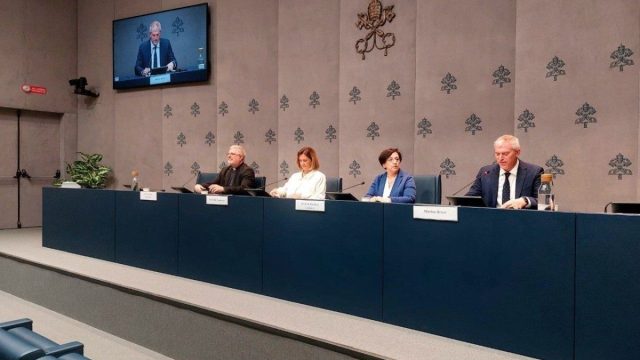
Pope Leo XIV opens Rome conference marking 10 years of Amoris Laetitia
About 200 bishops, experts and lay people are meeting in the Paul VI Hall through October 14 to assess how Pope Francis's exhortation on family life has been received over the past decade
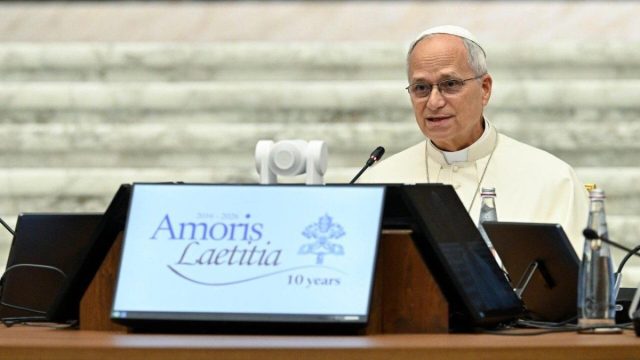
Pope Leo XIV opened a conference on October 7, 2026, marking the 10th anniversary of Amoris Laetitia, the apostolic exhortation that has prompted sustained debate about family life and the sacrament of marriage since its publication. The gathering, held in the Paul VI Hall in Rome, brings together about 200 participants, among them bishops, experts and lay people, and runs through October 14. The conference was convened by the Dicastery for Laity, Family and Life and the General Secretariat of the Synod of Bishops.
Pope Francis published Amoris Laetitia after two synod assemblies he called to address the challenges facing family life in the 21st century. The 256-page document gathers his reflections on the Christian family and marriage. Most of the debate has centered on chapter 8, which deals with the accompaniment of couples in situations the Catholic Church considers "irregular."
Assessing a decade and new challenges
In March of this year, the pope called together the presidents of the bishops' conferences and of the Eastern Churches to assess how Amoris Laetitia has been received over the past decade and to apply its teaching to current challenges. "Our age is marked by rapid changes," the pope said, "which makes it necessary, more than it was ten years ago, to give pastoral attention to families, to whom the Lord entrusts the task of sharing in the Church's mission of proclaiming and bearing witness to the Gospel."
The pope said there are areas of the Church and of society that can be reached only "through the laity and, in particular, through families." He also stressed the urgent need to renew the Church's commitment so that those called to marriage can live their married love fully in Christ, and so that young people discover the beauty of that vocation.
Historical context and pastoral responsibility
In his opening address, the pope placed the conference within the last 50 years, going back to the wish of John Paul I, carried out by Pope St. John Paul II, to hold a synod assembly on the family. The pope said he wanted the week's reflection to unfold in a climate of prayer and mutual listening. "This history of more than half a century imposes a particular responsibility on our gathering as pastors," he said, "as the synodal vocation of the whole Church continues to develop."
The pope said his predecessor's exhortation has been received in very different ways depending on cultures and pastoral settings, supporting families in their real lives and prompting initiatives and processes. "I hope," he told participants, "that, through the many stories you bring from your Churches and from different cultural contexts, a shared narrative of these ten years will gradually take shape, marked by joy and hope."
Challenges to the Christian vision of marriage
The pope pointed to the factors drawing young people further away from the Christian understanding of married intimacy. "In many contexts," he said, "a growing distance has emerged between the ways sex and intimacy are lived and the Christian vision of marriage." Young people long for love, fidelity and belonging, he said, but many cannot see how that vision of love might take concrete shape in their lives, nor do they believe that a lifelong commitment is the condition for reaching what they want.
The pope also mentioned economic insecurity, migration, violence, loneliness and other forms of emotional fragility that shape people's decisions and the possibilities they are able to imagine for their future. "These realities," he said, "raise a series of questions that we must face with courage."
A call to pastoral action
After the pope's address, Sister Helen Alford, president of the Pontifical Academy of Social Sciences, asked participants, and bishops in particular, to "encourage young people to take up the great challenge of marriage and family life."
The conference continued behind closed doors after Wednesday's opening session. The pope asked those attending to "preserve the discretion and confidentiality that this time of listening and discernment requires." "May the Lord give us the freedom to listen to one another," he said, "the wisdom to recognize his work among his people and the courage to follow where he leads us, so that each day the Gospel becomes ever more fully good news for families throughout the world."