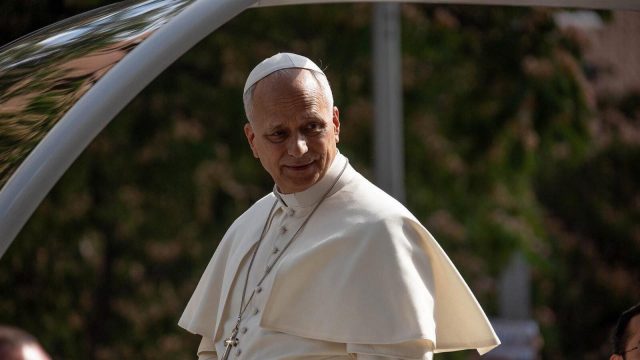
Pope Leo XIV says warnings from AI experts should be taken seriously
Speaking to reporters on the September 28 flight from Metz to Rome, Pope Leo XIV called on governments and technology companies to regulate artificial intelligence, defended his opposition to euthanasia and returned to the question of clergy abuse
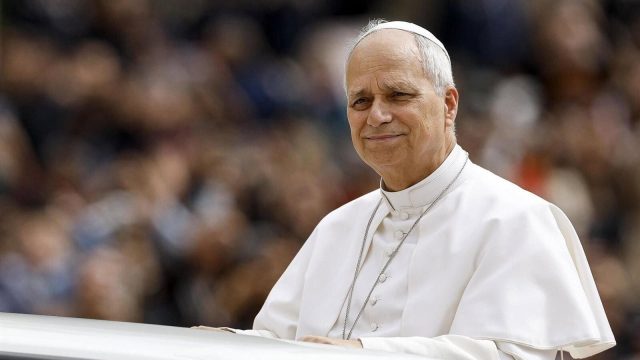
Pope Leo XIV said he is not panicking about the risks of artificial intelligence but called on governments and technology companies to act urgently to regulate it before it reaches a critical point. He spoke on September 28, 2026, at a press conference aboard the flight from Metz, France, back to Rome. He also said he had not crossed any line by opposing France's euthanasia law, and said abuse in the Church is not systemic across the whole institution.
Speaking about the warnings from artificial intelligence experts, the pope said that if someone asked whether he was panicking, he would answer: "I sleep peacefully at night." He added: "I think the concerns raised by AI experts should be taken seriously." He said he does not regard those warnings as "fake news" driven by economic or other interests.
The pope cited specific warnings from the industry. A former safety researcher at Anthropic, a leading artificial intelligence company, had warned that the development of the technology could carry a "greater than 10 percent probability that AI kills everyone" within a decade. Dario Amodei, Anthropic's chief executive, has called on the industry to slow the development of advanced models, a call backed by other leaders in the sector.
The Vatican has an encyclical and a commission on AI, but the pope says more is needed
The pope said he published his encyclical Magnifica Humanitas just four months ago, a document that deals specifically with the place of AI in a humanist civilization. He said the Vatican has set up a commission on AI to coordinate the use of the technology and to promote "dialogue, study and research" so that AI does not reach a critical point that puts humanity in danger.
Those measures are not enough if they remain passive, he said: "we cannot simply sit back and do nothing." He called for action from the Vatican, from governments and from technology companies to responsibly regulate a technology whose development far outpaces its current governance. The Church has an obligation to proclaim its social teaching on contested questions such as this one, he said. He described that not as interference but as part of his pastoral mission of applying the Gospel to today's world.
Euthanasia in France: "I did not cross any line"
The press conference also turned to the recent legalization of euthanasia and assisted suicide in France, the country the pope had just visited. Asked whether he had "crossed a line" by taking a position against those laws, he said: "I did not cross it." He added: "we are not getting into politics; we are applying the Gospel."
The pope said "the defense of life is a fundamental principle" of Church teaching. He pointed to his recent visit to Lourdes, the Marian shrine in southern France where sick and disabled people go in search of meaning. Being in a place where people understand that "their life, even in the midst of illness or pain, has meaning" strengthens the Church's calling to accompany those who suffer and to affirm the value of life in every circumstance, he said.
Abuse in the Church: a crime and a spiritual wound, but not systemic across the institution
Asked about sexual abuse committed by clergy, the pope repeated that he does not describe the problem as "systemic" in the Church as a whole. Some organizations within it, he said, have been "abusive as a system." He defended precision in language and said: "it is important to make the distinction." Above all, "sexual abuse is a human problem," he said, but when it happens in the Church it takes on a further dimension that goes beyond the criminal.
Abuse within the Church has devastating spiritual consequences, he said: "people's lives of faith are deeply wounded." In some cases, he added, they are "destroyed." For that reason, he said, the Church's responsibility does not end with recognizing crimes and prosecuting them: it also requires supporting victims through their spiritual healing.