Andorra moves to decriminalize abortion for women after talks with the Vatican
Andorra's government has approved a bill that would end criminal liability for women who have abortions but keep the procedure banned and health workers liable to prison, a formula reportedly agreed with the Holy See
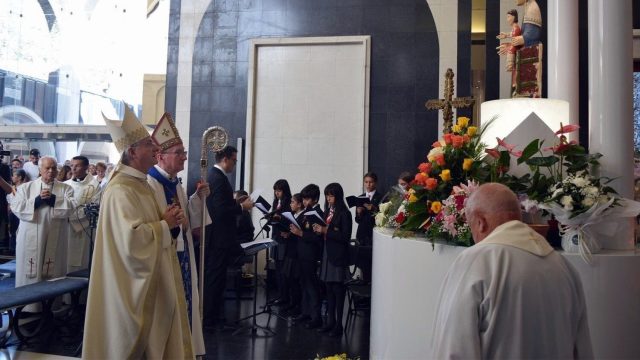
The government of the Principality of Andorra, a small country in the Pyrenees between Spain and France, approved a draft bill on October 28 that would remove criminal liability from women who voluntarily end a pregnancy. Andorra's head of state is, in part, a Catholic bishop. The bishop of Urgell, Josep-Lluís Serrano Pentinat, shares the role with the president of France under Andorra's historic co-principality system. The reform of Article 117 of the Andorran Penal Code still has to clear parliament under an expedited procedure.
The new rules "exempt women from all criminal liability" for a voluntary termination of pregnancy. But abortion remains banned inside Andorra "because of constitutional requirements." Health professionals who perform abortions also still face penalties: up to three years in prison and a five-year ban on practicing their profession. The reform does not provide for Andorra's social security system to cover abortion, so the procedure will remain excluded from public health services.
A formula reportedly agreed with the Holy See
Dropping the penalties for women who consent to, request or take part in their own abortion, while keeping them for those who perform it, appears to be the result of talks held by the Holy See's Secretariat of State. In July 2026, Cardinal Pietro Parolin, the Vatican secretary of state, met with Andorra's head of government, Xavier Espot, and with Minister Ladislau Baró to discuss decriminalization. The formula the Council of Ministers later approved matches the solution that, according to press reports, had been agreed with the Holy See. It lifts criminal liability for women, keeps the sanctions on health professionals and rules out any public funding for abortion.
The aim of those contacts was to find a legislative solution that would not put the institutional continuity of the co-principality at risk. Baró described the contacts with Rome as an "institutional dialogue" rather than a formal negotiation. The Holy See has not publicly confirmed that it supports the bill.
The bishop's position
As co-prince of Andorra, Serrano Pentinat could refuse to ratify the law, but the French co-prince would approve it. When the bill was presented, Baró explicitly acknowledged that possibility. He said a refusal by the bishop would not necessarily prevent the law from taking effect, because Andorra's legal system allows a law to be promulgated by just one of the two co-princes. That would allow Serrano Pentinat to maintain his formal opposition to the bill without blocking it.
Criticism from abortion-rights groups and the government's case
Groups that support legalizing abortion say the proposal does not go far enough, because it still bans abortion in the country's health facilities and excludes public funding for the procedure. The Andorran government presents the bill as a solution compatible with both the Constitution and the survival of the co-principality.
Addressing the Council of Ministers, the minister for Institutional Relations, Education and Universities defended the change. He argued that the protection of life set out in Article 8 of the Andorran Constitution "cannot entail the criminalization of women." The bill now awaits debate and approval in parliament.
Based on reporting by Lucas Alonso for Iglesia Noticias. This article was translated and adapted from Spanish with the help of artificial intelligence.