
Paris's Spanish-language parish forged baptismal records to save 150 Jews
The Parroquia de la Lengua Espanola in Paris, run by Claretian missionaries since King Alfonso XIII bought the building, helped about 150 Jews escape deportation during the Nazi occupation and today serves Spanish-speaking migrants in the city
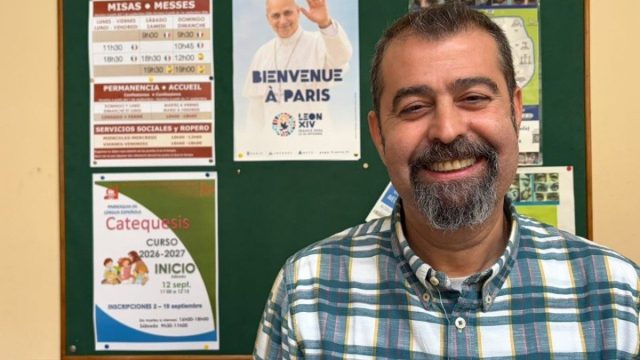
In the 16th arrondissement of Paris, a short walk from the Eiffel Tower, the Parroquia de la Lengua Española (Parish of the Spanish Language) has served Spanish-speaking migrants and expatriates for more than a century. Run by the Claretian missionaries, it takes in people who arrive in the French capital looking for new opportunities, often with nothing. Its pastor, Father Miguel Tombilla, who is from Galicia in northwestern Spain, puts it simply: "anyone who speaks Spanish can come here."
The parish began when King Alfonso XIII bought the building and entrusted it to the Claretians. In its early years the congregation was made up mainly of Spaniards working in the households of wealthy families. Today Latin Americans, Spaniards and French worshippers make up a far more mixed community, and the parish still centers its work on welcoming newcomers.
During the Nazi occupation in World War II, four Claretian missionaries, a Spanish consul and several collaborators ran a clandestine operation forging baptismal certificates. About 150 Sephardic and Spanish Jews escaped deportation as a result. Those involved said nothing about it for decades, and the operation remained unknown until a Spanish journalist brought it to light in 2020. The community is now waiting for formal recognition from the Spanish Embassy.
Magaly Velasco arrived in Paris 13 years ago looking simply for somewhere to attend Mass. She later joined the pastoral council and took on responsibility for organizing events. She describes the parish as a meeting point for people in very different circumstances, from expatriates to migrants living precariously. "The common ground is the language and the religion," she said, adding that many arrive looking for "a little peace, a little affection."
The mission's social service, run by Elena Costa Sort, deals with people who arrive with nothing. Costa Sort said around 95 percent of those who ask for help are of Latin American origin, and that the first step is always the same: a coffee and someone to listen. Staff then point each person toward available resources, including food, housing and psychological support. The parish also runs French classes and a clothing bank for those who arrive in the most precarious conditions.
For many parishioners, it is a place where loneliness and hardship are shared. Those who come say what they value most is the priests' closeness and their willingness to listen. For many of them, Sunday Mass is a moment of respite and a connection with their faith. During Pope Leo XIV's recent visit to France, Latin Americans in the community took an active part in the scheduled events.
Other Spanish-speaking communities also operate in the city, among them those at Saint-Germain-des-Prés and Saint-Pierre de Chaillot, which hold services and gatherings for those who want to practice their faith in Spanish.


